

A study of more than 1 million people found genetic influences on the Big Five traits that shape our personality.
Articles on Genome-wide association studies (GWAS)
Displaying all articles

A study of more than 400,000 people found 1% had never had sex – which was linked to a range of genetic, environmental and other factors.

Researchers examined the DNA of over 53,000 people with OCD and over 2 million people without OCD, gathering data that could one day improve treatment.

No treatments are currently available to cure Parkinson’s disease. Better understanding the genetic foundation of this condition can help researchers find ways to slow or halt its progression.

Biobanks collect and store large amounts of data that researchers use to conduct a wide range of studies. Making sure participants understand what they’re getting into can help build trust in science.

People don’t randomly select who they have children with. And that means an underlying assumption in research that tries to link particular genes to certain diseases or traits is wrong.
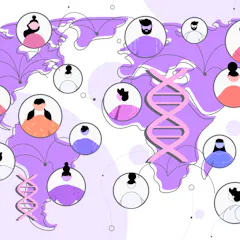
Existing genetic data and sequencing tools are overwhelmingly based on people of European ancestry, which excludes much of the rich genetic variation of the world.

A new study of nearly 500,000 individuals finds that many genes affect same-sex behavior, including newly identified candidates that may regulate smell and sex hormones.

New research is pinpointing how much genes influence the stability of educational achievement.
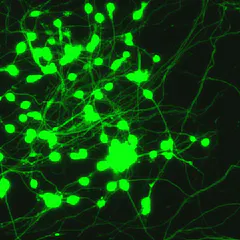
Figuring out what causes diseases like autism, schizophrenia and depression is tricky. Now Stanford University researchers are turning blood into brain cells to study these diseases in a dish.

Scientists find the missing link in epigenetics that could explain the mystery of inherited disease.
Top contributors
-

Reader in Psychology, Queen Mary University of London
-
Associate Professor of Pathology at the Institute for Stem Cell Biology and Regenerative Medicine, Stanford University
-
Professor of Microbiology and Immunology, Indiana University
-
Professor of Neurology, University of Florida
-
Assistant Professor of Sociology and Data Science, Purdue University
-
Professor of Neurology and Human Genetics, University of California, Los Angeles
-
Assistant Professor of Medicine, Harvard University
-
Sir Henry Wellcome Postdoctoral Fellow, King's College London
-
Professor of Epigenetics, Queen Mary University of London
-
Postdoctoral Researcher in Statistical Genetics, University of California, Los Angeles
-
Professor of Psychiatry, University of Florida
-
Associate Professor, School of Psychology, The University of Queensland
-
Postdoctoral Researcher in Translational Neurogenomics, QIMR Berghofer
-
Associate Professor and Head of the Neurogenetics and Dementia Laboratory, QIMR Berghofer