
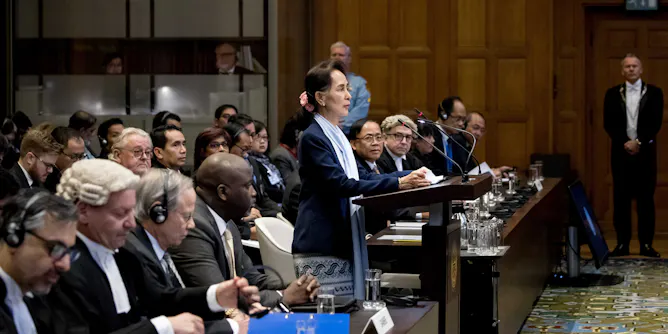
The International Court of Justice has ordered Myanmar to make wholesale reforms at the drop of a hat, wielding a stick of shame rather than a ladder of support.
Articles on Genocide
Displaying 221 - 240 of 333 articles
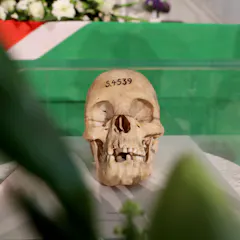
An oral history based biography of a survivor of colonial genocide in Namibia indicates instances of humanity during an entirely inhumane era.
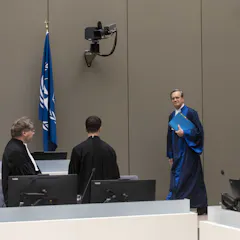
With the ICC facing intense criticism and scrutiny, its member states have met to create a plan to improve the court’s standing and performance.
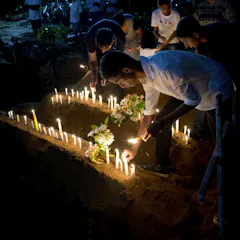
Violence against religious minorities around the world prompted the United Nations to mark a day for the victims in 2019. Here is a roundup of some key events around the world.
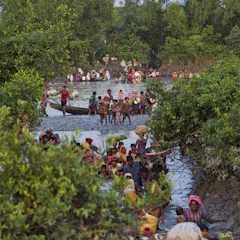
Dozens of Muslim-majority countries are asking the UN’s International Criminal Court to investigate and prosecute a 2017 massacre in Myanmar that killed an estimated 10,000 Rohingya Muslims.
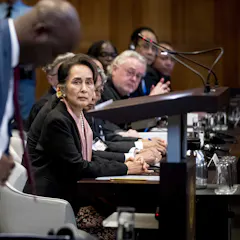
A case brought by the Gambia claims that Myanmar’s military committed genocide against its Rohingya Muslim minority.

Interviews with the Yazidi survivors of IS attacks that killed 3,100 people in 2014 reveal the emotional, cultural and spiritual scars of religious persecution.
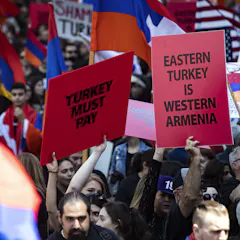
A recent vote in the US House of Representatives recognised the Armenian massacre of 1915 as a genocide in a significant moment for the Armenian diaspora.
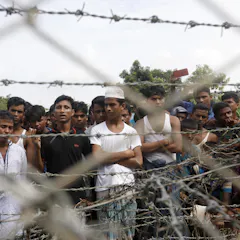
The sheer volume of pregnant women in the refugee camps was an early indicator of the extent sexual violence was used against Rohingya women and girls.
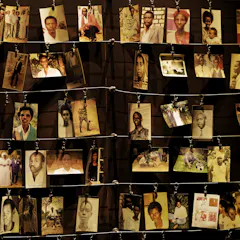
Learning from what actually worked during the United Nations’ infamously ineffective 1994 peacekeeping mission in Rwanda may save lives in the future.
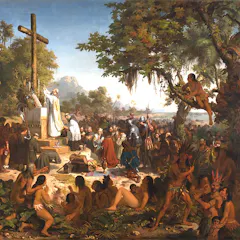
After five centuries of extraction, the Amazon region stands on the brink.
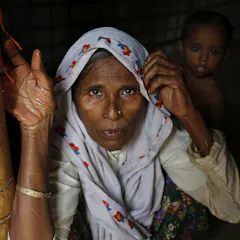
The current repatriation deal signed by Myanmar and Bangladesh fails to guarantee the safety and citizenship of the Rohingya people or address issues of justice for crimes perpetrated against them.
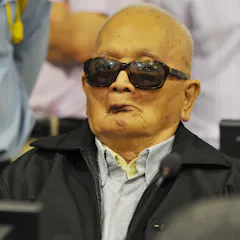
Does there need to be a conviction for a genocide to be recognised by the law?
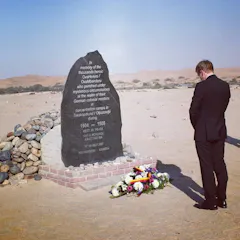
Germany praises itself for having declared a ‘special responsibility’ for Namibia since independence. But the relationship is viewed differently from Windhoek.
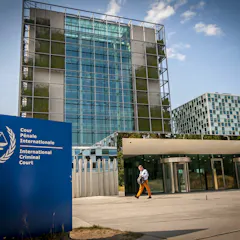
Cooperation with the Sudanese government to try al-Bashir could amount to legitimising those who themselves have been implicated in genocide
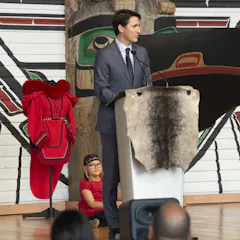
Political scientists concern themselves with ideas of democracy. Now that Canada’s PM has accepted the finding of genocide, this changes how and what political scientists need to discuss.
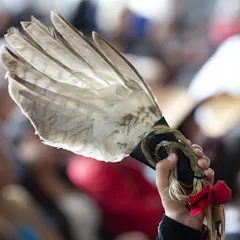
The final MMIWG report says that genocide does not refer only to the deliberate murder of some or all members of a particular social group. It also refers to the destruction of a group as a social unit.
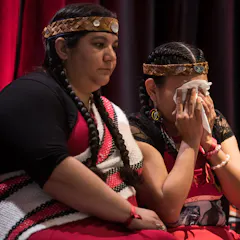
The attempt to grapple with genocide by the MMIWG commission is about more than simply applying international law to the facts. It’s also about decolonizing the international law of genocide itself.
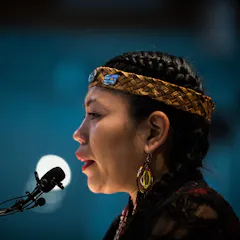
Understanding genocide as a process can help people grapple with the ongoing threat faced by Indigenous people in Canada, as named in the report into missing and murdered Indigenous women and girls.
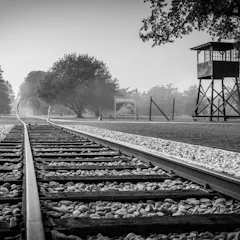
Social status and location affected Dutch Jews’ chances of survival.
Top contributors
-

Extraordinary Professor, Department of Political Sciences, University of Pretoria
-
Co-Director, Institute for Genocide and Mass Atrocity Prevention, and Professor of Public Administration, Binghamton University, State University of New York
-
Distinguished Professor of Anthropology; Director, Center for the Study of Genocide and Human Rights, Rutgers University - Newark
-
Professor of Law, University of Waikato
-
Professor in Political Science, Arnold Bergstraesser Institute
-
Associate Professor International Law, Roskilde University
-
Co-Director, Institute for Genocide and Mass Atrocity Prevention, Professor, Department of Philosophy, Binghamton University, State University of New York
-
Professor Emeritus, Department of Political Science, Wilfrid Laurier University
-
Postdoctoral Research Associate, King's College London
-
Professor, Lancaster Law School, Lancaster University
-
Assistant Professor of Law, Osgoode Hall Law School, York University, Canada
-
Professor Emeritus in Global Health & Humanitarian Affairs, University of Manchester
-
Professor of Anthropology, University of the Western Cape
-
Adjunct Professor of Mass Atrocities Prevention, Georgetown University; University of Connecticut
-
Associate Professor, Departments of History and Indigenous Studies, University of Manitoba