

Gender bias in health research is an ongoing issue, but health interventions that target women or men ignore gender-diverse people and create new areas of discrimination.
Articles on Gender medicine
Displaying all articles

New research shows women receive sub-optimal care after they have a heart attack and are twice as likely than men to die six months after the attack.

Like it or not, evidence now shows that men and women differ genetically far more profoundly that we previously recognised. An analysis from the 2017 winner of the Prime Minister’s Prize for Science.
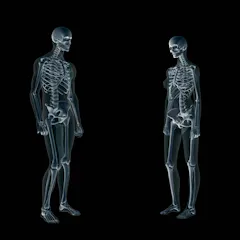
Fracture risk is higher in older women than men, but in adolescence the reverse is true. These differences mean our approach to managing bone health for men and women changes across the ages.

If something goes wrong in pregnancy, a boy baby is more likely to be born malnourished or stillborn than a girl. This may have an evolutionary basis.

Gender is important in defining susceptibility and exposure to a number of mental health risks. Gender can also explain differences in mental health outcomes.

Heart disease has long been considered a man’s condition. Our ignorance of its impact on women has led to gaps in outcomes for men and women suffering the same condition.

In medical training and practice, gender differences have at last become a vital part of diagnosis and treatment.

Women have evolved to have stronger immunity than men. But this comes with downsides -
women are more likely to have autoimmune diseases due to their “reactive” immune systems.
Top contributors
-
 Jenny Graves is a Friend of The Conversation.
Distinguished Professor of Genetics and Vice Chancellor's Fellow, La Trobe University
-
Professor, Molecular Immunology, WEHI (Walter and Eliza Hall Institute of Medical Research)
-
Professor and Matthew Flinders Fellow, Flinders University
-
Senior Lecturer, Adelaide University
-
PhD Candidate, School of Pharmacy and Medical Sciences, Adelaide University
-
Professor of Psychiatry, Monash University
-
Vice-Chancellor's Distinguished Fellow, UNSW
-
Associate Research Professor, School of Pharmacy and Medical Sciences, Adelaide University
-
Associate professor, Monash University
-
Visiting Academic, School of Pharmacy and Medical Sciences, Adelaide University
-
Head of Coronary Care, Concord Hospital, Sydney and Professor of Cardiology, University of Sydney
-
Cardiologist at Westmead Hospital; Director of the Westmead Applied Research Centre, University of Sydney
-
Associate Professor, Monash University
-
Lecturer in Health, Te Herenga Waka — Victoria University of Wellington
-
Research Fellow, University of Otago