

Your genes can affect how some medicines work. A reusable result could help doctors prescribe more safely, alongside other clinical evidence.
Articles on Medical care
Displaying 1 - 20 of 42 articles
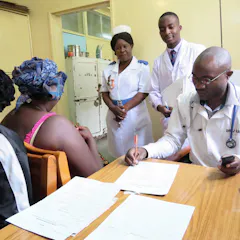
In 2019 Zambia introduced a National Health Insurance Scheme to help more people access healthcare and move the country closer to universal health coverage.

Uncertainty is common in medicine, and AI isn’t very good at navigating it.
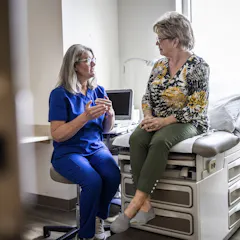
Specialist doctors have the highest incomes in the country and run the most profitable business. But patients often can’t afford their fees.

France may not have oil reserves, but it does have a well-oiled public health service comprising doctors, state-funded hospitals, strong state regulation and medical expenses that are reimbursed.

A new study from a Pittsburgh hospital finds that trauma patients recover faster when emergency medical teams have shared experience working together.

The agency’s budget has grown steadily since the 1960s, fueling an industry that creates lifesaving medicines and attracts billions of dollars in investment.

Mainstream medical organizations have criticized ‘restorative reproductive medicine,’ but some Catholics who follow church teachings consider it a welcome alternative.

COVID-19 highlighted the need to plan for medical emergencies, but most people still avoid the issue.

Women in Alberta with a high school diploma or less have nearly double the rate of hysterectomies than those with a university degree, raising questions about social disparities in medical care.

France’s approach to thermal medicine is more than just day at the spa. Instead, the country’s practice of “thermalism” is medically recognised and state reimbursed.

Obstetric and gynecological violence is care that is violent, disrespectful, abusive or neglectful. At its heart is the absence of consent, or consent without having received appropriate information.

A free birth is when a woman chooses to have a baby, usually at home, without a registered midwife or doctor in attendance. It’s much riskier than a planned home birth.

The COVID-19 pandemic put a spotlight on how fragmented medical care can be. Relational, or person-centered, medicine is attempting to provide solutions.

Research shows that focusing strictly on weight loss is not only ineffective in the long term, it can even be harmful and counterproductive.

From primary care to cancer screening and insurance coverage, gender-diverse people still face many hurdles to getting good medical care.

A bioethicist explains the four ethical principles that guide medical practitioners’ thinking about abortion, such as autonomy and justice.

Palliative care, often misunderstood, is not synonymous with hospice care.

Black American women have disproportionate HIV infection rates – in part because of systemic and structural racism in the health care system.
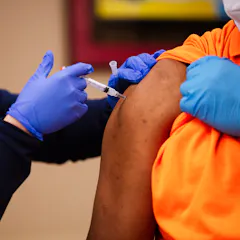
Medical innovations paired with innovative programs to get them to Black, Indigenous and Hispanic Americans can help close the health inequality gap.
Top contributors
-

Professor of Operations Management, Brock University
-
Doctoral Student, University of Florida
-
Lecturer in Human Resource Management and Management, RMIT University
-
Chair in Computing Science, University of Aberdeen
-
Professor of Operations Research, Brock University
-
Research Fellow, University of Aberdeen
-
Research Fellow, University of Aberdeen
-
Associate Professor of Operations Management, Brock University
-
Anaesthetist and researcher, SA Health
-
Policy Head, Research Assets, Sax Institute; Co-Director, Australian Primary Health Care Research Institute, Australian National University
-
Honorary Fellow, Early Childhood Education., Charles Darwin University
-
Associate Professor, Queensland University of Technology
-
Head of Coronary Care, Concord Hospital, Sydney and Professor of Cardiology, University of Sydney
-
Director of Centre for Rural Health, University of Aberdeen
-
Professor of Law, Villanova University