
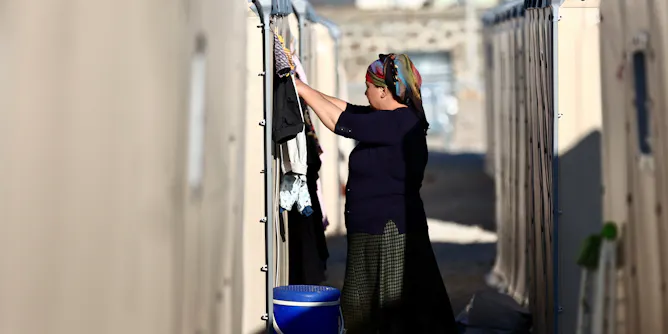
When government responses to a natural disaster do not address the specific needs and vulnerabilities of women and girls, women tend to lose trust in the institutions.
Articles on Gender inequality
Displaying 61 - 80 of 218 articles

We will waste the potential of the pandemic if we don’t address the inequalities — specifically the gender inequalities — that it exacerbated and revealed.
Days of international observance recognize challenges facing marginalized groups or society as a whole, draw attention to them and create unity and mobilization around those problems.

Summing up the gender pay gap in one number hides how inequality affects different groups of women.

Labels that reflect our gender, racial or age-specific biases can often undermine others.

The tools for reach and influence that the internet provides might be unprecedented. But people like Tate are simply pedalling the age-old sexist views that fuel gendered violence.

Men and women both offer unique, valuable contributions to company boards. To reap these benefits, organizations should continue to increase gender diversity.

PrEP enables adolescent girls and young women to protect themselves from HIV without having to convince a partner to use a condom at the time of sex.

The narrative of the Fourth Industrial Revolution is more aspiration than reality.
During spring and summer, as more people consider exercising outdoors, a trauma- and violence-informed approach to physical activity can help ensure equity, inclusion, safety and access.

Like other gender gaps, it is important to continue pushing past individual explanations and understand the gender gap in orgasms as a form of gender inequality.

When working from home, women struggled more than men to find time for the sustained effort needed to produce good, publishable research. Lack of thinking time is a problem for all knowledge workers.
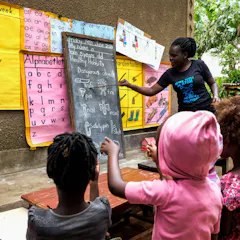
Emerging evidence shows that, for young people, the effects of COVID on education have already been devastating.

There’s an intricate interchange of culture, tradition and societal narratives in the way the vulnerable boys and girls experience school.

Women in cities tend to get more walking done, which is beneficial to both their health and the climate. Making streets safer for cycling would give them greater access to cities too.
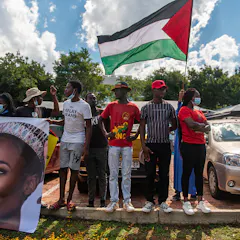
The objectification of women’s beauty measured by competitive processes, linked specifically to the body, strengthens patriarchal norms.
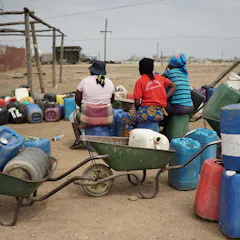
The provision of better health services and social grants has aided rural women’s progress in South Africa, but there are still tremendous needs to be met.
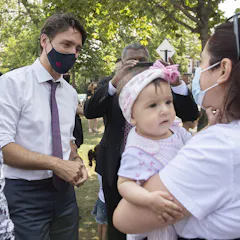
The recent federal election could be a game-changer for organizational gender inequality. The proposed Canada-wide child-care strategy could have a profound impact.
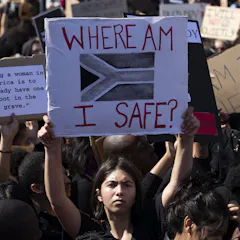
The problem of gender-based violence and femicide in South Africa is structural and fuelled by inequalities that transect race, class, gender, sexuality and age.
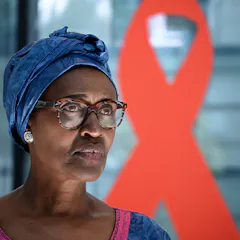
Greater urgency is needed in the response to pandemics, to end AIDS and to end COVID-19.
Top contributors
-

RBC Professor in Responsible Organizations and Full Professor, Concordia University
-
Professor of Political Science and Chair of the South African Research Initiative in Gender Politics, Stellenbosch University
-
DSTI/NRF Research Chair in Welfare and Social Development, University of Johannesburg
-
Professor of Law, The University of Melbourne
-
Pro Vice-Chancellor, Climate, Sustainability and Inequality and Director, Southern Centre for Inequality Studies, University of the Witwatersrand
-
Senior Lecturer in Creative Industries and ARC DECRA Fellow, The University of Melbourne
-
Senior lecturer, School of Psychology, Deakin University
-
Adjunct Professor, Curtin Law School and Curtin Business School, Curtin University
-
Chief executive officer, Grattan Institute
-
Professor of European Politics and Society, University of Bath
-
Associate Professor in Human Geography, University of Oxford
-
Associate Professor in Finance, University of Canberra
-
Director, XYX Lab, and Professor, Faculty of Art, Design and Architecture, Monash University
-
Assistant Professor of Politics and International Relations, University of Nottingham
-
Lecturer in Global Development Politics, University of York