
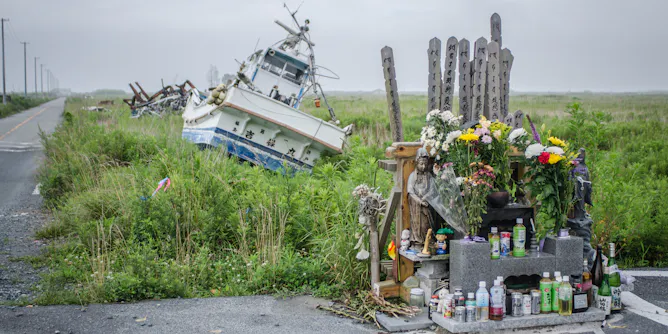
Those communities affected by the Fukushima Daiichi nuclear accident are having their resilience tested once again.
Articles on Fukushima
Displaying 21 - 40 of 67 articles
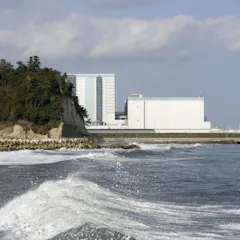
The latest earthquake off Japan’s east coast was an ominous reminder of the 2011 Fukushima disaster. But despite a technical hitch at one of Fukushima’s other reactors, there was no repeat this time.
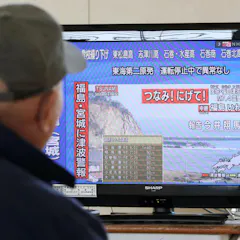
Japan’s response to a tsunami threat following major earthquake shows it has learned much from past events, including the deadly quake and tsunami that disabled the Fukushima nuclear power plant.
Even though three women have recently been appointed to powerful positions in Japanese politics, gender parity in the country is a long way off.
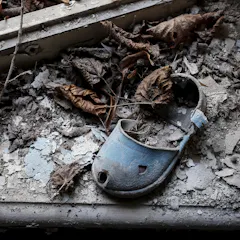
Chernobyl is already responsible for up to 5,000 cases of cancer in Europe.

The meltdown at the Chernobyl Nuclear Power Plant in 1986 exposed 572 million people to radiation. No other nuclear accident holds a candle to that level of public health impact.
Small nuclear reactors are one step closer to powering the UK’s future energy requirements.
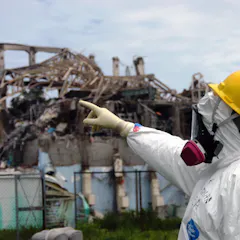
Estimating health impacts after a nuclear accident is more complicated than you might think.
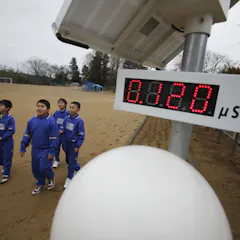
Remediation will never get radiation to zero in the area affected by the 2011 meltdown at the Fukushima-Daiichi nuclear power plant. Rather than safety, the conversation should focus on acceptable risk.
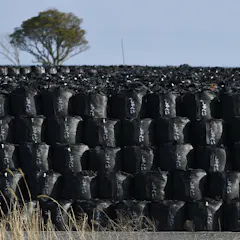
The nuclear operator was nowhere near adequately covered for the disaster. And it’s not just a Japanese problem.
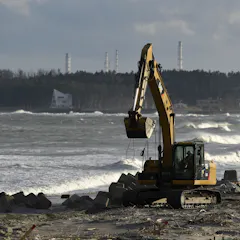
Scientists are setting Japan on the road to recovery, using data to protect against future disasters.
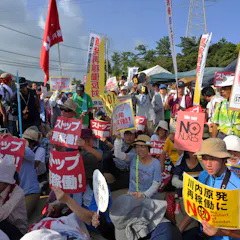
The restart of Japan’s nuclear reactors is good news for climate change. But there are still large psychological barriers to overcome.

Any nuclear weapon exchange or major nuclear plant meltdown will immediately lead to a global public health emergency. What can we learn from past events to help prepare?
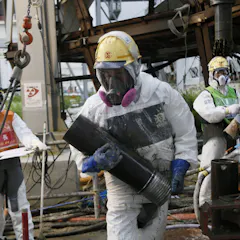
Is nuclear power worth it? No, says Mark Diesendorf – it’s never been a major world energy force, it has caused huge accidents, and its greenhouse emissions are higher than many people realise.
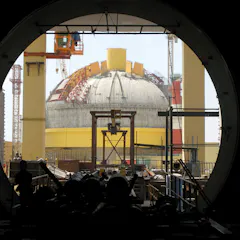
Australia’s prime minister Tony Abbott is set to sign a deal with India that will allow the export of uranium to the country. There are concerns that some of the uranium will be used to produce nuclear…
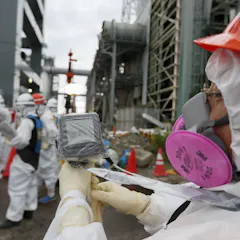
Engineers at Fukushima nuclear power plant have been trying to create a £185m ice wall to isolate contaminated water from mixing with groundwater. However, there has been a steady stream of news articles…
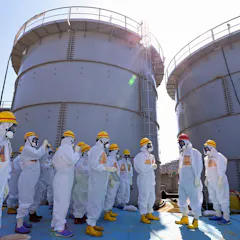
Many readers will know the name Mark Willacy, an Australian journalist who was the ABC’s North Asian correspondent for five years. On March 11, 2011, he would witness events that would redefine Japan as…
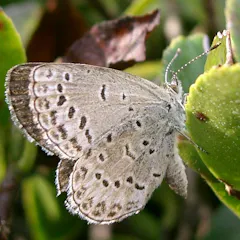
Irradiated plants taken from the evacuated areas around the stricken Fukushima Dai-ichi nuclear power plant have been reported to cause growth abnormalities and early death when fed to butterfly larvae…
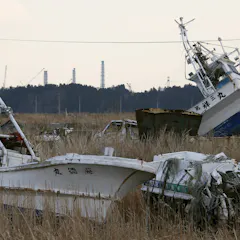
Three years ago today, Japan was hit by the strongest earthquake ever measured in that country – and Fukushima became an international by-word for disaster. Now, as Japan tries to put its past behind it…
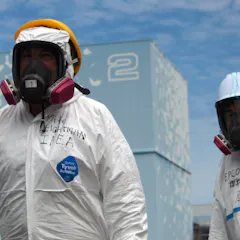
Modern safety engineering follows the aphorism, “there is no such thing as zero risk, only acceptable risk”. However, calculating chances and risk is a finicky process, especially when played out against…
Top contributors
-

Honorary Principal Fellow, School of Population and Global Health, The University of Melbourne
-
Honorary Professor of Tsunami Research, PANGEA Research Centre, UNSW Australia, UNSW
-
Honorary Fellow, The University of Queensland
-
Professor of Physics, University of Johannesburg
-
Timothy J. Jorgensen is a Friend of The Conversation.
Director of the Health Physics and Radiation Protection Graduate Program and Professor of Radiation Medicine, Georgetown University
-
Honorary Associate Professor, Nuclear Reactors and Nuclear Fuel Cycle, Australian National University
-
ARC Australian Laureate Professor, University of Tasmania
-
Directeur du Centre de recherche sur les risques et les crises et chercheur au sein du Collège des Sciences Navales, Mines Paris - PSL
-
Emeritus Professor, School of Environment and Science, Griffith University
-
Executive Director, Australia-Japan Research Centre, Crawford School of Economics and Government, Australian National University
-
Eugene M. Isenberg Chair in Integrative Studies, UMass Amherst
-
Honorary Fellow in Economics, The University of Queensland
-
PhD Student, Sustainable energy network planning & analysis, Adelaide University
-
Deputy Section Head Section of Environment and Radiation at IARC, International Agency for Research on Cancer (IARC)
-
University Professor Department of Health Policy & Management, University of Georgia