
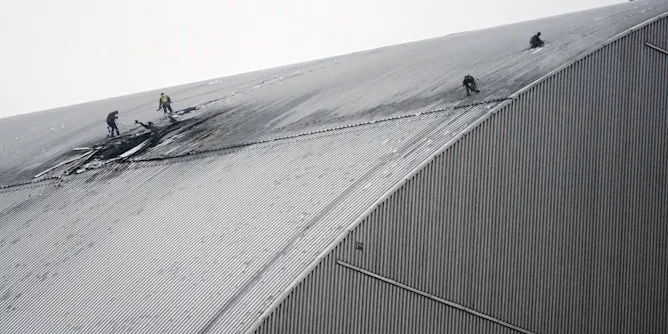
Radiation risk can be measured, understood and controlled in ways that keep people safe, including from contaminated foods.
Articles on Fukushima disaster
Displaying 1 - 20 of 28 articles

Memorials, monuments, preserved school buildings and found objects form part of a memory culture that keeps conversations about risk reduction going.

The Los Angeles fires may be the most costly natural disaster in US history. An expert on safety, risk reduction and complex systems calls for a blue-ribbon commission to analyze their causes.
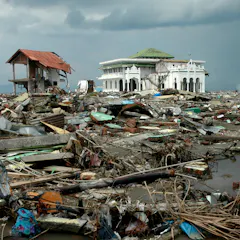
We need early warnings, stronger seawalls, and people who know the risks.
Fission and fusion are both nuclear reactions. But while one involves splitting atoms, the other involves fusing atoms together.

The first wind phone appeared in Japan in 2010, and the concept has since spread around the world.
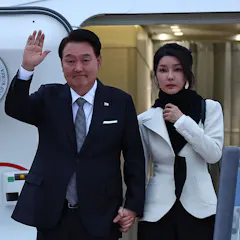
Heading into a parliamentary vote, there is very little gap between the ruling People Power Party and opposition Democratic Party – raising the prospect of a smaller party emerging as kingmaker.
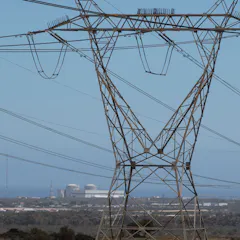
There are several risks in choosing the nuclear path – the biggest being financial.
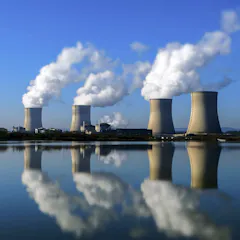
When Australia’s government and opposition argue over how to get to net zero emissions, nuclear power is the flashpoint. The argument against nuclear is stronger, but not for the obvious reason.
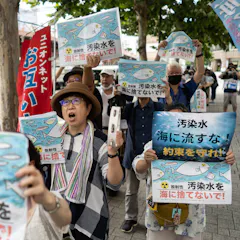
Japan’s much-criticised plan to release wastewater from Fukushima into the Pacific is underway – and many are concerned.

Suzume stands its ground in the large collection of films and literature coming to terms with the memory of Japan’s 2011 triple disaster.
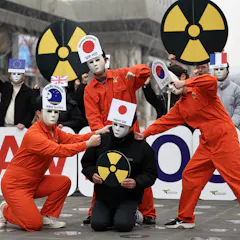
An independent assessment of Japan’s plan to release treated radioactive wastewater into the Pacific Ocean, nearly 12 years after the Fukushima nuclear disaster, finds it safe and reasonable.
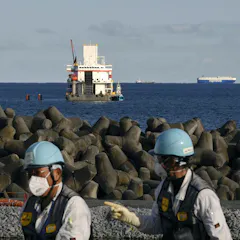
Japan’s Fukushima Daiichi Nuclear Power Plant is set to release radioactive wastewater into the Pacific Ocean – but the cause for concern is minimal.

It is impossible to label nuclear power as sustainable without taking into account the entire life cycle of a nuclear reactor and the industry’s exposure to environmental and geopolitical risks.
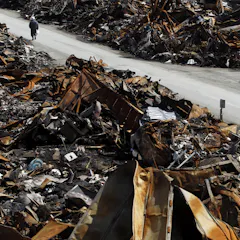
Japan has a long experience of hazards and disasters. Yet it does not seem like all lessons have been applied when it comes to COVID.
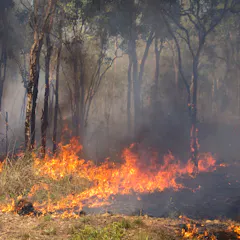
How to prevent future disasters by learning from the past. Listen to episode 21 of The Conversation Weekly podcast.
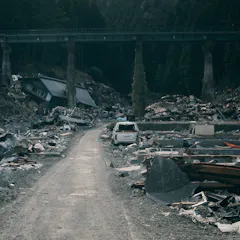
The fault line that ruptured causing the Fukushima disaster hadn’t done so for over 1,000 years.
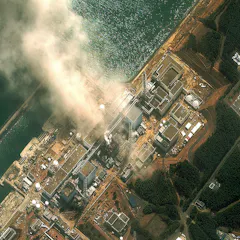
The rush to evacuate communities and abandon nuclear energy was understandable, but an error.
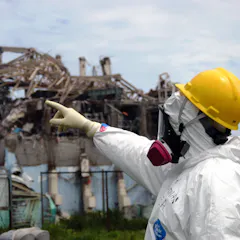
On the 10th anniversary of the Fukushima nuclear disaster, two experts explain why human choices are more important to nuclear safety than technology, and why the job is far from finished.
From Fukushima to a stalkers visual diary, art can be confrontational whether it’s far away or uncomfortably close
Top contributors
-

Associate Professor, International Research Institute of Disaster Science, Tohoku University
-
Professor of Engineering and International Relations, University of Southern California
-
Directeur du Centre de recherche sur les risques et les crises et chercheur au sein du Collège des Sciences Navales, Mines Paris - PSL
-
Rédacteur en chef, coordination internationale et technique, The Conversation France
-
Lecturer in Visual Communication, Southampton Solent University
-
Senior Lecturer in Healthcare Management, Anglia Ruskin University
-
Director of Energy Studies, University of Florida
-
Professor of Chemistry, University of Sydney
-
Associate professor, University of Saskatchewan
-
Maître de conférence (HdR) en ingénierie et sécurité industrielle, Centre de recherche sur les risques et les crises, Mines Paris - PSL
-
Lecturer in History, Coventry University
-
Associate Professor of Physics, Curtin University
-
Honorary Associate Professor, Nuclear Reactors and Nuclear Fuel Cycle, Australian National University
-
Lecturer in Japanese, University of New England
-
Sociologue, IMT Atlantique – Institut Mines-Télécom