
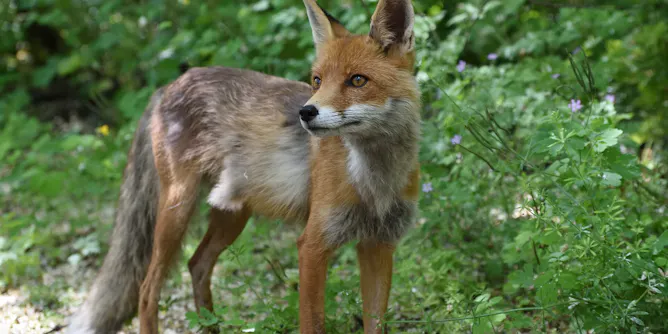
Endangered species are making their home in a massive wild zone around the derelict Chernobyl nuclear plant.
Articles on Nuclear accidents
Displaying 1 - 20 of 28 articles

Russia is committing ecocide in Ukraine, an act of war aimed at inflicting serious damage on the environment.
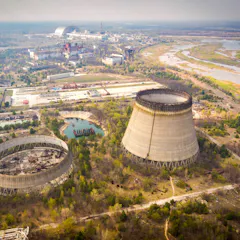
Zircons formed in the hellish Chernobyl meltdown are changing how geologists understand their favourite crystals.
The lost radioactive source may never be found.
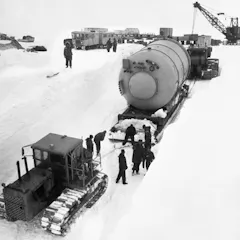
Nearly 60 years after a radiation-leaking reactor was removed from a US Army base on the Greenland ice sheet, the military is exploring portable nuclear reactors again.
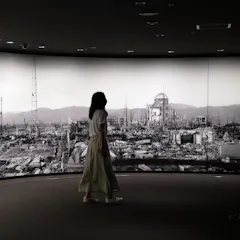
What if there was another nuclear incident in the US? A disaster management scholar looks back at the history of nuclear events to assess the risk.
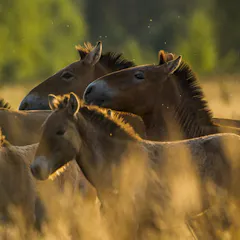
Wild horses native to the steppes of Asia live now in the Chernobyl Exclusion Zone (Ukraine), with an expanding population, 34 years after the nuclear accident.
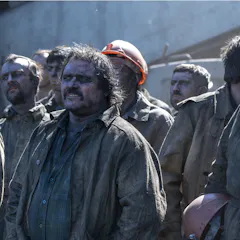
Most of the time, these operations were not urgent – unlike the one following this disaster that summoned some 600,000 people to the site of the worst nuclear accident of all time.
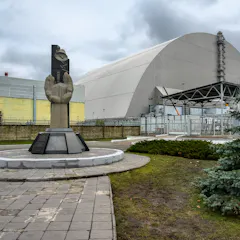
Documentary or drama? The HBO/Sky series is gripping watching, but sometimes facts make way for artistic licence.

The initial impact of the catastrophe on nature was important, but the exclusion zone has now become a natural reserve.

Three Mile Island, Chernobyl and Fukushima demonstrated the difficulty of managing a disaster at a nuclear power plant. What is the situation in France?
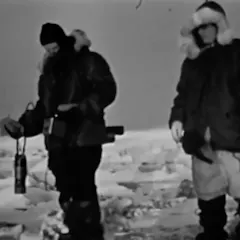
In what came to be known as the Thule incident, an American bomber crashed in Greenland, spreading radioactive wreckage across 3 square miles of a frozen fjord. Denmark was not happy.
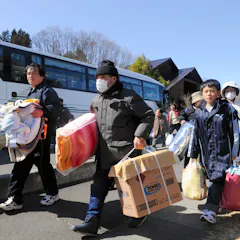
Letting Fukushima residents stay in their homes would have only cost them an average of three months’ life expectancy.
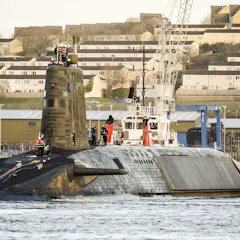
Reports of a failed Trident missile launch have all sorts of political and security implications – but they don’t necessarily spell catastrophe.
Given that cities may be home to 80% of humanity by the end of the century, they can only be sustainable if eco-friendliness is one of their core features.

CC BY-ND31.5 MB (download)
In part two of our podcast on rebooting, we explore what would happen if humanity was wiped out, take a look at a political comeback in France, and get a taste of a revamped US institution.
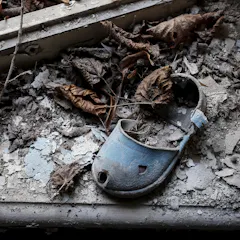
Chernobyl is already responsible for up to 5,000 cases of cancer in Europe.

The meltdown at the Chernobyl Nuclear Power Plant in 1986 exposed 572 million people to radiation. No other nuclear accident holds a candle to that level of public health impact.

How do we measure long-term impacts of nuclear accidents? Studies at Chernobyl and Fukushima show that radiation has harmed animals, birds and insects and reduced biodiversity at both sites.
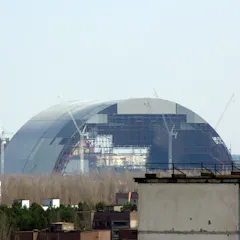
Engineers have devised an innovative way to dismantle Chernobyl’s reactor while preventing further radiation escaping.
Top contributors
-
 Timothy J. Jorgensen is a Friend of The Conversation.
Director of the Health Physics and Radiation Protection Graduate Program and Professor of Radiation Medicine, Georgetown University
-
University Professor Department of Health Policy & Management, University of Georgia
-
Profesor Titular de Zoología / Associate Professor of Zoology, Universidad de Oviedo
-
Research Associate, University of Oxford
-
Researcher in Security and Defence, the Policy Institute at King's, King's College London
-
Professor of Biological Sciences, University of South Carolina
-
Professor of Energy Policy, SPRU, University of Sussex Business School, University of Sussex
-
Professor of Politics & Co-Director, Aston Centre for Europe, Aston University
-
Professor of Computer Networks and Distributed Systems, Bielefeld University
-
Professor of Evolutionary Palaeobiology at the Milner Centre for Evolution, University of Bath
-
Senior Lecturer of Environmental Policy, Russian National Research University The Higher School of Economics
-
Honorary Associate Professor, UNSW
-
Visiting professor
-
Professor of Science Communication, University of Westminster
-
Honorary Professorial Fellow, University of Wollongong