
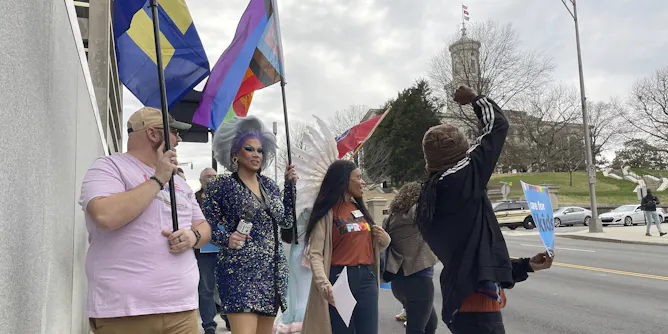
Free speech protections in federal law likely mean a new Tennessee law restricting or banning some drag shows will be found unconstitutional, says a First Amendment scholar.
Articles on Free speech
Displaying 121 - 140 of 393 articles

Cartoonists throughout the nation’s history have been jailed, beaten, sued and censored. But Scott Adams’ work is being rejected for what he expressed off the page.

A satirist posted a parody of a police Facebook page. He was arrested and jailed for four days. How far do free speech protections extend when it comes to satire about government?

The ability of professors to freely teach and write about controversial topics without fear of retribution is nothing new.

Calls have erupted to cancel two writers from Adelaide Writers’ Week – including from South Australia’s Opposition leader. Why? And are they justified? Denis Muller weighs the evidence.
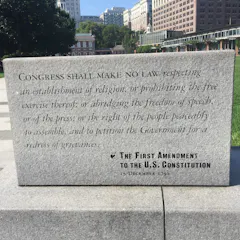
‘Congress shall make no law … abridging the freedom of speech.’ It’s often misunderstood, by many Americans. A constitutional scholar explains what it really boils down to.
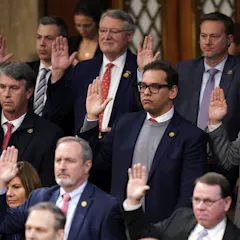
When candidates can get elected to Congress based on a mountain of lies they’ve told, is it time to reconsider whether such lies are protected by the First Amendment?

Many digital services currently hosted on social media platforms are critical to democracy. Governments must build alternative infrastructures that allow citizens to control their own data.
Bias-motivated attacks became a distinct crime in the 1980s. But police investigate only a fraction of the roughly 200,000 hate crimes reported each year – and even fewer ever make it to court.

‘America’s finest news source’ The Onion wants the US Supreme Court to answer some difficult questions: is satire protected speech, and if so, how do we define it?
We should be concerned about the sweeping discretion social media companies have over so much of our speech.

Universities should look to democratic innovations seen in society like ‘mini publics’ where citizens deliberate about critical issues in representative forums.
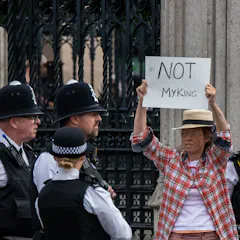
It’s understandable some people wish to publicly grieve the Queen and offer their respects to her and the monarchy. But those who disagree with the monarchy also have a right to freedom of speech.
Police may not have been justified in making arrests over breach of the peace and public order.
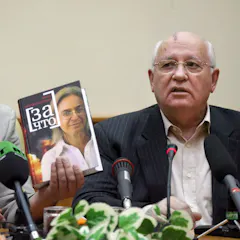
Glasnost was hailed as one of the Soviet leader’s great achievements. But it was a fragile freedom and soon overturned by Vladimir Putin.
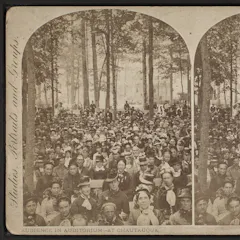
The Chautauqua movement symbolized progressive reformers’ hopes that public learning could create a healthy democracy.
The fatwa against Salman Rushdie has political significance beyond the threat to free speech.
Talk of the attack risks devolving into overly simplistic free speech debates.
For civilians, free speech is protected by the First Amendment. Not so in the US military, where the rise of political extremism has become a problem.
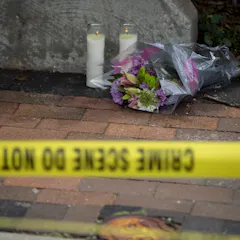
Since rap music emerged in mainstream culture in the late 1980s, politicians have derided its lyrics and imagery as violent. Over the years, rap has become an easy target to blame for violence.
Top contributors
-

Senior Research Fellow, Centre for Advancing Journalism, The University of Melbourne
-
Deputy Executive Dean and Associate Dean (Academic), Faculty of Humanities, Arts and Social Sciences, The University of Queensland
-
Deputy Director, Institute for Ethics, Governance & Law, Griffith University
-
Professor Emeritus of Communication and Rhetorical Studies, Syracuse University
-
Associate Professor of Philosophy and Law, Wayne State University; Institute for Humane Studies
-
Professor of Law and Humanities, Queen Mary University of London
-
Brechner Eminent Scholar in Mass Communication, University of Florida
-
Professorial Fellow, University of Canberra
-
Professor of Law; Kim Santow Chair of Law and Social Justice, University of Sydney
-
Programmes Manager and Research Fellow, the Bonavero Institute of Human Rights, Faculty of Law, University of Oxford
-
Professor of Law, University of Dayton
-
Stephanie A. (Sam) Martin is a Friend of The Conversation.
Frank and Bethine Church Endowed Chair of Public Affairs, Boise State University
-
Senior Lecturer in Political Theory and Philosophy, Queen's University Belfast
-
Emeritus Professor of Sociology, University of Technology Sydney
-
University Research Professor of Education, University of Kentucky