
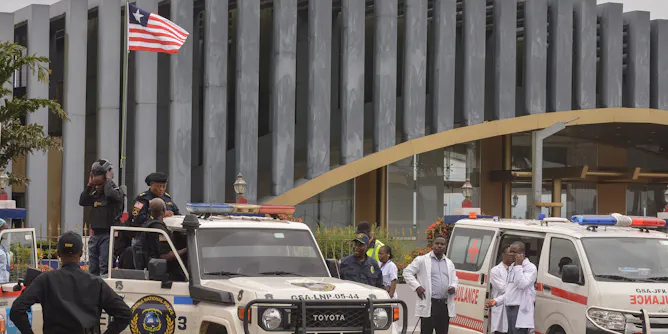
In the 1800s, West Africa became a focal point for efforts to remove Black people from America. The arrival of free people later gave the country its name.
Articles on US Supreme Court
Displaying 1 - 20 of 949 articles
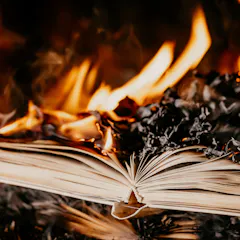
The battle over the novel offers a window into America’s long-running fight over what students should be allowed to read.
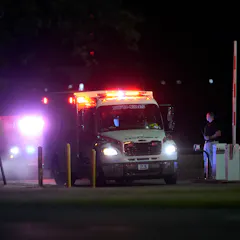
The constitutional prohibition of cruel and unusual punishment has shaped legal discourse around failed executions, but courts have not stopped states from attempting to execute the same person again.
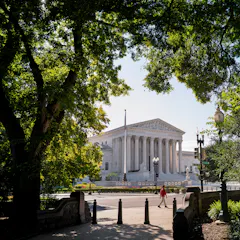
When the Supreme Court hears arguments in St. Mary Catholic Parish v. Roy, Colorado will defend antidiscrimination laws for the fourth time in 10 years.
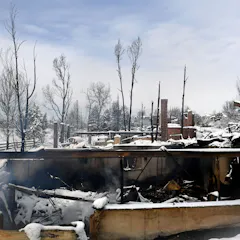
If fossil fuel companies misled the public about the dangers of their products, should they be required to pay for damages from climate-related disasters?
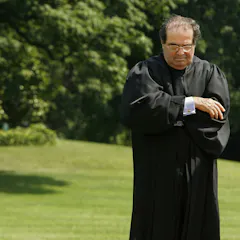
A majority of Supreme Court justices follow originalism, the mode of constitutional interpretation championed by late Justice Antonin Scalia. A former Scalia law clerk explains what originalism means.
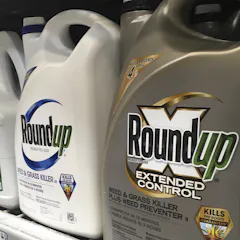
The U.S. Supreme Court’s decision on glyphosate relieves the sellers of hundreds of pesticides from obligations to warn customers about potential dangers.

The US legal system often fails to provide counsel for millions of Americans in civil cases. Generic and law-specific AI models can help address this justice gap of unmet legal needs.

A midterm election is coming. In the face of wavering voter trust – some of it driven by forces outside their control – what can election officials actually do to keep elections credible?
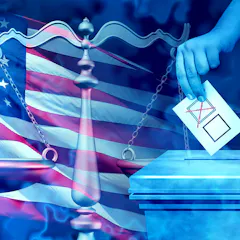
An election law scholar explains the president’s effort to dramatically limit mail voting ahead of the midterm elections – and why the court decided to block it.
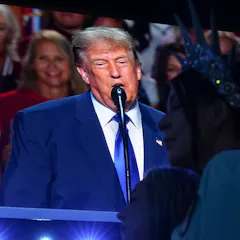
Bribery involves offering money to a particular person, but Trump did not make his $5,000 offer to any single voter or set of voters.

A CIA veteran explains that a polygraph campaign is not likely to eliminate leaks, but it may divert investigative energy from essential security priorities.
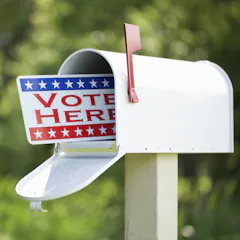
How will the Supreme Court justices approach the vote-by-mail case that concerns the most fundamental right in a democracy, the right to vote? A former federal judge weighs in on their task.

Congress never built a path from temporary status to permanent residence, leaving many people facing deportation with little recourse.

Uncle Sam may receive charitable gifts, but that doesn’t give presidents free rein on how to spend those funds.
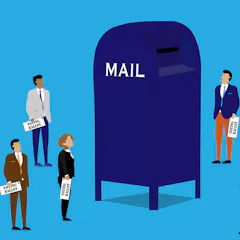
Will an Aug. 24, 2026, Supreme Court decision lead to chaos in the midterm elections? An election law scholar dissects the decision, its background and possible effects.

Uncle Sam may receive charitable gifts, but that doesn’t give presidents free rein on how to spend those funds.
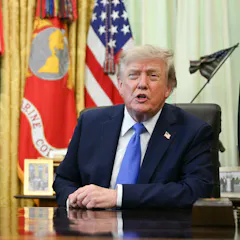
Two new executive orders take aim at aspects of birthright citizenship the high court did not address in its June 2026 ruling.
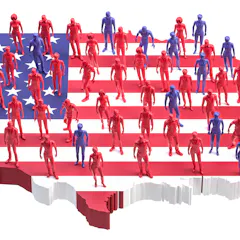
State constitutions play a growing role in American politics. But turning to such documents to recognize rights and liberties is not a new project – nor is it an entirely liberal one.
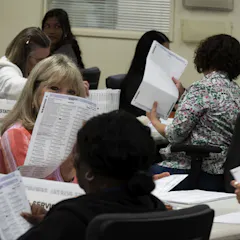
The U.S. Constitution gives states control of elections. An executive order by President Donald Trump aims to take away that control and limit mail-in voting. The Supreme Court will now weigh in.
Top contributors
-

Professor of American Civics, University of Tennessee
-
Joseph Panzer Chair in Education and Research Professor of Law, University of Dayton
-
William Nelson Cromwell Professor of Jurisprudence and Political Science, Amherst College
-
Professor of Legal Studies and Political Science, UMass Amherst
-
Professor of Law, University of Virginia
-
Associate Professor of Political Science, College of Charleston
-
Professor of Law, George Washington University
-
Associate Professor of American History and Politics, University of East Anglia
-
Associate Professor of Law, Quinnipiac University
-
Professor of Law Emeritus, Vermont Law & Graduate School
-
Professor of Law and Adjunct Professor of Political Science, Wayne State University
-
Professor of Law and Director of the Center for Professional Ethics, Case Western Reserve University
-
Professor of Law, University of Richmond
-
President, Dickinson College
-
Associate Professor of Philosophy and Law, Wayne State University; Institute for Humane Studies