
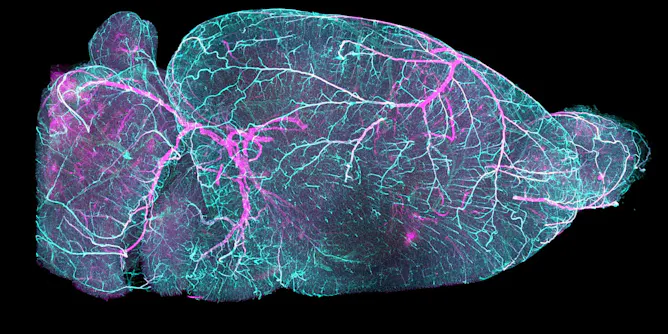
This little-known brain disorder is currently one of the biggest challenges facing medicine where age-related diseases are concerned.
Articles on France
Displaying 21 - 40 of 1018 articles

Researchers are advocating for an organisational memory to help companies fully encompass their past - the good, the bad and the ugly and avoid false narratives and cases of corporate amnesia.
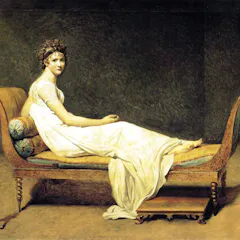
Influencer culture is not a thing of the past, and yet the movers and shakers of post-revolutionary France are proof that writing lifestyle columns and trending is a centuries-old pursuit.
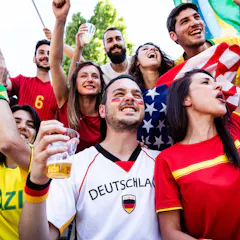
A study of over 6,000 posts by European football associations demonstrates that communities react very differently, depending on the type of diversity up for debate.
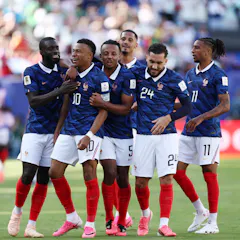
France’s ethnically diverse squad reflects the nation’s multi-faceted history: its colonial heritage, migration patterns and the French Football Federation’s training policy that dates back to the 1990s.
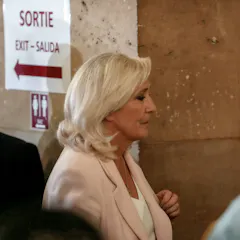
Marine Le Pen was found guilty of misusing EU funds, but her eligibility to stand in the presidential election remains intact. Luc Rouban, Emeritus researcher at Sciences Po’s CEVIPOF, weighs in on the verdict.

Two revolutions, two republics and the enduring power of national myths and civic festivities come to the fore in July as France and the US both celebrate national holidays.
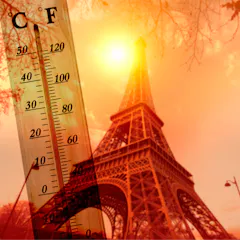
As people across Europe are having to acclimatise to an unprecedented heatwave, coordinated responses for tackling extreme heat need to come from the top, and there’s no time to lose.
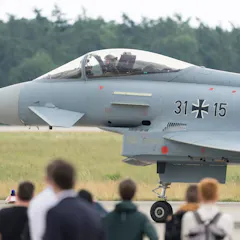
Understanding the coopetition mechanics behind Europe’s defence dilemma is vital and key for making much-needed headway.
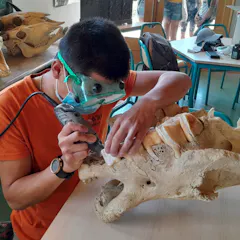
A recent study provides evidence that Neanderthals used rhinoceros teeth as tools.
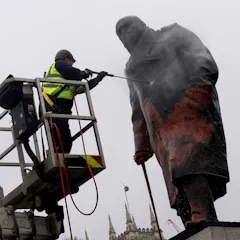
With Keir Starmer, the 5th British prime minister in ten years now sitting in an ejector seat, the nation is dreaming of a “new Churchill”, but is this the ideal role model for Britain’s current predicament?
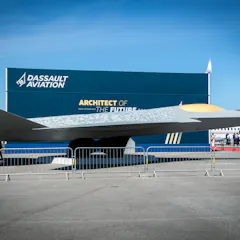
The collapse of the Future Combat Air System programme led by France and Germany highlights how diverging national interests and coordination difficulties are challenging European armament cooperation.

The programme got bogged down by disputes over leadership, workshare and intellectual property.

For the first time since 1974, the Haitian men’s team has qualified for the World Cup. This is their story.
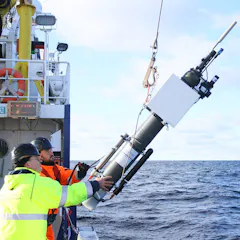
Defunding marine monitoring networks could jeopardise efforts to avoid losing track of the world’s oceans and their precious ecosystems, which drive the blue economy.

The leaders of Canada, France, India and Turkey are among those looking to leverage their ability to say ‘no’ to Washington.

In cardiology, sex and gender-sensitive diagnosis and treatment planning are crucial, but biological differences remain the missing link in AI-powered human virtual twin technology.

The housing shortage is a major concern for many EU citizens. A foresight study by more than 30 experts examines four ways affordable, low-carbon homes could emerge by 2040.
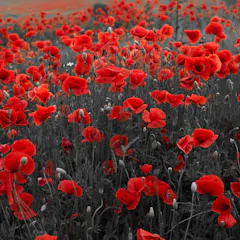
During and after WWI, thousands of American women acted as mothers for displaced French children. A war studies research fellow weighs in with considerations for teaching this vital, often overlooked part of transatlantic wartime history.
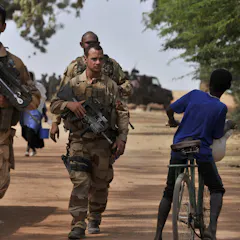
After more than a decade, external security intervention has left the Sahel region more fragmented, militarised and violent.
Top contributors
-

Associate Professor in French and Francophone Studies, University of Nottingham
-
Senior Lecturer in Politics, University of Bath
-
Senior Lecturer in International Relations and Politics, Aston University
-
Associate Professor, School of History, ANU / Chercheur Associé at the Centre d’Histoire de Sciences Po, Australian National University
-
Reader in French Studies, University of Warwick
-
Senior Lecturer in French and Francophone Studies, Bangor University
-
Associate professor in Politics and International Relations, Leeds Beckett University
-
Research Fellow at the University of the Free State, South Africa and Assistant Professor in the History of International Relations, Utrecht University
-
Historien, Université Clermont Auvergne (UCA)
-
Professor of Politics & Co-Director, Aston Centre for Europe, Aston University
-
Visiting Fellow, ANU Centre for European Studies and Department of Pacific Affairs, Australian National University
-
Professeur, UMR ISYEB (Institut de Systématique, Évolution, Biodiversité), Muséum national d’histoire naturelle (MNHN)
-
Dean of Programs, EM Lyon Business School
-
Professeur émérite de science politique, Sciences Po Grenoble, Auteurs historiques The Conversation France
-
Rédacteur en chef, coordination internationale et technique, The Conversation France