

When companies are hit by activists, managers of competitors may fear that their company’s reputation would suffer if their turn comes next.
Articles on Fossil fuel divestment
Displaying all articles

When people spend time thinking about what a sustainable world can actually look like, they’re more likely to work towards that outcome.

Many investors and corporations believe that accounting for the impact that businesses have on the environment, society as a whole and their own workforces benefits their bottom line.
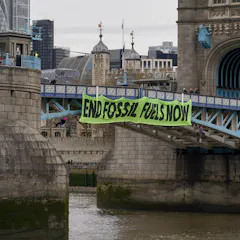
A managed fossil fuel phasing-out offers a chance for producers – including governments, corporations and unions – to negotiate the terms of a ‘just transition’ to renewable energy.

A just transition for coal mining communities has been talked about for decades. BHP’s decision this week shows it’s time to get serious.
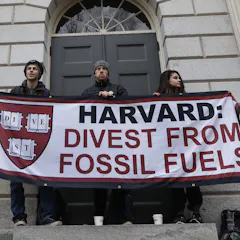
The announcement didn’t use the word ‘divest.’ A legal scholar explains why that shouldn’t matter.

By hiving off its oil and gas assets into a separate company, BHP is acknowledging it has no future in the carbon emissions business.

The groundbreaking legal case has changed the game for how Australia’s $3 trillion superannuation industry invests, and how members are protected from climate risk.

The AMP saga, and new research, shows the power of ‘shareholder voice’.

To limit warming to 1.5°C above pre-industrial levels, we’ll need to cut global emissions by 7.6% each year this decade. It’s difficult, but not impossible.

New Zealand’s government has hailed a fossil fuel ban for KiwiSaver default funds as part of its commitment to addressing climate change – but there’s scant detail about what exactly the ban covers.

We want to to believe in the power of shareholder activism, but reality is another thing.
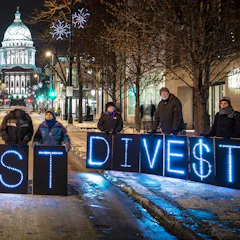
Divestment doesn’t affect global demand for oil, it just transfers power to state-run oil companies – which have higher carbon footprints. But there are other things we can do.
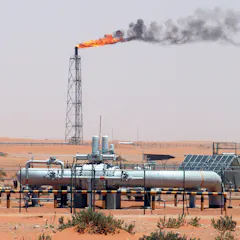
The Saudi government’s oil firm is set to become the world’s biggest public company, but investors are already betting against its long-term prospects.

A research team of youth climate activists and academics is examining how environmentalists learn about solidarity and justice.
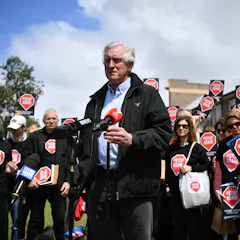
Anti-fossil fuel activism is gaining ground where previous climate campaigns have failed, largely because it resonates better with people.
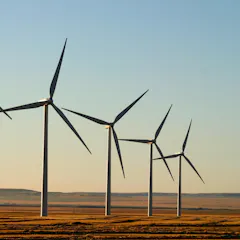
The idea of a renewable energy transition is exciting. It opens up space to think about enhancing democracy and decolonization.

The $4 billion that foundations are pledging to spend within five years amounts to less than 1 percent of what businesses and governments spend on global warming every year.
Top contributors
-

Associate Professor in Political Theory and Public Policy, UCL
-
Professor, Department of Geography & Environmental Studies, University of Regina
-
Assistant Professor of Management, College of Charleston
-
Research Fellow, American University School of Public Affairs
-
Assistant Professor of Finance, College of Charleston
-
Assistant Professor of Management, College of Charleston
-
Professor, Geography Department and School of Public Policy & Global Affairs, University of British Columbia
-
Scientia Professor of Economics, UNSW
-
Professor of Finance, Lancaster University
-
Associate Professor, Monash University
-
Associate Dean of Undergraduate Education; Associate Professor of Economics, University of New Hampshire
-
Associate Professor, School of Science, University of Newcastle
-
Reader in Comparative Politics, Queen's University Belfast
-
Assistant Professor of Education, University of Manitoba
-
Associate Professor and Head of School, School of Accountancy, Economics and Finance, Te Kunenga ki Pūrehuroa – Massey University