

When companies are hit by activists, managers of competitors may fear that their company’s reputation would suffer if their turn comes next.
Articles on Shareholders
Displaying 1 - 20 of 73 articles

In the old days, companies went public early to access cash to grow. These days, soon-to-be-public companies are already flush with cash from private finance.

In Nepal, local shareholding in a hydropower project changed how communities regarded it.

New research has found a trouble connection between share pledging by controlling shareholders and the likelihood of corporate misconduct.

An investigation reveals e-voting software used by numerous large-scale organisations isn’t as anonymous or secure as claimed.
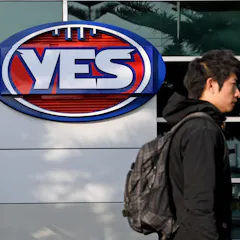
Shareholders accused companies that campaigned during this year’s Voice referendum of wasting time and energy that could be better used increasing their returns.

Five major banks are now in the crosshairs of the French financial prosecutor’s office. Of what are they accused? Here’s the lowdown.

The retailer has spent nearly $12 billion buying back its own stock since 2005, money that could have been used to invest in its business.

Completing the $44 billion deal, following six months of turmoil, may be the easy part.

The rules around climate-related financial disclosures are now being written. But the narrow definition of their target audience is a missed opportunity that can still be rectified.

Musk, who revived his bid for Twitter after the social media company’s board sued to enforce the deal, has been very critical of its board.

Incentives, like shareholder credits for corporate taxes paid, mean that shareholders want their corporations to pay taxes.

After sitting on the sidelines in 2020, US private equity is moving in for the kill.

When big investors like Blackrock get worried about their returns, they have the power and incentive to make fossil fuel companies take action.

The federal government should embrace Québec’s simplified incorporation model for small businesses. With some minor refinements, Québec’s regime can and should be deployed across the country

Emmanuel Faber was trying to pursue a form of stakeholder capitalism.

The groundbreaking legal case has changed the game for how Australia’s $3 trillion superannuation industry invests, and how members are protected from climate risk.

Already, under this year’s temporary provisions, the meetings have been shorter with fewer questions.
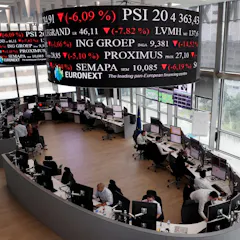
Financial theory shows that the dividend is economically neutral, although it helps to reassure the shareholder psychologically.

The AMP saga, and new research, shows the power of ‘shareholder voice’.
Top contributors
-

Associate Professor in Accounting, The University of Queensland
-
Professor of Company Law in Context, University of Birmingham
-
Professor of Law, UNSW
-
Emeritus Professor of Accounting, University of Essex, University of Essex
-
Lecturer in Finance, University of Manchester
-
Professor of Finance, International Institute for Management Development (IMD)
-
Associate Professor of Finance, UNSW
-
Lecturer, Accounting Discipline Group, University of Technology Sydney
-
Associate Professor, Accounting, University of Technology Sydney
-
Associate Professor of Finance
-
Head of HR Research Development, Institute for Employment Studies, Lancaster University
-
Professor of Law, Brooklyn Law School
-
Associate Professor of Political Science, University of Amsterdam
-
Honorary Associate Professor, The University of Queensland
-
Associate Professor of Finance, The University of Queensland