
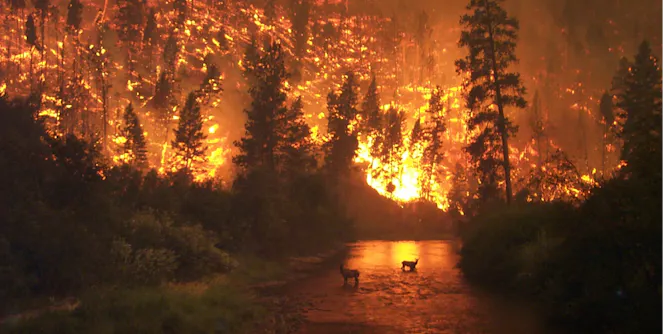
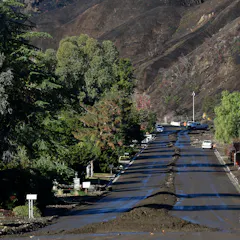
Fires here can affect meltwater timing and water quality, worsen erosion that triggers mudslides, and much more, as two scientists explain.
Articles on Forest fires
Displaying 41 - 60 of 96 articles
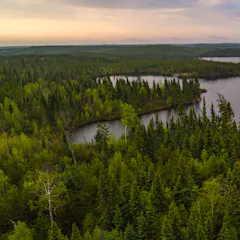
Canada’s boreal forest is affected by global warming, climate change and the frequency of forest fires.
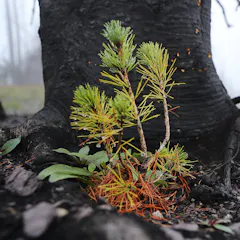
Over 50 fire ecologists across the Western U.S. took an unprecedented look at how forests in thousands of locations are recovering from fire in a changing climate. The results were alarming.
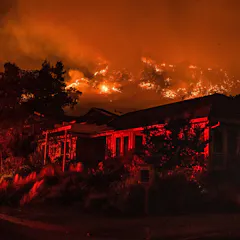
More homes are burning in wildfires in nearly every Western state. The reason? Humans.
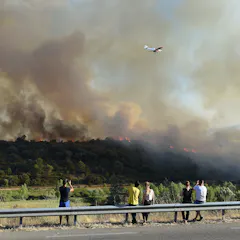
The forest fires that struck the Continent in the summer of 2022 were devastating, yet historical data shows that they were not ‘unprecedented’, contrary to media accounts.
Carbon offsetting is often met with scepticism, but a new report suggests that if correctly designed it can be an important part of the net zero transition.

Wildfires are intensifying, yet they’re one of the most poorly understood phenomena on Earth. New research shows that they can disturb both regional and global climate.
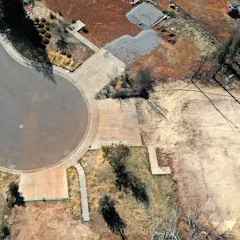
Managed retreat is already common in flood-prone areas, but what about in neighborhoods at high risk from wildfires? Here are four ways communities can pull back for safety.
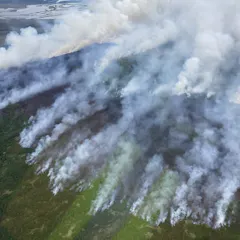
Fires today are hotter and more destructive, thanks in part to a warming climate.
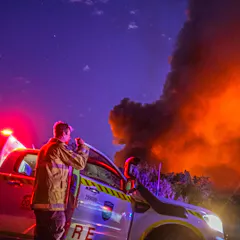
Australia’s forests have controlled their own own flammability since Gondwana. We must respect this natural process.
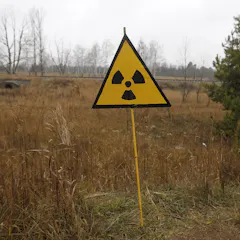
With Russian troops rolling through the Chernobyl exclusion zone in Ukraine, a biologist who studies wildlife in the area describes the risks of disturbing this radioactive landscape.
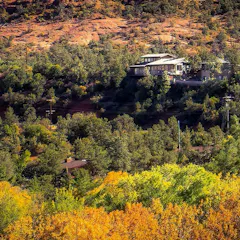
A new study maps vegetation’s fire risk across the West and shows where population in the highest-risk areas from California to Texas is booming.
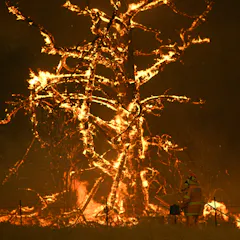
Forest fires in Australia are burning more land across more of the year than ever before, as climate-linked fire weather worsens.

Pollution from more frequent floods and wildfires – exacerbated by the warming climate – is threatening human health and poses particular risks to the brain.
An atmospheric scientist and sailplane pilot describes why large areas of burned land can produce clouds and rainstorms.
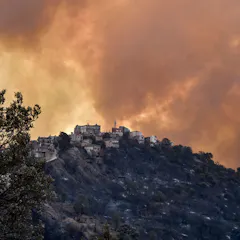
With a massive territory to manage, all actions taken - to prevent, to detect and to fire fight - aren’t enough.
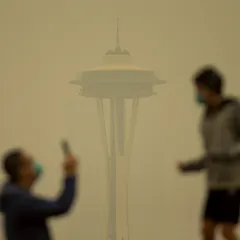
New research found that smoke from the Camp Fire in Paradise, California, carried high concentrations of lead. An environmental toxicologist explains what else you’re breathing and how to stay safe.
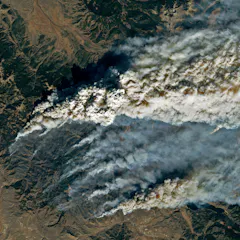
Scientists studied charcoal layers in the sediment of lake beds across the Rockies to track fires over time. They found increasing fire activity as the climate warmed.
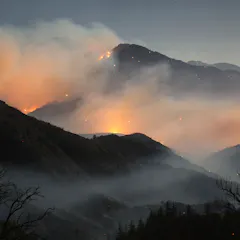
As the risk of fires rises in areas once considered too wet to burn, it creates hazards for mountain communities and for downstream water supplies.
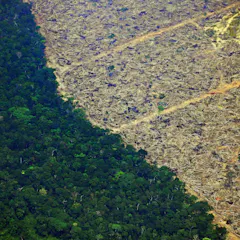
Because Brazil’s economic prosperity in the last two decades is increasingly linked to the Amazon’s good health, restoring the country’s economy is a critical first step toward ending deforestation.
Top contributors
-

Professor of Geography and Director of the Centre for Wildfire Research, Swansea University
-
Professor of Fire Ecology, University of Montana
-
Distinguished Professor of Ecology, Fenner School of Environment and Society, Australian National University
-
Research Associate, University of New South Wales, and Adjunct Associate Professor, Curtin University
-
Professor of Forest Protection, IPB University
-
Professeur écologie et aménagement forestier, Université du Québec en Abitibi-Témiscamingue (UQAT)
-
Research Fellow, Fenner School of Environment and Society, Australian National University
-
Research Fellow, Australian National University
-
Tenured Scientist (IMB-CSIC, Spain) & Honorary Associate Prof. (SU, UK), Swansea University
-
Chief Research Scientist, CSIRO Environment; Executive Director, Global Carbon Project, CSIRO
-
Professor in Soil-Landscape Modelling, University of Sydney
-
Associated Professor, Department of Geography, University of Minho
-
PhD Candidate in Political Science and International Relations, Queen's University, Ontario
-
Professeur-chercheur en écologie forestière, Université du Québec à Chicoutimi (UQAC)
-
Associate Professor of Civil Engineering, Boise State University; United Nations University