
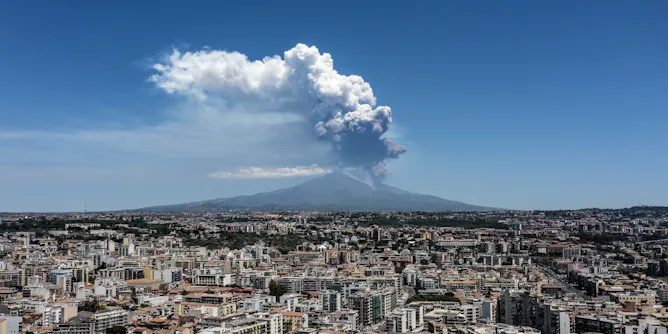
On an explosiveness scale from Hawaii to Vesuvius, the latest from Mount Etna was relatively mild.
Articles on Forecasting
Displaying 21 - 40 of 63 articles
A storm scientist explains what’s been driving deadly tornado outbreaks and how tornado season has been changing.

NOAA’s preseason forecast is the 30,000-foot view of what’s likely. Here’s what forecasters will be watching for over the weeks and months ahead.
A meteorologist explains three essential components of NOAA hurricane data collection that forecasters everywhere rely on yet are being targeted for federal cuts.
The absence of the early warning network will affect Kenya’s ability to address food insecurity.

NOAA operates fleets of satellites, sensors on airplanes and ocean-going buoys, as well as radar, providing the data used by weather forecasters nationwide – and freely available to anyone.
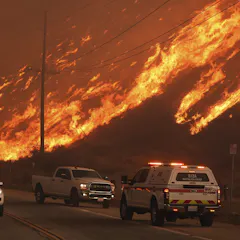
Fire spotters used to watch with binoculars from forest towers. Now, technology can help forecast fire behavior, but human experience is still essential.

A powerful storm hitting the West Coast combines these phenomena for a wet week of erratic weather, as a meteorologist explains.
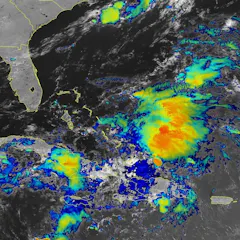
New techniques are helping forecasters spot potentially dangerous storms earlier than ever.
Cutting marketing spending helps businesses in the short term but often backfires in the long term. Research could help investors identify those bad decisions.
Option price swings show how much traders believe seasonal climate and weather matters for all sorts of industries, not just the ones you might expect.
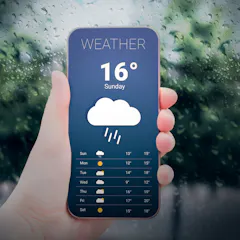
We crave certainty in our weather forecasts. But that’s only possible for big weather events such as cyclones and major storms. Everything else is probability.
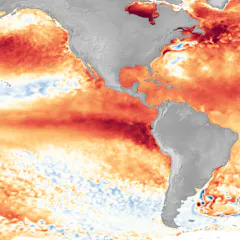
An atmospheric scientist explains how El Niño works, this year’s oddities and why this phenomenon doesn’t last long.
What are the odds of the end of humanity? There’s no real way to know.

Local communities need to be warned more clearly and effectively if there is a threat of a storm surge and of coastal flooding.
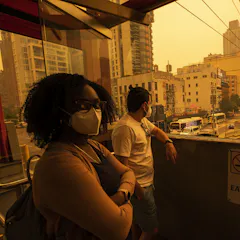
Air quality forecasting is getting better, thanks in part to AI. That’s good, given the health impact of air pollution. An environmental engineer explains how systems warn of incoming smog or smoke.
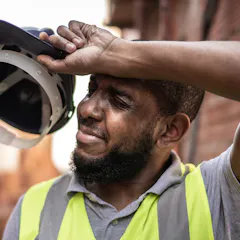
Three economists looked at years of temperature and death data and calculated the costs when forecasts miss the mark.

In the future, our computer may be able to produce long-term forecasts in areas such as climate change, bushfires and financial markets – while being cheaper and more accessible than supercomputers.

Researchers are turning to computer models, drones and other methods to improve tornado forecasting.
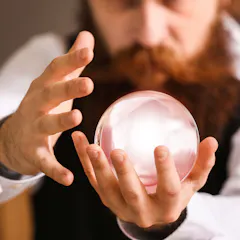
A sobering picture emerges from a study testing social scientists’ ability to predict societal change during the COVID-19 pandemic.
Top contributors
-

Meteorologist and Research Program Manager, University of Wisconsin-Madison
-
Adjunct Professor (Practice) in the School of Earth, Atmosphere and Environment, Monash University
-
Professor of Economics, University of Arizona
-
Climatologist, Australian Bureau of Meteorology
-
Professor of Operations Research, Brock University
-
Assistant Professor of Geology and Geological Engineering, Colorado School of Mines
-
Senior Climatologist, Australian Bureau of Meteorology
-
Project Scientist, University of California, Santa Cruz
-
Researcher in Ecosystem Dynamics, University of California, Santa Cruz
-
Senior Research Fellow, University of Oxford
-
Assistant Professor, Université Mohammed VI Polytechnique
-
Research Hydrologist, USDA-ARS, University of California, Berkeley
-
Professor of Floriculture and Ornamental Horticulture, Mississippi State University
-
Associate Professor of Atmospheric Science, Texas A&M University
-
Research scientist, University of Reading