
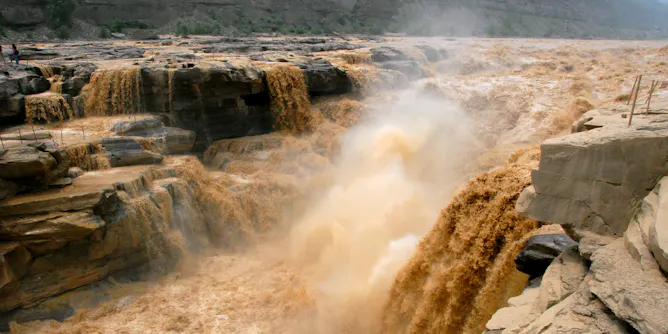
After cascading ecological catastrophes in the 90s, China spent 20 years seriously investing in sustainability. Now that effort is paying off.
Articles on Food sustainability
Displaying 21 - 40 of 53 articles
New research finds more CO₂ can actually make most plants smaller in the long-term - but the story for crops isn’t so simple.
Food chains are often so complex that it’s too hard to make the right choices.
Australians love canned tuna. Here’s our handy guide to finding the most sustainable options for you (and your cat).
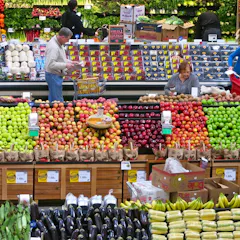
Would you be shocked by a supermarket without carrots, potatoes or broccoli, at any time of year? But harvesting in the off-season does serious damage to our soil.

In an extract from his new book, Tim Flannery explains how giant kelp farms could suck carbon dioxide from the air and store it in the ocean’s depths, while encouraging species like fish and oysters.
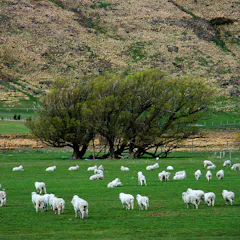
Australia feeds tens of millions, at home and abroad. But if our population doubles by 2061, as some projections suggest, we’ll need some smart strategies to keep those people fed.
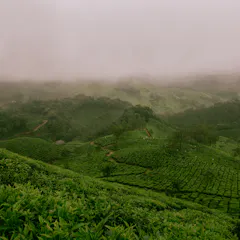
Sequencing the tea plant’s genome could help scientists breed new varieties that thrive in the degrading soil of tea farms.
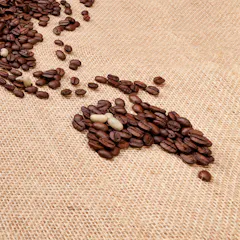
Your cup of coffee might cost the world more than you think, but a little knowledge goes a long way if you want to make an eco-friendly choice.
We’re in danger of losing the health benefits of soils faster than they are replaced.
Pet food is a multi-billion-dollar industry that consumes huge amounts of animal protein. A veterinary nutrition specialist explains how to feed dogs and cats healthily and sustainably.

Is your New Year’s resolution to cut your food waste? The answer could be closer than you think.
Free range, sow stall free - you’ll find a number of different types of ham on the market this Christmas. But what do they mean?
Methane concentrations in the atmosphere are growing at a faster rate than any time in the past 20 years.
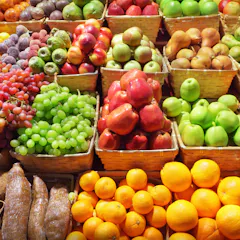
The food we eat is responsible for almost a third of our global carbon footprint.
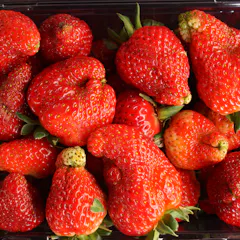
Australia’s city foodbowls are an important part of the nation’s food supply, but they’re under increasing pressure from growing populations.
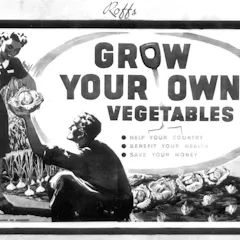
Can suburban gardening and poultry-keeping meaningfully contribute to resilient and sustainable food systems? We look to the past to find out.
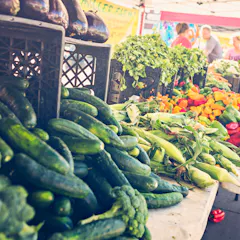
Being a “locavore” means choosing food that is grown locally, and is one way that you can play a role in feeding more people in a rapidly changing world.
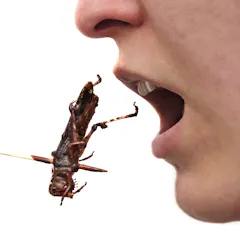
Humans have eaten insects for centuries, but western diets seem to have lost the taste for them.

In a warming world with a growing population and dwindling resources, we can no longer afford to eat food that’s bad for both our health and the environment.
Top contributors
-

Professor, School of Health Sciences, University of Newcastle
-
Associate Professor in Food Systems, The University of Melbourne
-
Associate Professor, Institute for Sustainable Futures, University of Technology Sydney
-
Emeritus Professor, School of Environment and Science, Griffith University
-
Director, Melbourne Sustainable Society Institute, The University of Melbourne
-
Professor, The University of Melbourne
-
Lecturer, University of Wollongong
-
Research fellow, The University of Melbourne
-
Research Associate, University of British Columbia
-
Associate Professor, Creative Writing, University of Wollongong
-
Professor, University of British Columbia
-
Food Systems Research and Partnerships, The University of Melbourne
-
Dean and Professor of Marketing at School for Business and Society, University of York
-
Adjunct Lecturer, Environment and Agriculture, Curtin University
-
Research Director, Institute for Sustainable Futures, University of Technology Sydney