

A survey shows people with healthy eating habits tend to waste less food than those who focus on choosing ethical and environmentally friendly products.
Articles on Food sustainability
Displaying 1 - 20 of 53 articles
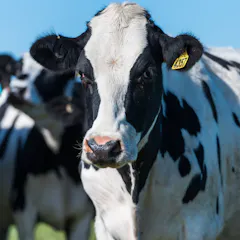
Most dairy farmers surveyed said they faced major challenges, including rising costs, drought and floods. Long working hours and low incomes created mental strain for 69% of farmers or their families.

The free ecoSwitch app takes the guesswork out of sustainable food choices, empowering consumers to take matters into their own hands.

School food can connect people powerfully to their local lands, resources and economies, and be a tool towards reconciliation with Indigenous communities.

Human health depends on having a liveable planet and this is inextricably linked to food systems.
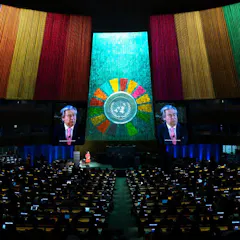
Our research shows the world is not on track to achieve any of the Sustainable Development Goals. But with decisive action, we can still achieve a fairer, more sustainable and prosperous future.

A guaranteed basic income is a promising tool for contributing to sustainability and justice across agriculture and fishing sectors.

Continually innovating disrupts processes that make it difficult for restaurants that champion it to be consistent and efficient.

Gardens require huge labour, and outcomes like health, well-being or food security are affected by systemic barriers people face in cities and schools.

Substituting one food for another – no matter the reason – may not result in a healthier choice.

Food security has six dimensions: availability, access, stability, utilisation, agency and sustainability.
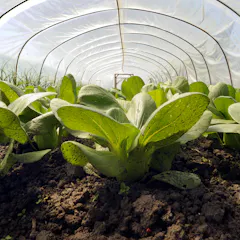
A new report calls for a greener and fairer food system in England.
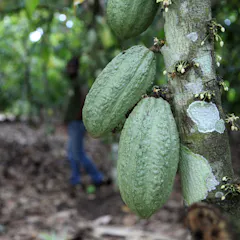
Côte d'Ivoire and Ghana produce almost two-thirds of the world’s cocoa, and face high rates of deforestation. But the cocoa industry could make changes to become more sustainable.
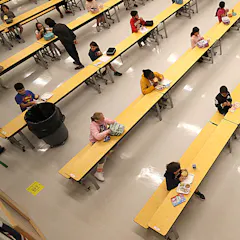
Students are spreading out when they eat and using more single-serve packaging. Future changes to school meals could be less visible.
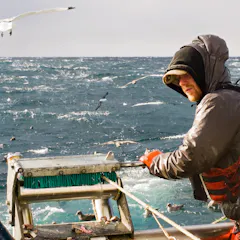
Agreements between the EU and its partner countries for fishing rights could be a great vehicle to push sustainability but more must be done before we can say they are doing that.
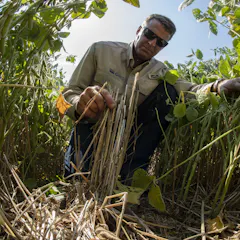
There’s growing interest in making the US food system more resilient and flexible, but soil – the origin of nearly everything we eat – is often left out of the picture.

Urban gardening is a departure point for learning about land and relationships, as well as food, consumer culture and social activism.

Most consumers underestimate the greenhouse emissions associated with different foods. But environmental labels, similar to existing nutrition information, can help us make lower-impact choices.
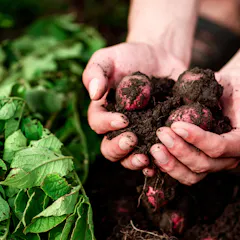
The thin layer of soil on our planet’s surface ultimately sustains us all, but it’s a finite resource. With a growing global population, perhaps it is time to start looking for alternatives.
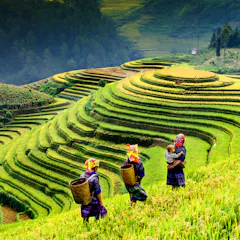
A new analysis explores what making space for nature means for our global food production systems.
Top contributors
-

Professor, School of Health Sciences, University of Newcastle
-
Associate Professor in Food Systems, The University of Melbourne
-
Associate Professor, Institute for Sustainable Futures, University of Technology Sydney
-
Emeritus Professor, School of Environment and Science, Griffith University
-
Director, Melbourne Sustainable Society Institute, The University of Melbourne
-
Professor, The University of Melbourne
-
Lecturer, University of Wollongong
-
Research fellow, The University of Melbourne
-
Research Associate, University of British Columbia
-
Associate Professor, Creative Writing, University of Wollongong
-
Professor, University of British Columbia
-
Food Systems Research and Partnerships, The University of Melbourne
-
Dean and Professor of Marketing at School for Business and Society, University of York
-
Adjunct Lecturer, Environment and Agriculture, Curtin University
-
Research Director, Institute for Sustainable Futures, University of Technology Sydney