
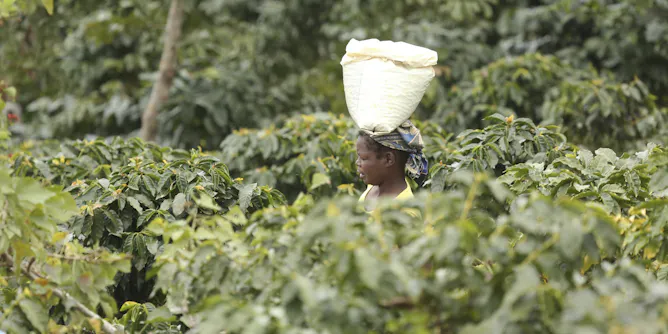
The COVID-19 crisis highlights the importance of supply chains. But even with the increased recent attention, most supply chains remain murky. Consumers can play a key role in lifting that cloud.
Articles on Food supply
Displaying 21 - 40 of 55 articles
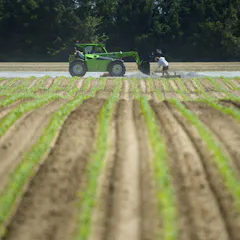
COVID-19 has given society a teachable moment, and we should now establish the policies, programs and technologies to ensure our food system becomes stronger, more resilient and more equitable.
Using innovative technologies like Bitcoin and automation can help protect our food supply chains from disruptions like the one caused by the current coronavirus pandemic.
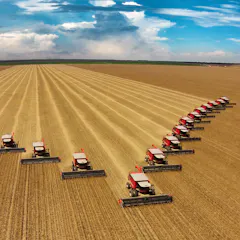
For the second time this century, crises have led to calls to transform our global food system. We can start with restructuring the global food trade so that it complements local food systems.

After the brief shock of food insecurity in the form of empty supermarket shelves, we might start thinking about having a Plan B and C based on local food sources and shorter supply chains.
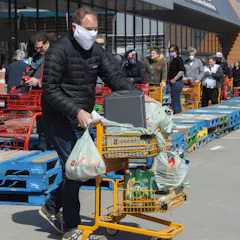
Canada’s food system has bent but not broken in the face of unprecedented demand during the COVID-19 pandemic. We will continue to have enough food available.
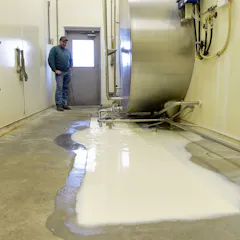
It’s not as easy as you might think to divert food intended for schools and restaurants and send it to grocery stores or even food banks.
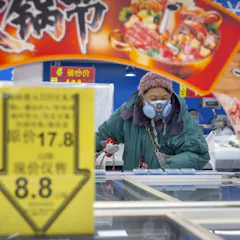
Decades of planning on food security and a food reserve system kept China’s urban populations fed during the coronavirus outbreak, showing the significance of a resilient local food system.
By shopping responsibly and thinking of others, consumers will play a big part in ensuring everyone can buy what they need.
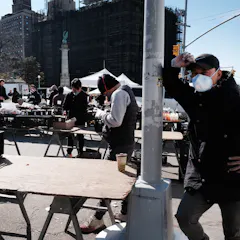
Small-scale farmers are likely to be hit hard if open-air markets close due to coronavirus fears. This could have a longer-term impact on the food supply chain.
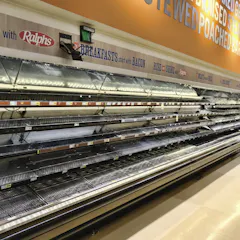
COVID-19 is showing us we must work collectively to put resilience alongside efficiency as the primary drivers for the systems we depend upon each and every day for food.
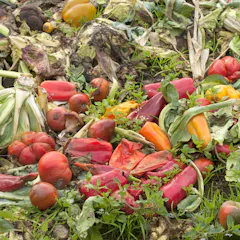
Business minds using up leftovers.
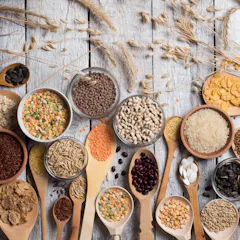
Combining and fermenting readily available indigenous African crops can help counter malnutrition on the continent.

Globalization is making it harder to identify and trace outbreaks of foodborne illness. Technology can help, but consumers may also have to rethink their food choices.

The global population will top 9.5 billion by 2050 – but cities could play a major role in making sure everyone has enough to eat.

A new analysis explores what making space for nature means for our global food production systems.

The heatwave is unlikely to cause the price hikes of 1976 for a number of reasons.

A new report highlights direct and indirect impacts of climate change on physical and mental health.
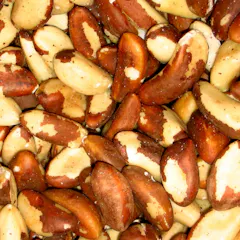
Is the 61% spike in the price of Brazil nuts this year because we’re going nuts for nuts?
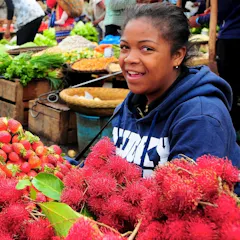
Global food system issues can be traced to colonial history. It’s time food production became more sustainable so that it meets the needs of people - equally.
Top contributors
-

Director of the Arrell Food Institute and Professor in the Dept. of Geography, Environment and Geomatics, University of Guelph
-
Senior Lecturer, School of Engineering and Built Environment, Griffith University, Griffith University
-
Professor of Geography and Environmental Systems, University of Maryland, Baltimore County
-
Colorado State University
-
Honorary Research Fellow, University of Liverpool
-
University of Washington
-
PhD Candidate, School of Social Sciences, University of Tasmania, and Senior Research Consultant, Institute for Sustainable Futures, University of Technology Sydney
-
Professor of Agri-Environmental Economics, University of Kent
-
Honorary Research Fellow in Agrarian History, University of Leicester
-
Aquaculture scientist, CSIRO
-
Associate professor, Global Change Institute, University of the Witwatersrand
-
Principal Research Scientist, CSIRO
-
Professor Emeritus, Oceanlab, University of Aberdeen
-
CEO, Crops for the Future Research Centre and Professor of Global Food Security, University of Nottingham
-
Chief Research Scientist, Food Systems and the Environment, CSIRO