

Food insecurity is an issue felt particularly acutely by Inuit across Northern Canada. Culturally appropriate food systems may be the solution.
Articles on Food security
Displaying 101 - 120 of 550 articles

The share of low-income US families who sometimes or often didn’t have enough food to eat fell from 24.5% to 22.5% between late April and late July of 2020, a research team found.
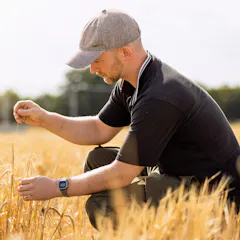
Farming has made crop plants reliant on synthetic fertilisers, but we can reactivate their ability to engage with beneficial microorganisms and make them more independent.
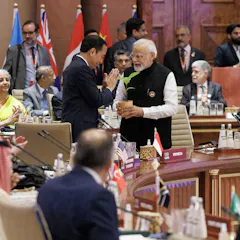
The G20 has its critics, but an expert on international politics explains why it still performs a useful function – particularly in this period of great geopolitical divisions.
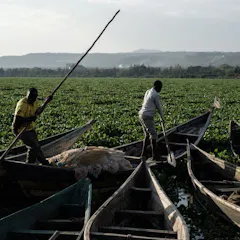
The new report on alien invasive species doesn’t just concentrate on problems. It also offers solutions.

African must make its collective voice heard on Russian mercenaries in African conflicts.
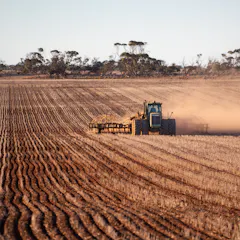
The new El Niño is unlikely to significantly increase global food prices, but some parts of the world will feel the pain.
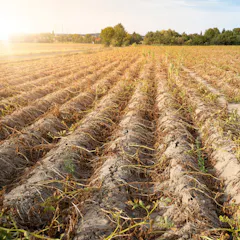
Disturbing news about the potential for widespread crop failure as the climate changes should send shockwaves through governments around the world. Time to rethink global trade and food security.
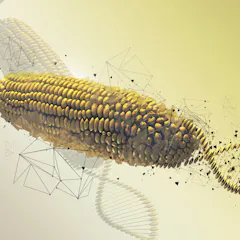
Genetically modified crops are increasing yield and food security in developed countries, but in Africa, a lack of adoption is limiting success.
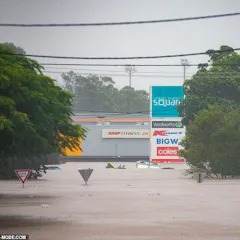
When the roads flooded around Lismore, it left supermarket shelves empty for months. Keeping everyone fed took a huge community effort. Now we need to make food supply secure.

If greenhouse gas emissions continue at a high rate, breadbaskets of Europe and North America will see a 50% chance of a flash drought each year by the end of this century.

Australia is the last continent to be invaded by the dangerous honey bee parasite, and has an opportunity to be the first to eradicate it.

Biological and chemical substances are the most common food contaminants and account for over 200 food-borne illnesses.
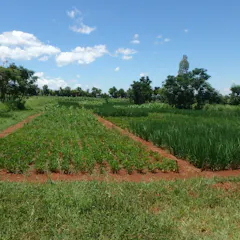
Growing legumes could at once provide African farmers with fertilisers and food crops. However, researchers warn this is not a one-size-fits-all solution.

Food forests are urban oases that pack a lot into small spaces, including food production, local cooling and social connections.

While recuperating heat from data centres to ease greenhouse energy demands is better than letting it go to waste, we must not overlook the complex implications of these two newly merging industries.
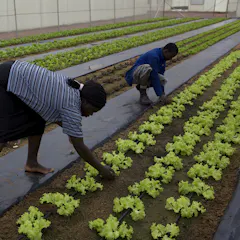
Urban farms can work in developing countries if farmers and architects are aware of conditions that favour food production in built spaces.
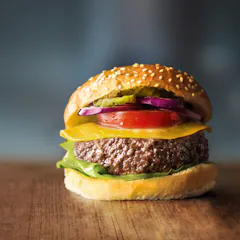
Growing meat in vats could help us prepare for climate change - and curb the environmental damage done by traditional meat. But only if we can scale it up.

A drop in food prices might immediately address the lack of economic access to food but will not address the root causes of food insecurity.
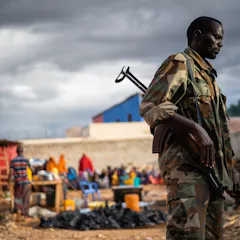
The negative effects of conflict on human capital – particularly nutrition, health and education – are larger than commonly thought.
Top contributors
-

Senior Fellow, Department of Agricultural Economics, Stellenbosch University
-
Associate Professor in Food Systems, The University of Melbourne
-
Research Fellow, Tegemeo Institute, Egerton University
-
Associate Professor, Department of Entomology; African-American Studies, University of Illinois Urbana-Champaign
-
PhD, Political Economy, Macquarie University
-
Professor of Food Policy, City St George's, University of London
-
Researcher in sustainable food systems, The University of Melbourne
-
Director of the Arrell Food Institute and Professor in the Dept. of Geography, Environment and Geomatics, University of Guelph
-
Network and Research Manager: ARUA – UKRI GCRF FSNet Africa, University of Pretoria
-
Professor in Food Security; Head of the Department of Agricultural Economics, Extension and Rural Development, University of Pretoria
-
Emeritus Fellow in Plant Biochemistry, University of Westminster
-
Professor of Social Development Studies, University of Johannesburg
-
Food Systems Research and Partnerships, The University of Melbourne
-
Adjunct Professor, Curtin Business School, Curtin University
-
Climate Scientist and Researcher, University of Cape Town