
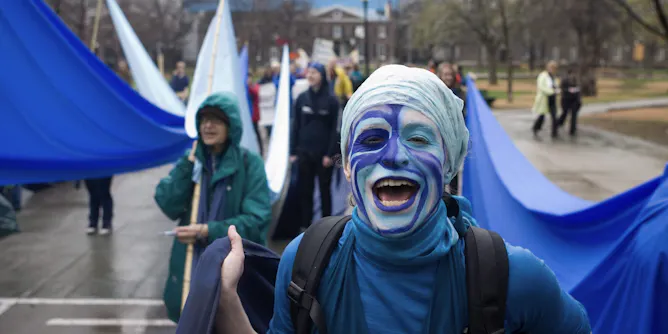
The declared end of Flint, Mich., contaminated water crisis echoes similar claims worldwide. Evidence shows victims of past and ongoing water crises, especially Indigenous people, continue to suffer.
Articles on Flint water crisis
Displaying 21 - 40 of 48 articles
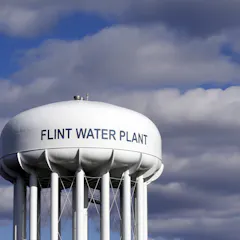
Congressional inability to devise a health care plan for the US is not the only impediment to good health care. Contaminated water pipes and old bridges are also roadblocks.
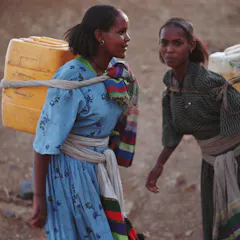
According to a new UN report, more than two billion people around the world do not have access to clean, safe water in their homes. Most of the work of getting water falls to women and girls.

Hey big spender – what will your project actually do for the public?
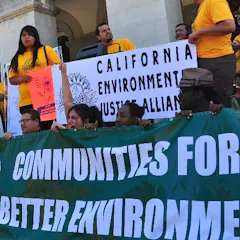
How could green groups attract more diverse volunteers? Maybe they could put more time and energy into outreach toward the people most affected by environmental injustices.
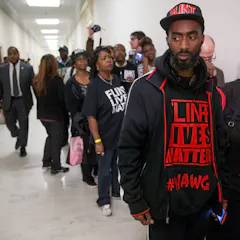
Addressing social and health inequalities from pollution is no longer a priority at the EPA. What did the Office of Environmental Justice do and what will happen if it’s shut down?
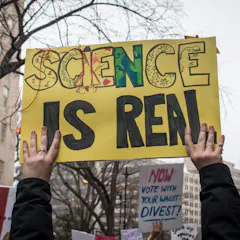
In the wake of the Flint water crisis and with a new notably anti-science president, U.S. scientists are reevaluating how to navigate the tension between speaking out and a fear of losing research funding.

Scientists must bear some responsibility for the post-truth era and the current crisis in democracy.
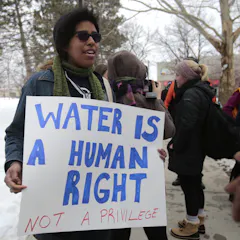
The hostility of Scott Pruitt, Trump’s nominee to head the EPA, toward climate change rules is well-known. But his anti-regulatory stance could easily set back years of work on environmental justice.
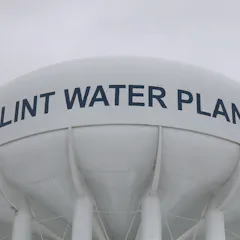
High blood lead levels in children in Flint, Michigan were obscured in part because of an outdated method of studying public health – the ZIP code. Here’s why we need to make use of a better way.
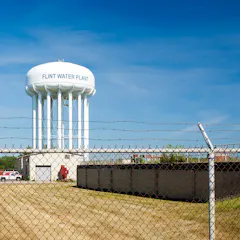
By tapping into diverse data sources in Flint, researchers can predict vulnerable homes and even have found that home water service lines may not be the biggest contributor to lead poisoning.
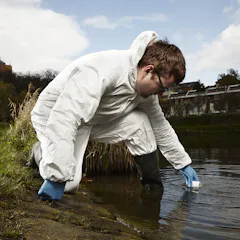
Some water researchers are ignoring the evidence offered by sampling if it doesn’t fit their preconceived notions. But science should always be honest and open.

Because Muslim Americans are an extreme ‘outgroup,’ they’re all the more vulnerable to discrimination, especially in the wake of negative media coverage.
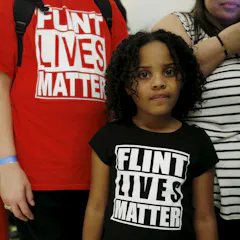
Hillary Clinton has elevated environmental justice to a high level as a presidential nominee, but as the Flint water crisis demonstrates, the deeper problem lies in ineffective government agencies.
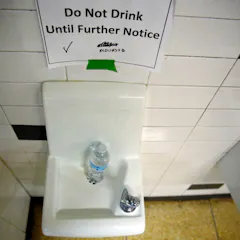
When it comes to many of the big decisions faced by governments and the private sector, behavioral science has more to offer than simple nudges.
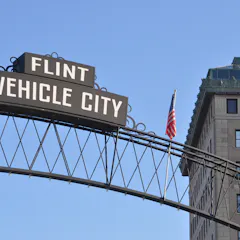
A lead poisoning crisis caused by corroded pipes has made Flint, Michigan a symbol of American inequality.
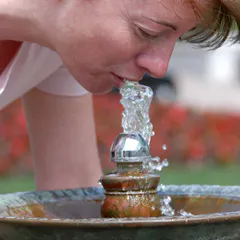
Unlike the U.S., some European countries have stopped using chlorine to disinfect drinking water to avoid changing the taste and potential health problems. Which approach is better?
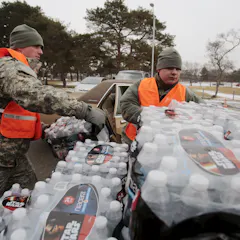
The Flint water crisis has left people across the country wondering if lead poisoning is a problem in their community. But it’s very hard to find out how widespread this problem is.
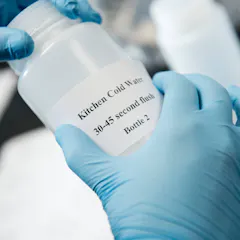
Virginia Tech University engineering students blew the whistle on Flint, Michigan’s toxic drinking water. Hailed as heroes, they’ve also learned that it isn’t easy to do science for the public good.

Many observers have called for criminal prosecutions in Flint, Michigan’s water crisis. A law professor with experience in federal and state government reviews the laws that may have been broken.
Top contributors
-

Lynton K. Caldwell Professor of Public Affairs, Indiana University
-
Professor, Physics and Astronomy, McMaster University
-
Assistant Professor of Climate Adaptation, University of Washington
-
Associate Professor of Public Affairs and Administration, Rutgers University - Newark
-
Assistant Professor of Communication Studies and Faculty Associate at the Institute of Social Research, University of Michigan
-
SUNY Distinguished Professor of History, Stony Brook University (The State University of New York)
-
Assistant Professor of Marketing, Ross School of Business, University of Michigan
-
Associate Professor of Environmental Engineering, University of Colorado Boulder
-
Associate Professor in American and International Politics, University of Birmingham
-
Distinguished Journalist In Residence, Arthur Carter Journalism Institute, Retraction Watch
-
Associate Professor of Family Medicine, University of Michigan
-
Assistant Professor, Hubert Department of Global Health, Rollins School of Public Health, Emory University
-
Vice-President Research & Innovation; professor of chemistry and biology, Faculty of Science, Toronto Metropolitan University
-
Dean, School of Public Affairs, Texas Southern University
-
Assistant Professor of Sociology, Central Michigan University