
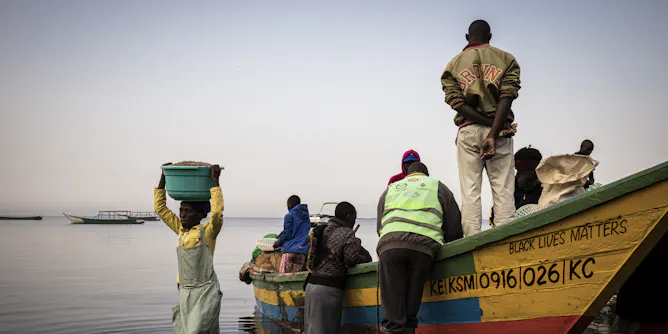
A new study into drownings of small-scale fishers on the Kenyan side of Lake Victoria has found that extreme weather and boat owners’ failure to provide life jackets are causes.
Articles on Fishers
Displaying all articles
Recent research shows how reducing overfishing is both an ecological imperative and a critical means to addressing climate change.
Local fishers with small boats have had little say in Indonesia’s marine and fisheries governance, despite their important roles in ocean protection.

As the number of protected areas continues to grow, fisher households in Indonesia are still among the poorest of the poor.

Hollywood undermines Africa’s struggles, creating a false impression of the continent to please western viewers.

Each year, enough fishing line to circle the Earth 18 times is lost at sea. This not only harms marine life, but also the livelihoods of fishers worldwide.
The newly-announced regulation for recruiting and contracting migrant fishers has legal complexities that might harm future attempts to protect these workers.
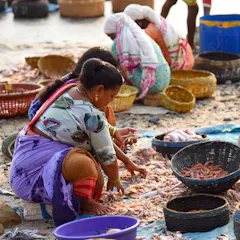
Creating opportunities to meaningfully engage women in governance and decision-making is necessary to achieve gender equality in small-scale fisheries.
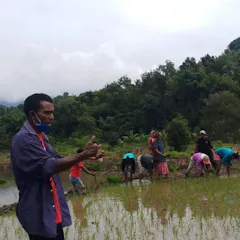
Do farmers fare better together in the face of a changing climate?
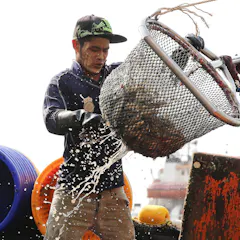
When illegal fishing is misrepresented, it leads to poor investments and misguided policies that don’t help the actual problem.

Decision-makers, locally and globally, must balance management of pandemics with a recognition that fish and fishing communities are essential to local well being.
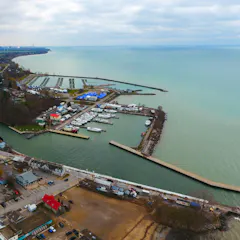
Working waterfronts are a key link between consumers and seafood, but are increasingly threatened by developers. Policies need to ensure that waterfronts remain accessible to seafood harvesters.

Empatheatre’s latest production is more than a play about three characters who live near the sea. It’s a model for collective consultation on how to save the ocean.
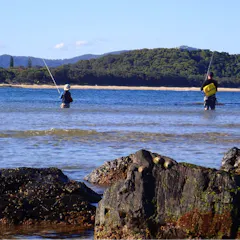
The overwhelming majority of recreational fishers support no-fishing marine sanctuaries.
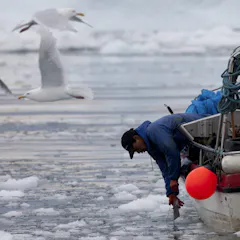
A recent summit in Ottawa on what’s known as agroecology has shown that more equitable and sustainable methods of producing food are not only possible, they’re beginning to spread around the world.
Top contributors
-

Senior Principal Research Scientist, CSIRO
-
Adjunct associate, Universitas Indonesia
-
Senior Principal Research Scientist, Environment, CSIRO
-
Senior Research Fellow, Bielefeld University
-
Senior researcher, Durban University of Technology
-
GEDSI and Ocean Research Analyst, World Resources Institute
-
Director & Professor, Fisheries Economics Research Unit, University of British Columbia
-
Assistant Professor, Marine Affairs, Dalhousie University
-
Associate lecturer, Paramadina University
-
Associate Professor, School of Environment, Resources and Sustainability, University of Waterloo
-
Research Director, Kaleka
-
Marine Social Sciences PhD candidate, James Cook University
-
ARC DECRA Fellow, James Cook University
-
Post-doctoral Fellow, The University of Western Australia
-
Senior Research Scientist, CSIRO