

For farmers breaking away from conventional agriculture, the Kentucky farmer-poet was a powerful example of someone who combined faith with a commitment to the environment.
Articles on Sustainable farming
Displaying 1 - 20 of 21 articles

Forests benefit everyone – but farmers carry the risk.
Rhizobia-based fertiliser technology is cost-effective, non-toxic and sustainable.
A researcher explains the benefits of a relatively new farming practice called paludiculture.
Africa is heavily dependent on agriculture. At this year’s COP30 conference, the continent needs to secure more funding to adapt land to climate disasters.
Farmers around the world are devising sustainable production systems. For agroecological systems to be a solution, they must be highly productive.

If grown on an industrial scale, hemp could provide multiple benefits for the environment and the economy.
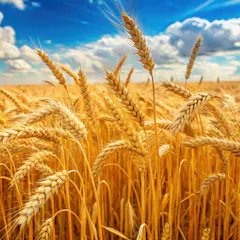
If you’re cutting down on meat, processed plant-based meat alternatives aren’t the only options.
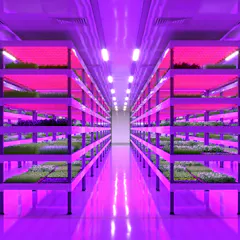
Vertical farming - growing plants without soil in huge controlled environments - has huge potential to support traditional agriculture but won’t ever replace it.

Major African cocoa plants in Côte d'Ivoire and Ghana have stopped or cut processing because they cannot afford to buy beans.
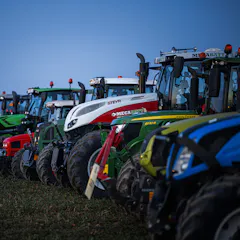
Green reforms are piling additional pressure on farmers struggling to make ends meet.
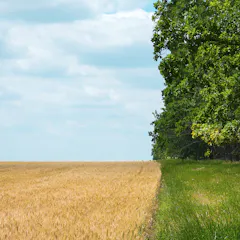
We know industrial farming needs to change. But regenerative agriculture may not be the transformation our global food system needs.
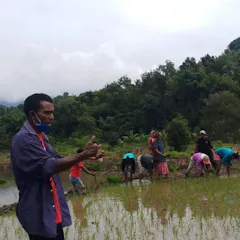
Do farmers fare better together in the face of a changing climate?
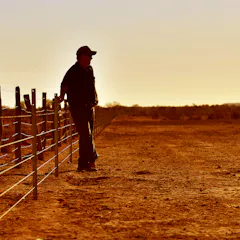
Adopting more environmentally conscious farm models would safeguard our agricultural exports, cut emissions and help protect nature.

The basic payments scheme that sustains 90% of farmers will be gone by 2028, but the reductions are biting already.
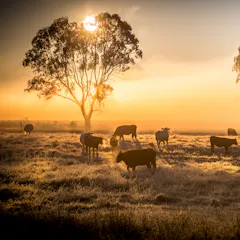
The federal budget included $32 million to promote schemes in which farmers who adopt sustainable practices earn money on private markets. Evidence suggests the approach is plagued with problems.
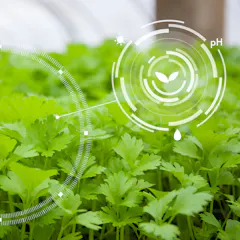
Nanotechnology, which approaches materials at the scale of atoms and molecules, has numerous applications for food production. Applying nanotech could revolutionize the agricultural sector.

Instead of boycotting palm oil, source it from pastureland and not recently logged forests.

Crises in the Darling River have raised questions about cotton and rice farming in the Murray Darling Basin.
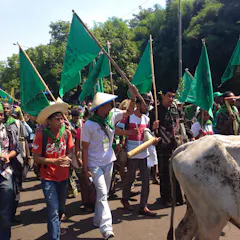
If the food movement’s goal is to reclaim a corporatised food system by ‘rebuilding the public sphere from the ground up’, what does this look like?
Top contributors
-

Senior Lecturer, Department of Media and Communications, Faculty of Arts and Social Sciences, University of Sydney
-
Canada Research Chair in Equitable and Sustainable Food Systems, Lakehead University
-
Professor, Fenner School of Environment & Society, Australian National University
-
PhD Researcher, University of Leicester
-
PhD Candidate in Geography, Lancaster University
-
Associate Professor, Oxford School of Global and Area Studies/ History, University of Oxford
-
Senior Lecturer, Environment and Sustainability, University of Surrey
-
Professor, Crawford School of Public Policy and Director, Centre for Climate and Energy Policy, Australian National University
-
Distinguished Professor of Ecology, Fenner School of Environment and Society, Australian National University
-
Lecturer in Sustainability and International Relations, University of Technology Sydney
-
Emeritus Professor of Biotechnology, University of South Wales
-
Research Director, Kaleka
-
Senior Lecturer, Griffith Law School, Griffith University
-
Lecturer in Management, University of Leeds
-
Professor, Chemistry, University of Toronto