
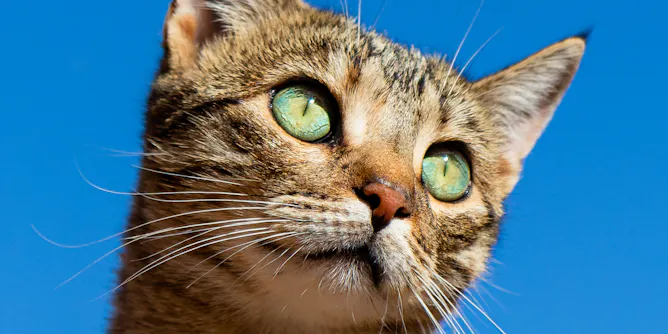
One-third of local councils have rules to stop pet cats roaming because of their major impacts on wildlife. More councils want to get on board but many are hampered by state laws.
Articles on Feral cats
Displaying 21 - 40 of 50 articles

Rewilding is risky but we can learn from past attempts to use it as an effective tool for conservation
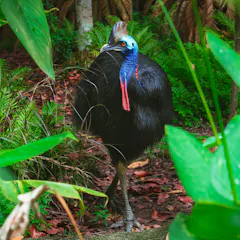
Dozens of species have been coaxed back from oblivion, with fenced havens, conserved habitat, islands and feral predator control vital.
Feral cats double the size of domestic tabbies. Cane toads with longer legs. And dingoes with flexible joints. ‘Selection pressure’ is at work on introduced animals.
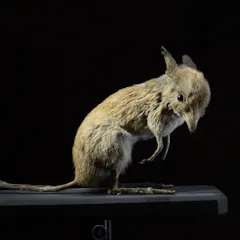
38 mammals have been driven to extinction since colonisation, and many more are close to joining them. We have the solutions at hand, but warnings continue to be met with mediocre responses.
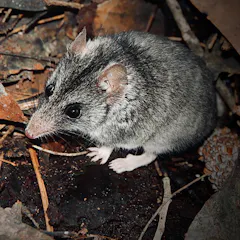
The findings underscore the importance of acting immediately to protect threatened species from predators in the wake of catastrophic natural events.
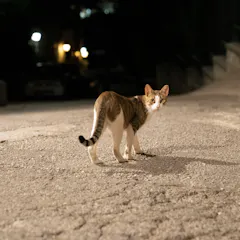
Allowing cats to roam unsupervised is detrimental to humans, wildlife and the cats themselves. Managing free-roaming cats should consider the risks they pose to other species.
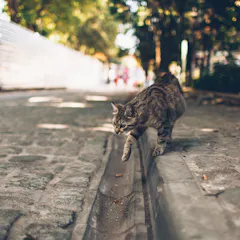
A new study shows that when free-ranging cats are more than a few blocks from forested areas in cities, such as parks, they’re more likely to prey on rats than on native wildlife.
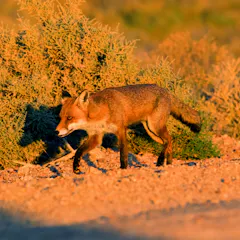
In some regions, foxes kill at least 1,000 animals per square kilometre every year.
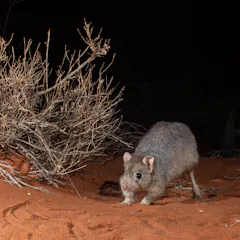
What if we could help threatened marsupials evolve to survive foxes and feral cats?
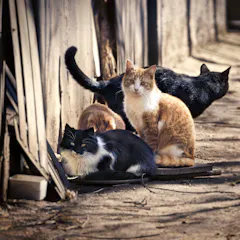
Adopt, neuter and return, or kill? There’s no easy way to deal with Australia’s stray cat problem, and we compare the main options.
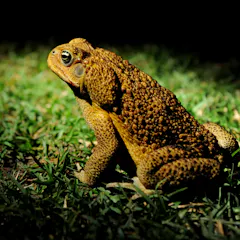
Without urgent action, Australia will continue to lose billions of dollars every year on invasive species.
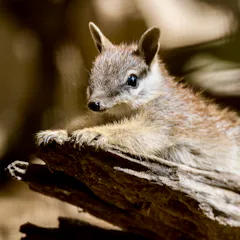
Given the scale of the problem, five years was never enough time to turn things around. Clearly, we must reflect honestly on our successes and failures so far.
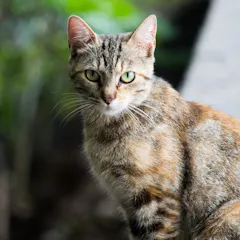
When cats were introduced to Australia, they brought several diseases with them. These diseases are taking a big toll on human health and the economy — but there are things we can do.

Compassionate conservationists believe no animal should be killed in the name of conservation. This idea is a death knell for Australia’s native species.

Small mammals in northern Australia have been rapidly vanishing for the last 30 years, and scientists weren’t sure why. Now, a major new study found feral livestock are largely to blame.
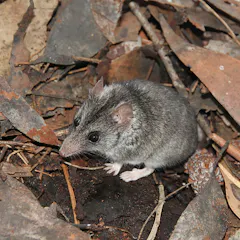
The Kangaroo Island dunnart was listed as critically endangered before fires ripped through 95% of its habitat. Those that survived the fires now face the threat of feral cats.
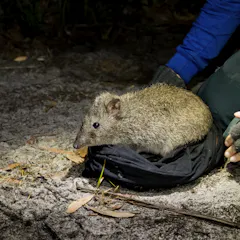
If long-nosed potoroos can co-exist with one of the world’s most deadly predators, then it’s time we rethink our conservation strategies.
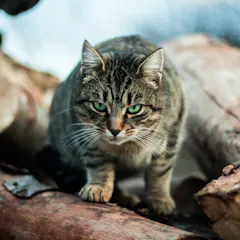
Roaming pet cats kill 390 million animals per year in Australia. Most of the animals are native to Australia.
Ownerless cats may find it harder to find food scraps with restaurants closed during the coronavirus crisis. Given social distancing rules, is it okay to go outside to feed them?
Top contributors
-

Professor of Conservation Biology, Charles Darwin University
-
Professor of Wildlife Conservation, Australian National University
-
University Fellow in Biodiversity, Charles Darwin University
-
Professor in Wildlife Ecology and Conservation, School of Life & Environmental Sciences, Deakin University
-
Professor of Conservation Biology, UNSW
-
Professor of Ecology, Charles Darwin University
-
Professor Emeritus in Terrestrial Ecology, University of Sydney
-
Honorary Research Fellow, University of Sydney
-
Project Officer, School of Earth and Environmental Science, The University of Queensland
-
Research Adjunct in Conservation Ecology, Research Institute for the Environment and Livelihoods, Charles Darwin University
-
Professor in Terrestrial Ecology, Deakin University
-
Professor, Murdoch University
-
Professor of Conservation and Sustainable Livelihoods, Charles Darwin University
-
Professor in Ecology, Charles Sturt University
-
Adjunct Research Associate, Charles Darwin University