

Australia needed a federal government-inquiry into the management of the pandemic. Albanese recognised this and before the election he indicated Labor would have one. But he was vague about its form.
Articles on Fault lines
Displaying all articles
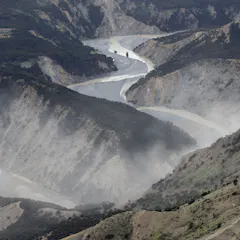
Earthquakes can cause rivers to unexpectedly change course. New research reveals we may be able to predict the resulting flooding – and plan better for future disasters.
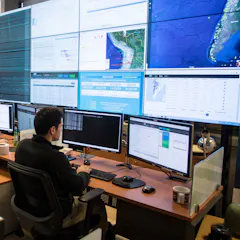
The idea that scientists could warn a region that a big quake was coming at a certain time – with enough advance notice for large-scale preparation and evacuation – remains a dream, not a reality.
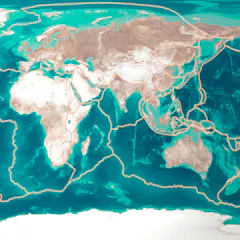
Earthquakes happen over seconds to minutes. Slow slip events on the other hand can last for weeks or months.
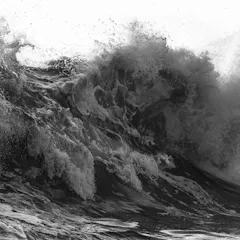
A tricky kind of earthquake that happens in the soft rock of the ocean floor causes much larger tsunamis than their magnitude would predict. New research pinpoints a way to identify the danger fast.
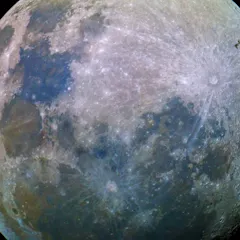
New analysis of data from the Apollo era shows that moonquakes occur close to visible faults, which may matter when setting up a moon base.
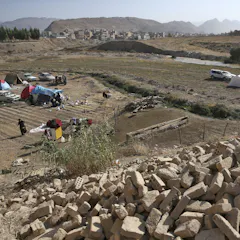
The Nov. 12 earthquake wasn’t centered on any known major faults in the Earth’s crust. In its wake, scientists will collect data to add detail to what they know about seismic activity in the area.
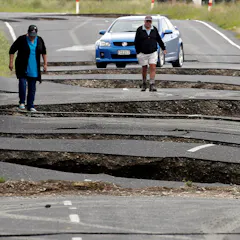
Early analysis of the New Zealand earthquake shows it may be a complex event, involving several faults on the South Island.
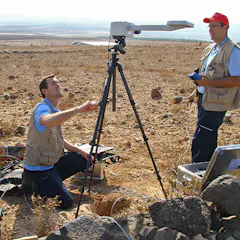
For seismologists, there’s much to be learned after a major earthquake, as aftershocks help them map out the fault with high precision. More data now can prepare a region for its next big one.
Small fault lines and fractures in the earth are likely to lead to gold, new research from the CSIRO has found. Researchers…
Top contributors
-

Ph.D. Candidate in Earth and Planetary Sciences, Northwestern University
-
Associate Professor of Geophysics, University of Florida
-
Honorary Fellow in Structural Geology and Tectonics, The University of Melbourne
-
Professor of Earthquake Science, The University of Melbourne
-
PhD candidate in Geological Sciences, University of Canterbury
-
Professorial Fellow, University of Canberra
-
Professor of Seismology and Geohazards, University of Washington
-
Assistant Professor of Geophysics, University of Oregon
-
Professor of Planetary Geosciences, The Open University
-
Reader, School of Earth and Ocean Sciences, Cardiff University