
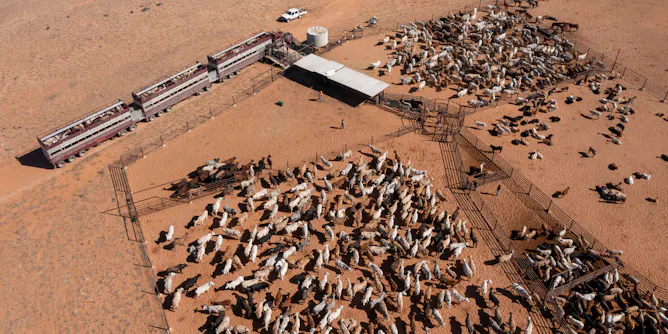
When Peter Singer first published Animal Liberation in 1975, he wasn’t aware of climate change. But the new book, Animal Liberation Now, argues eating plants will reduce greenhouse gas emissions.
Articles on Farming
Displaying 221 - 240 of 708 articles

Why plants’ oscillating genes matter for humans.

If greenhouse gas emissions continue at a high rate, breadbaskets of Europe and North America will see a 50% chance of a flash drought each year by the end of this century.
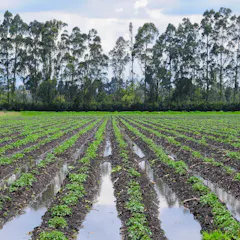
Potatoes are profitable and in demand. But wet weather and hard-to-control diseases have caused havoc for our growers.

Australia is the last continent to be invaded by the dangerous honey bee parasite, and has an opportunity to be the first to eradicate it.
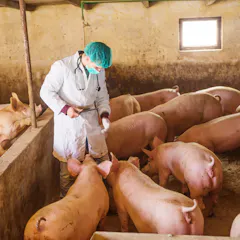
While mRNA vaccines are designed to last longer in the body than mRNA molecules typically would, they are also tested to ensure they are eliminated from livestock long before milking or slaughter.
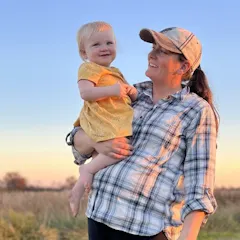
Access to affordable child care affects farm productivity, safety and ultimately the nation’s food supply. Farm families across the U.S. are struggling without it.
We know industrial farming needs to change. But regenerative agriculture may not be the transformation our global food system needs.
Even if you don’t live near farm country, you’ve got a stake in the upcoming farm bill – including what kind of farms your tax dollars support.
Cloud seeding – spraying materials into clouds to increase precipitation – has been around for nearly 80 years. But only recently have scientists been able to measure how effective it really is.

A guaranteed basic income is a promising tool for contributing to sustainability and justice across agriculture and fishing sectors.
Children working on family farms is often mistaken for harmful child labour.
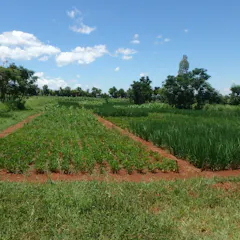
Growing legumes could at once provide African farmers with fertilisers and food crops. However, researchers warn this is not a one-size-fits-all solution.
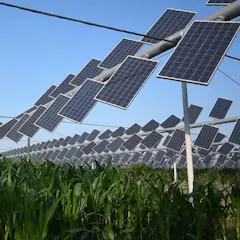
Canada can meet its carbon emission reduction targets, make food cheap again and open up a gigantic trade surplus with the U.S. by shading farm crops with solar panels.
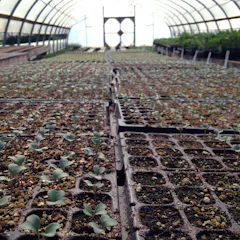
In light of the changes caused by the pandemic, it is clear that food autonomy as a frame of reference for reorganizing the Québec food system is not enough.

Spiders liquefy their prey in order to consume it, and this makes it challenging to determine what spiders eat. A new approach that uses DNA barcoding is helping researchers figure out spider diets.
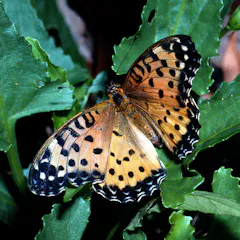
Australia’s threatened species keep declining. But there are concrete ways to help, from wildlife friendly gardens to leashing your dog.
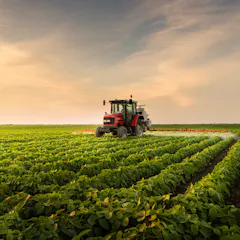
Why ‘local’ and ‘natural’ food isn’t always good for the environment, and ‘industrial’ or ‘intensive’ farming isn’t always bad.
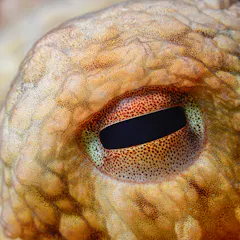
Octopuses are enigmatic beings whose experiences of industrial farming are likely to be profound.
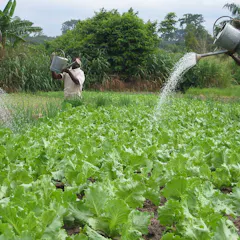
The effect of climate change on established lifestyles of farming communities are varied
Top contributors
-

Senior Fellow, Department of Agricultural Economics, Stellenbosch University
-
Associate Professor in Food Systems, The University of Melbourne
-
Professor in Wildlife Ecology and Conservation, School of Life & Environmental Sciences, Deakin University
-
Adjunct Associate Professor, Centre for Regional and Rural Futures, Deakin University
-
Professor, Dept of Food, Agricultural and Resource Economics, University of Guelph
-
Emeritus Professor, Poverty, Land and Agrarian Studies, University of the Western Cape
-
Adjunct Professor in Animal Welfare, Curtin University
-
John M. Thompson Chair in Information Technology and Innovation and Professor, Western University
-
Emeritus Professor of Agroecology and Food Politics, Centre for Agroecology, Water and Resilience, Coventry University
-
Research Fellow, Centre for Rural Policy Research, University of Exeter
-
Lecturer in Ecology, University of New England
-
Professor of Sustainable Development, University of Notre Dame
-
CGIAR
-
Professor, Food Economics, University of Guelph
-
Professor of Law, The University of Melbourne