

Fact-checking only helps if it reaches people before they have made up their minds.
Articles on Fact checking
Displaying 1 - 20 of 29 articles

There is a risk this study will be leveraged by big tech platforms to exonerate themselves.
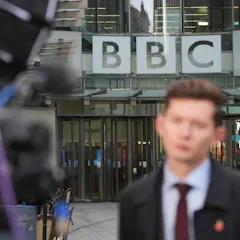
From the BBC’s implementation of AI guardrails to Reuters’ embrace of AI tools to disseminate breaking financial news, newsrooms’ missions and values are shaping their technological futures.

With AI slop and misinformation on the rise, research suggests New Zealanders may be turning back to mainstream news for reliability and accountability.
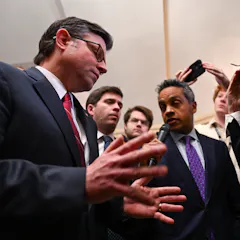
Responsible journalists verify and fact-check information. That can create a lag, leading the audience to believe they’re not just slow but wrong.

Fact-checking is seen as an effective strategy to combat misinformation and disinformation.

While Meta’s decision to drop fact-checkers has drawn sharp criticism, the real concern lies in the unchecked power of AI and neurotechnology.
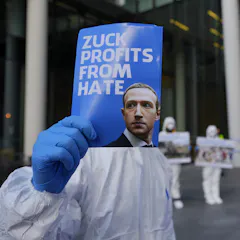
In the name of “freedom of expression”, Mark Zuckerberg has announced measures that will turn his digital platforms into even more fertile ground for contaminating public debate with disinformation and hate content

Numerous studies have shown that fact checking has helped reduce the spread of misinformation and disinformation online.
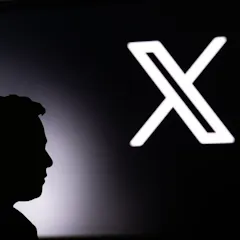
As well as becoming an ‘everything app’ and a place where lies continue to flourish, X is likely to see an increase what’s known as ‘cyberbalkanisation’.

An impending election doesn’t mean that people have to avoid social media altogether. When used wisely, it can still be an important source for political information and an outlet to express opinions.
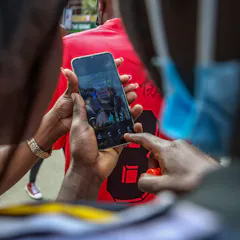
Users must learn to understand and navigate digital environments critically.
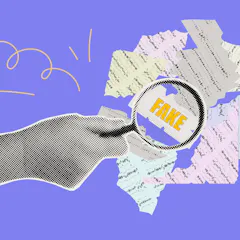
You’ve heard of debunking, but what about prebunking? Getting ahead of misinformation can pay off, but it’s not a silver bullet.
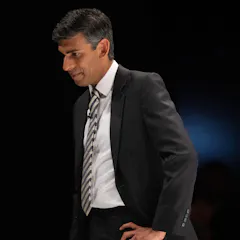
Broadcasters can struggle to report impartially when they have to single out one party for making dubious claims.

The ideological war waged by Smith will only endanger high-quality research void of political interference from the government.

Third-party fact checking appears to be in decline around the world - and Australia is not immune.
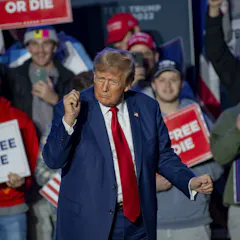
Artificial intelligence is likely to make the ‘fake news’ problem worse. But it can also be used to help us counter misinformation.

An onslaught of fake videos on social media is relaying confusing and deliberately misleading information about the Israel-Gaza conflict.

Christopher Glasl’s withdrawn memoir of his time in Special Operations Group raises questions about publisher fact checking. How do they do it? And can it be improved?

The amount of content available online makes policing misinformation extremely difficult. But there are steps we can all take to better ensure the credibility of what we see online.
Top contributors
-

Professor of Journalism and Social Media, Griffith Centre for Social and Cultural Research, Griffith University, Griffith University
-
Professor and Chair of Cybersecurity, Rochester Institute of Technology
-
Leverhulme Trust Early Career Research Fellow, Lancaster University
-
Chair of Cognitive Psychology, University of Bristol
-
Professor of Marketing, The University of Western Australia
-
PhD Candidate, Griffith University
-
Acting director of the Reuters Insitute for the Study of Journalism, University of Oxford
-
Lecturer, UWA Business School, The University of Western Australia
-
PhD Candidate, Sociology, University of Alberta
-
Professor in the School of Journalism and Mass Communication, University of Wisconsin-Madison
-
Visiting Researcher & Co-Director Chevening African Media Freedom Fellowship, University of Westminster
-
Lecturer, Publishing, The University of Melbourne
-
Associate Professor of Social Science, New Mexico Tech
-
Professor of Politics and International Affairs, Princeton University
-
Professor of Computer Science & Electrical Engineering, University of Maryland, Baltimore County