

People living with disabilities or through poverty and racism develop deep practical knowledge of how institutions function. They should be seen as experts.
Articles on Expertise
Displaying 1 - 20 of 35 articles

Do you actually know how a bicycle or a zipper work, or what a penny or a common brand logo look like? Intellectual humility can help reduce overconfidence in what you don’t understand.
An anthropologist’s new book lays out the formula for human innovation, from stone tools to supercomputers. Depending on developments in the next few years, AI could hit the gas or the brakes.

People are using generative AI to flood courts with filings, legislatures with constituent letters and publications with submissions. AI detectors are no silver bullet.

Social inequalities emerge in every human society. New research into how these hierarchies form suggests ‘prestige psychology’ – the tendency to defer to expertise – is at the root.

Expertise comes with training, experience and accreditation. And expert consensus is the best guide modern democracies have for making decisions about complicated challenges.

Not too long ago, therapists created a wall between themselves and their patients. Have we gone too far in the other direction?
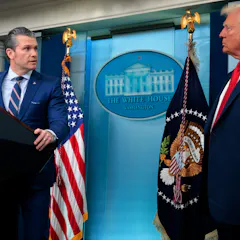
When common sense is promoted as a virtue, it’s not just to celebrate how regular people understand the world. It promotes a worldview that rejects empirical facts and paves the way for propaganda.

How can we explain governance failures in boards of directors? Part of the answer lies in the way directors use their expertise and understand their role on the board.
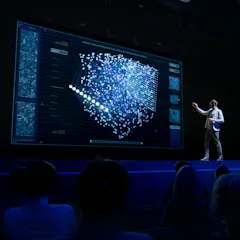
Conversations about scientific research and technological innovations allow the public to build trust with experts, and understand the impacts on everyday lives.
Our research highlights three key reasons for declining trust in experts, and how to regain their authority in future.

Among the expert witnesses in our justice system, astronomers play a surprising role. This astronomer provides evidence to several cases per week.

We should seize opportunities to test expert predictions – as we did, seeing how much bird experts got right about which birds would return to revegetated farmland.

How to use language clues to see through someone’s ‘expert’ facade.
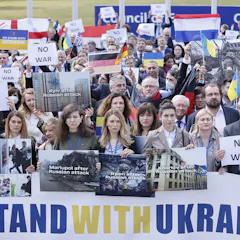
As we observe with the war in Ukraine, humanities skills are crucial for understanding 21st-century problems.
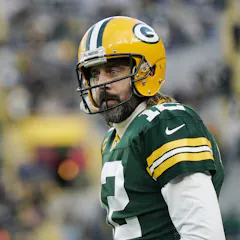
Critical thinking means seeking out new information – especially facts that might run contrary to what you believe – and being willing to change your mind. And it’s a teachable skill.
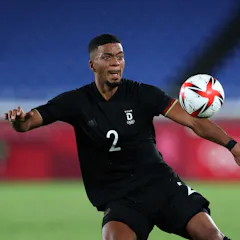
A researcher who studies physical skills explains how getting your conscious thoughts out of the way lets your body do what it knows how to do, better.
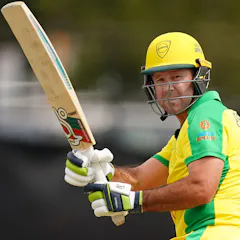
It’s what batsmen do on the pitch in between a bowler’s delivery that helps make them an expert in the game. They also need routines.
The coronavirus crisis has given experts and specialists worldwide a lot of power. As countries like New Zealand begin to recover, we need to question that power more than ever.

New research shows that when it comes to our health, we still value expertise above all else.
Top contributors
-

Associate Professor (hon) at the Centre for Public Awareness of Science, Australian National University
-
Senior Lecturer in Psychology, The Open University
-
Professor of Cognitive Psychology, Northumbria University, Newcastle
-
Previous Vice President of the Academy of Science of South Africa and DSI-NRF SARChI chair in Fungal Genomics, Professor in Genetics, University of Pretoria, University of Pretoria
-
Astrophysicist/Cosmologist, Australian National University
-
Professor of Psychology, Michigan State University
-
Associate Professor of Psychology, University College Dublin
-
Professor of Cognitive Neuroscience, Karolinska Institutet
-
Lecturer in Psychology, University of Buckingham
-
Senior Lecturer in Economics, University of Bath
-
Associate Professor: Department of Systematic Theology and Ecclesiology, head of the Unit for Moral Leadership, Stellenbosch University
-
University of Waterloo
-
Lecturer, James Cook University
-
Professor of Political Communication; Director CAJ, The University of Melbourne
-
Senior Lecturer in Psychology, University of Buckingham