
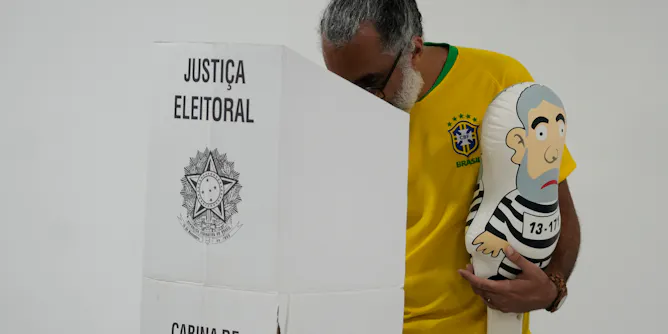
Far-right lead in the presdential race and landslide victories in legislative and local elections have affective, value-based, and political-ideological explanations.
Articles on Political science
Displaying 1 - 20 of 54 articles

There are no guarantees that pollsters’ troubles in recent elections and popular skepticism about their dependability will be alleviated anytime soon.
A study across 18 western countries has found that left-handed people sit on the left of the political spectrum and the data suggests it has more to do with identity than biology.

The strange alliance between demagogues and despots ought to puzzle and worry every thinking person, and it needs to be understood.
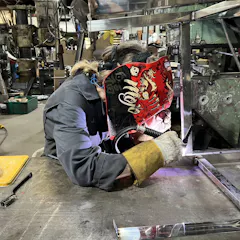
Jean Reith Schroedel’s 1985 book captured the struggles and triumphs of tradeswomen. Forty years later, its lessons remain urgent.

Game theory shows why political parties may gravitate to the centre in the quest for the median voter.
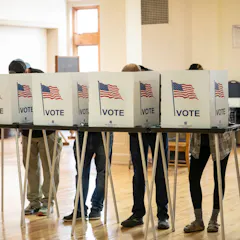
A common assumption holds that nonreligious Americans vote for liberal candidates. The reality isn’t so simple.

The more Americans isolate themselves from people in the other political party, the more stereotypes take over. In turn, that pushes people to isolate even more.

In this course, eight professors share their disciplinary perspectives to help students analyze proposed interventions for increasing wildfire risks.

The world’s richest man is now also one of the most politically powerful. Musk’s journey to mega MAGA funder sheds some light on what his motivations might be.

People love to hate bureaucracy, but regulatory agencies play key roles in modern society. Conservatives want to cut back their power, but a political scientist proposes a different option.

The commission has tight deadlines to finalize new maps. 2 voting rights experts explain the messy situation.

In a time of growing partisanship and general political uncertainty, a short research project provides a snapshot of the young people who might one day walk the halls of power.
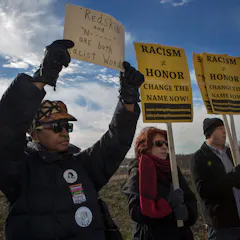
The book makes invaluable contributions to subjects of race, identity and belonging and how they shape human interrelations.

When politicians talk more about their personal lives and less about politics, it makes people from the opposing side of the political line see them as people and like them more.
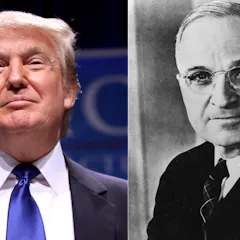
Nationalism and patriotism are sometimes treated as synonyms, but they have very different meanings.
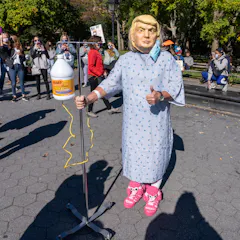
While derision and mockery permeate airwaves and social media feeds, satire holds the key to creating a more informed, engaged electorate.
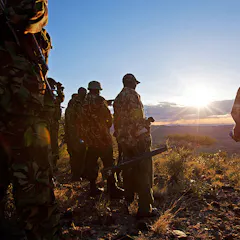
Conflict is prevalent in the region characterised by harsh climate, vast wilderness and low levels of development.

Bottom line: Political endorsements are overrated.

Studies on Ukraine going as far back as the late 1990s and early 2000s showed that the country’s population was connecting less and less with Russia.
Top contributors
-

Senior Lecturer in Democracy Studies, University of Canberra
-
Emeritus Professor of Politics and International Relations, Macquarie University
-
Researcher, Oklahoma State University
-
Post-Doctoral Researcher, University of Tennessee
-
Senior Lecturer in Philosophy and Education; Curriculum Director, UQ Critical Thinking Project, The University of Queensland
-
Research Professor and Executive Director of the World Peace Foundation at The Fletcher School, Tufts University
-
Professor of Political Science, University of Kentucky
-
Anthropologist, Sterling Prof Political Science; Acting Dir Agrarian Studies, Yale University
-
Associate Professor of Political Science, University of Kentucky
-
Associate Professor in Politics and International Relations, School of Social Sciences, Monash University
-
Senior Lecturer in the School of Media, Creative Arts and Social Inquiry, Curtin University
-
Professeure en sciences de l’information et de la communication, Université Paris-Est Créteil Val de Marne (UPEC)
-
Senior Lecturer, Department of Government and International Relations, University of Sydney
-
PhD Candidate in Political Science, Northwestern University
-
Maître de conférences, Université Paris-Est Créteil Val de Marne (UPEC)