
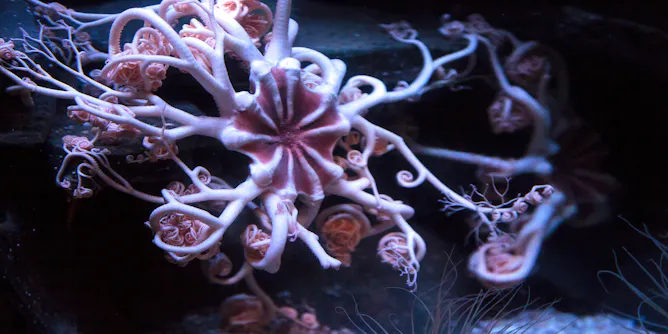
Deep-sea creatures from Iceland to Tasmania are more closely related than anybody realised.
Articles on Evolutionary biology
Displaying 21 - 40 of 187 articles
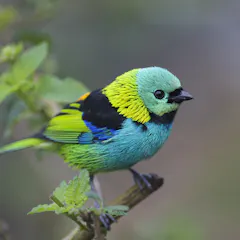
A secret under-layer explains why songbirds’ colourful feathers look so damn good.
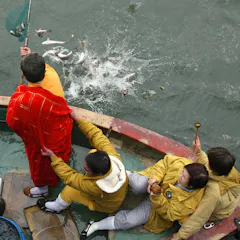
Humans change the urban landscape with religious, cultural and political activities, which in turn can influence the evolution of urban animals and plants.
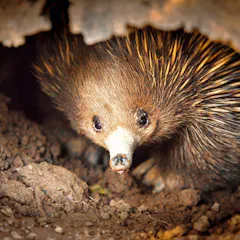
The monotreme sex gene may have been found after decades of searching – and it’s not what anyone expected.
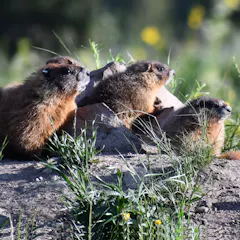
Multilevel selection is a controversial concept originally proposed by Darwin. A new study found evidence for it in the wild in a group of marmots scientists have been observing for more than 60 years.
Humans evolved late in Earth history. While this timing inspired the conclusion that humanlike life is a cosmic improbability, a new study pushes back.

Twins are pretty rare, accounting for just 3% of births in the US these days. But new research shows that for primates 60 million years ago, giving birth to twins was the norm.

Evolution is often depicted as a steady forward march from simple to complex forms. But new research shows that certain ferns can evolve ‘backward.’
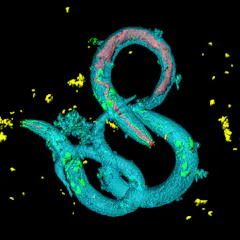
Going into a dormant phase may help animals coexist with competitors, experiments with nematode worms suggest.
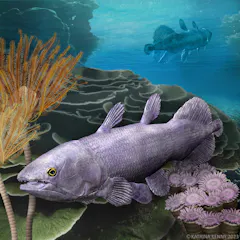
Researchers have discovered a new extinct species of coelacanth that lived 380 million years ago.
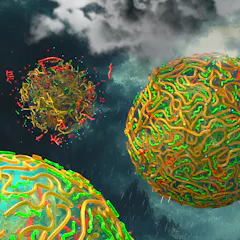
The earliest cells likely didn’t have membranes to separate and protect their components and chemistry away from a harsh surrounding environment. But they may have made do with rain.

Giraffe necks are a hot topic among biologists. A new study contradicts an older theory that says male giraffes need long necks to fight over mates.

New research on cuckoos suggests the battle between exploiters and victims may be a key reason for life’s enormous diversity.
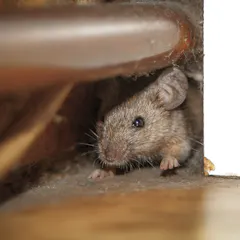
An evolutionary biologist is studying what these resilient urban pests can teach us about adaptation and evolution.
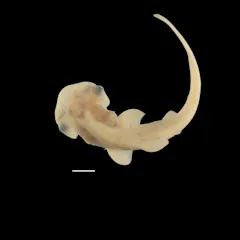
Because hammerhead sharks give birth to live young, studying their embryonic development is much more complicated than harvesting some eggs and watching them develop in real time.
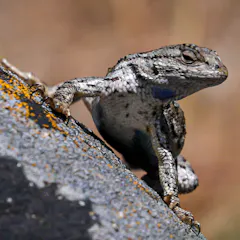
From dark dragonflies becoming paler to plants flowering earlier, some species are slowly evolving with the climate. Evolutionary biologists explain why few will evolve fast enough.

246 scientists looked at the same data sets and drew very different conclusions.
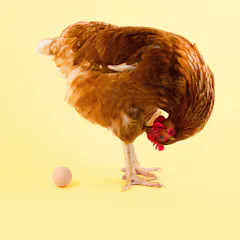
Evolutionary biology and the fossil record reveal a great deal about the origins of chickens and eggs.

The heat and chills that come with fever are not only uncomfortable but also metabolically costly. Increased body temperature, however, can make all the difference when you’re sick.
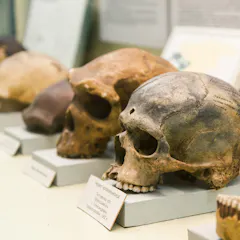
There are areas of biology that may be considered optional at younger year levels, such as botany, entomology and marine ecosystems. Evolution is not one of these.
Top contributors
-

Emeritus Strategic Professor in Palaeontology, Flinders University
-
Honorary Associate Professor, UNSW
-
Senior Lecturer, Centre for Behaviour and Evolution, Newcastle University
-
Mark Elgar is a Friend of The Conversation.
Emeritus Professor of Evolutionary and Behavioural Ecology, The University of Melbourne
-
Jenny Graves is a Friend of The Conversation.
Distinguished Professor of Genetics and Vice Chancellor's Fellow, La Trobe University
-
Postdoctoral Researcher , The University of Melbourne
-
Senior lecturer, School of Biological Sciences, University of Bristol, University of Bristol
-
Professor of Avian Behavioural Ecology, Macquarie University
-
PhD Researcher, Nature and Function of Human Nonverbal Vocalisations, University of Sussex
-
Lecturer, Macquarie University
-
Postdoctoral Researcher of Evolutionary Biology, University of Pennsylvania
-
Research fellow, University of Sydney
-
Sexual health researcher, The University of Melbourne
-
Professor of Evolutionary Biology, Université du Québec à Rimouski (UQAR)
-
Associate Professor, School of Psychology, The University of Queensland