
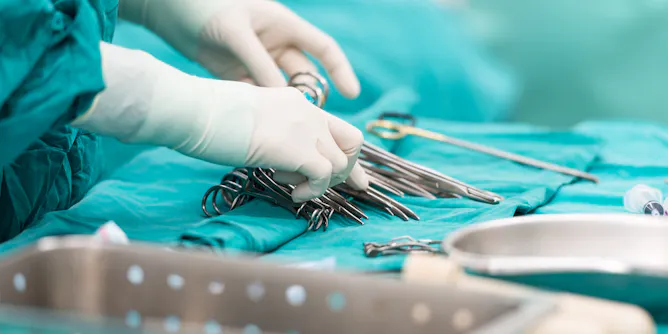
There’s often limited evidence for many common types of surgery. Understanding what makes good evidence is the key to deciding what’s best for you.
Articles on Evidence
Displaying 81 - 100 of 101 articles
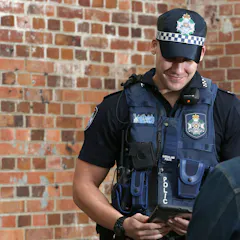
Body-worn cameras may seem to be a boost for policing and criminal justice, but they raise a host of issues around admissibility, privacy and fairrness.
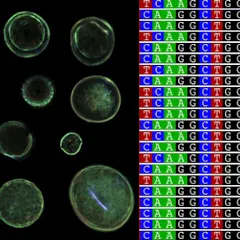
Pollen is all around us, is extremely durable and can provide clues about where someone’s been. A new genetic technique will make it easier to use pollen evidence in criminal investigations.
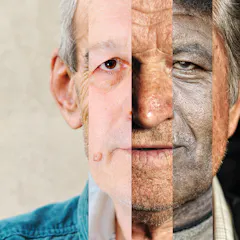
There’s a concern that images posted on social media run the risk of disrupting the accurate identification of people allegedly involved in a crime.
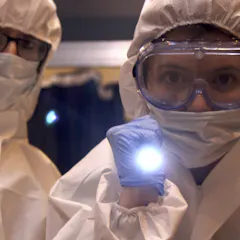
Forensic scientists should be encouraged to help detect patterns of behaviour in the incidents they investigate. This could lead to changes in the way some things are done and potentially save lives.
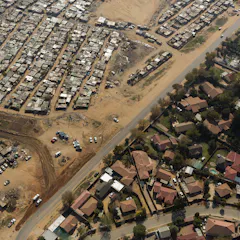
Without data, people don’t know what to believe or whom to trust. Empirical, thorough data collected by academics can help to fill important governance gaps.
When all the evidence points in one direction, people can quite happily go the other. Whether it’s Trump, Brexit or climate change.

Researchers and policymakers need to talk to each other. If they don’t, important research will merely gather dust and policies might do more harm than good.
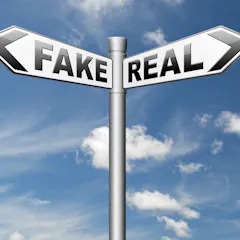
Forensic scientists are trained to disprove claims. This sort of thinking is useful when you’re trying to make sense of “miracle cures”, “wonder drugs” and other fantastic claims.

Would you know if you were being asked a leading question?

The more knowledge we gather in our search for answers to the unknown, the more uncertainty we uncover. But that’s not a bad thing.

So much of modern life involves our digital devices – including crime. As the field of digital forensics gains prominence, practitioners need practical and ethical guidelines.
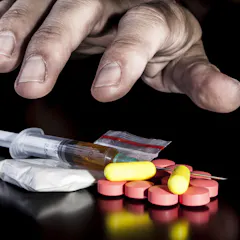
There’s a worrying lack of evidence for what works when it comes to drug treatment. And our addiction services are suffering as a result.

Beyond simply counting steps, fitness tracking technology creates personal black boxes that archive everything we do – even sleeping. So it’s not surprising to see that a Calgary law firm, representing…
Debunking myths requires an understanding of the psychological research into misinformation. But getting your refutation out in front of lots of eyeballs is a whole other matter. Here, I look at two contrasting…
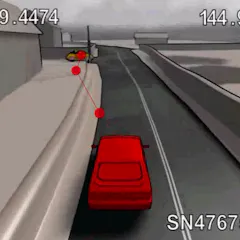
Recent cases involving the use of computer generated images as evidence in courtrooms have shown the powerful impact they can have on jury decision making. But studies show that jurors can be unduly influenced…
This week’s Intergovernmental Panel on Climate Change (IPCC) report will be compendious, cautious, thorough and as authoritative as a scientific report can be. But it will not make much difference. In…
The phrase “scientific evidence” has become part of the vernacular – thrown about like a hot potato during discussions of major environmental, health or social issues. Climate change is one example. The…
Accusations of scientific bias are the new catch-all weapon for anti-science commentators and climate deniers. Why are they effective? New research shows they may exploit part of our psychology. Climate…
How far do facts and evidence get us in public debates and policy formulation on immigration? And how far should they take us? Data on migration and its social and economic impact are of course vital for…
Top contributors
-

Professor: Evidence-Informed Decision-Making, University of Johannesburg
-
Senior researcher at the Africa Centre for Evidence, University of Johannesburg
-
Professor of Evidence Law, University of Sydney
-
University of Johannesburg
-
Senior Research Fellow, Africa Centre for Evidence and Stockholm Environment Institute, University of Johannesburg
-
Professor, Sydney School of Public Health, University of Sydney
-
Professor of Orthopaedic Surgery, UNSW
-
Director of the Research Hub for Language in Forensic Evidence, The University of Melbourne
-
Professor in Philosophy of Science, Durham University
-
Professor of Psychiatry, UNSW & Black Dog Institute, UNSW
-
Associate Professor, Physiotherapy, University of Sydney
-
Lecturer in Ecology, University of New England
-
Senior Lecturer, Department of Psychology, Aberystwyth University
-
Visiting Scholar, University of Wollongong in Dubai (UOWD), University of Wollongong
-
Senior Researcher, University of Johannesburg