

Experts know simply banning kids from social media isn’t going to protect them from harm – but there’s lots of evidence on what we can do instead.
Articles on Evidence based policy
Displaying 1 - 20 of 33 articles

Estimates suggest that every 12 seconds, a child somewhere in the world loses a caregiver to the coronavirus pandemic.

The limitations of traditional literature review approaches could be improved relatively easily with a few key procedures.

The active and uninhibited dissemination of knowledge is vital for the advancement of knowledge.

Policy implementation is about the execution of political decisions, informed by evidence.

With accessible software tools and workflows, machines can be left to do the laborious work so that people can focus on planning, thinking and doing.

Ramaphosa’s “new dawn” will require a rigorous evidence-base of what works to guide high-level policy planning and design.

Africa has a real challenge when it comes to using academic research and evidence to design policies.

Malaria elimination in Malawi is lagging because research isn’t being used properly.

To conserve Earth’s remarkable species, we must also defend the importance of science and scientific integrity.

There’s often limited evidence for many common types of surgery. Understanding what makes good evidence is the key to deciding what’s best for you.

Research looking at evidence-based teaching in higher education tends to be based more on anecdotes than on large, robust and peer-reviewed data.

Without data, people don’t know what to believe or whom to trust. Empirical, thorough data collected by academics can help to fill important governance gaps.

Researchers and policymakers need to talk to each other. If they don’t, important research will merely gather dust and policies might do more harm than good.

The relationship between social science research and advocates and policymakers is undermined if they cherry-pick evidence that supports their goals, ignoring the wider field.

We must improve religious literacy among politicians. They should look to universities for more insight.

There’s a worrying lack of evidence for what works when it comes to drug treatment. And our addiction services are suffering as a result.

Over the last six months a public consensus has emerged among academics, think tanks, community organisations, elements of the superannuation industry and most politicians about superannuation.
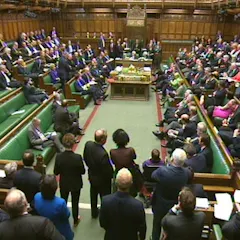
A new survey has found MPs are largely in favour of randomised controlled trials, even if they don’t understand why.

Our nation’s future depends on the quality of its thinking and its leaders. As such, science must be at the core of our national discourse.
Top contributors
-

Senior Researcher, University of Johannesburg
-
Professor: Evidence-Informed Decision-Making, University of Johannesburg
-
Senior Research Fellow, Africa Centre for Evidence and Stockholm Environment Institute, University of Johannesburg
-
Senior researcher at the Africa Centre for Evidence, University of Johannesburg
-
Professor/Director, Department of Anaesthesiology and Perioperative Medicine, Alfred Hospital and Monash University, Monash University
-
Professor, College of Business, University of Sharjah
-
Associate professor, Head of Centre for Evidence and Implementation, Parenting Research Centre
-
Executive Director: Gauteng City-Region Observatory, University of the Witwatersrand
-
Professor of Orthopaedic Surgery, UNSW
-
Universities Australia
-
Researcher, evidence based policy making, University of Birmingham
-
Professor of Psychology; Faculty Fellow Institute for Policy Research; Professor of Management and Organizations, Northwestern University
-
Associate Fellow, Centre for Science and Policy; Director of Research, Department of Politics & International Studies, University of Cambridge
-
Research Fellow in Health Services, University of Sheffield
-
Professor of Public Health/Director, Tobacco Control Research Group, University of Bath