
Bill C-7 has created ethical tensions between MAID providers and palliative care, between transparency and patient privacy, and between offering a dignified death rather than a dignified life.
Articles on Euthanasia
Displaying 21 - 40 of 117 articles
New regulations are being drafted in the Netherlands to allow euthanasia for a small group of children aged one to 12 for whom palliative care is not sufficient.
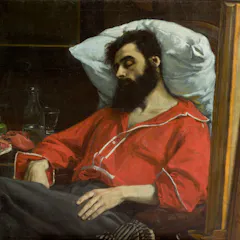
With euthanasia laws proliferating around the world, Caitlin Mahar’s The Good Death Through Time is a valuable exploration of the history of our shifting views on dying well.
This year sees three more states introduce voluntary assisted dying. But there are still several barriers to overcome.
It’s been a long time coming. But this latest news means the ACT and NT could draw up their own voluntary assisted dying laws, bringing them into line with the states.
There’s a simple way to give territorians better representation – and the time is ripe.
Tony Burke once worked hard to stop euthanasia becoming law in the Northern Territory. Now, he must usher through a new bill to allow the territories to debate the issue.
For people to access medical assistance in dying (MAID) requires health-care professionals willing to provide the service. The reasons health-care providers choose not to participate are important.

Aged care facilities and hospices can block access to voluntary assisted dying, despite it being legal in your state.

Voluntary assisted dying is now legal, or will soon will be, in all six states. But we need enough doctors to put their hands up for training.
Multiple amendments could make the law unwieldy, incoherent and even unworkable.
The proposed NSW legislation is similar to other states, including replicating a key flaw.

Interviews with 32 doctors who provided voluntary assisted dying services in Victoria found layers of bureaucracy made it difficult for patients to access the system. Some died while waiting.
Draft legislation which would see voluntary assisted dying allowed in Queensland will be introduced into the state’s parliament next week. So how does the proposed law compare to other states?

The fundamental underpinning of all MAID requests is supposed to be the presence of an incurable medical condition, but it’s not possible to predict that a mental illness will not improve.

We must make ensure that puppies born into the greyhound racing don’t slip through the cracks.
Assisted dying is often cast as an issue of individual autonomy, but an assisted death can have repercussions on many people — those left behind or others struggling with a chronic disease.

Over the first year of voluntary assisted dying in Victoria, about 400 people applied to access the laws to end their lives. There are lingering issues, but the system is workable.
A new report tells us in the first six months voluntary assisted dying was legal in Victoria, 52 people ended their lives. But the report doesn’t tell us everything we need to know.

Nine states and the District of Columbia currently have laws that permit assisted dying, but the laws are so restrictive that they are often more hurdle than help.
Top contributors
-

Distinguished Professor, Professor of End-of-Life Law and Regulation, Australian Centre for Health Law Research, Queensland University of Technology
-
Professor of Law, Australian Centre for Health Law Research, Queensland University of Technology
-
Associate professor, Queensland University of Technology
-
Senior Lecturer in Law, Australian Centre for Health Law Research, Queensland University of Technology
-
Professor of Medicine, Monash University
-
Research Fellow, Australian Centre for Health Law Research, Queensland University of Technology
-
Associate Research Fellow, Deakin University
-
Senior Specialist in Intensive Care and Head of Clinical Unit in Ethics and Health Law, University of Newcastle
-
Emeritus professor, Southern Cross University
-
Professorial Fellow, University of Canberra
-
Professor of Psychiatry, University of Toronto
-
Professor of Healthcare and Medical Law, Glasgow Caledonian University
-
Associate professor, Australian Catholic University
-
Lecturer in Health Law & Bioethics, University of Sydney
-
Associate Professor of Law, Monash University