

In 2027, Canadians 18 years and older with mental illness who are deemed to meet age and other eligibility criteria could potentially access doctor-assisted death in Canada.
Articles on MAID
Displaying 1 - 20 of 22 articles

The narratives embedded in disability policy influence everything from budget priorities to program eligibility and institutional cultures. They also shape how disabled people imagine their futures.

Recent reports from the Chief Coroner for Ontario reveal that Canada’s MAiD law, policy and practice focuses on promoting access to death, rather than protection.

A B.C. judge’s injunction blocking a MAiD case has been denounced by supporters of broad access to medical assistance in dying. But judicial oversight over MAiD practice is essential.

MAiD needs safeguards for the vulnerable: Ontario coroner’s reports show more marginalized people receiving Track 2 MAiD, which provides assisted death for those with disability but who are not dying.

Psychiatrist Karandeep Sonu Gaind speaks to The Conversation Weekly podcast on why he’s a vocal opponent of Canada’s expansion of its medically assisted dying laws to people with solely mental illness.

Most workplace bereavement policies were designed prior to MAID and very few employers have adjusted these policies in light of the new reality of living and dying in Canada.

In addition to asking health-care systems to prepare to end suffering of mental illness through Medical Assistance in Dying (MAID), we must ask policymakers to support better lives for families.
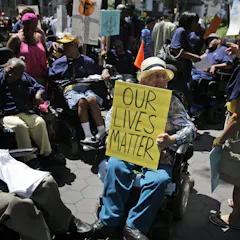
People with disabilities contend with daily challenges and ableism. Here are some dos and don'ts to help you be more mindful of those living with a disability.

Bill C-7 has created ethical tensions between MAID providers and palliative care, between transparency and patient privacy, and between offering a dignified death rather than a dignified life.

Since 2016, Canada’s practice of offering MAID has followed a trajectory of ever-expanding eligibility. The ultimate expansion would make MAID available to anyone who wanted it, for any reason.

Canada’s planned expansion of MAID to mental illness is based on ignorance — if not outright disregard — of fundamental suicide prevention principles.

For people to access medical assistance in dying (MAID) requires health-care professionals willing to provide the service. The reasons health-care providers choose not to participate are important.

Research suggests that expanded access to MAiD tends to benefit people with wealth and privilege, offering them choices and autonomy. At the same time, it puts marginalized people at risk.

Palliative care is about living well and meeting patients’ goals, but referral can be more complex than access to medical assistance in dying (MAID). Palliative care should be as accessible as MAID.

The fundamental underpinning of all MAID requests is supposed to be the presence of an incurable medical condition, but it’s not possible to predict that a mental illness will not improve.

Expanding access to medical assistance in dying (MAID) to those not terminally ill puts vulnerable people at risk of feeling pressured into MAID, and doctors at risk of being forced to facilitate it.

One judge must not be allowed to curtail parliament’s power to promote broader societal interests and protect people who are elderly, ill and disabled.
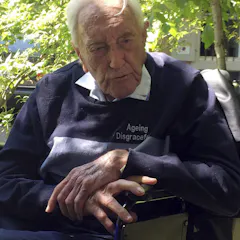
Recent stories in the media highlight the idea of suicide tourism to Switzerland. But what does that mean? How is the Swiss view of assisted dying different from the Canadian one?

In Nova Scotia, it’s clearer now who qualifies for medical assistance in dying. Will the other provinces and territories follow suit?
Top contributors
-

Professor of Psychiatry, University of Toronto
-
Professor of Health Law and Policy, University of Toronto
-
Associate Adjunct Professor of Disability Ethics, John Dossetor Health Ethics Centre, University of Alberta
-
Professor Emeritus, Faculties of Law and Medicine, Dalhousie University
-
Canada Research Chair in the Law and Ethics of Brain Technologies; Professor of Law; Member of the Board of Directors of the Bioethics Council for Canada, L’Université d’Ottawa/University of Ottawa
-
Assistant Professor, Faculty of Nursing, University of Regina
-
Professor, Department of Medicine, University of Alberta
-
Associate Professor, Business and Administration, University of Winnipeg
-
Associate Professor of Medicine, McMaster University
-
Host, The Conversation Weekly Podcast, The Conversation
-
Associate Professor, Department of Educational Studies, University of British Columbia
-
Research Associate - Faculty of Health Sciences, University of Lethbridge
-
Dean and Professor of Social Work, University of Toronto
-
Division Chair & Associate Professor of Palliative Medicine, Queen's University, Ontario
-
Associate Professor of Nursing, University of Lethbridge