
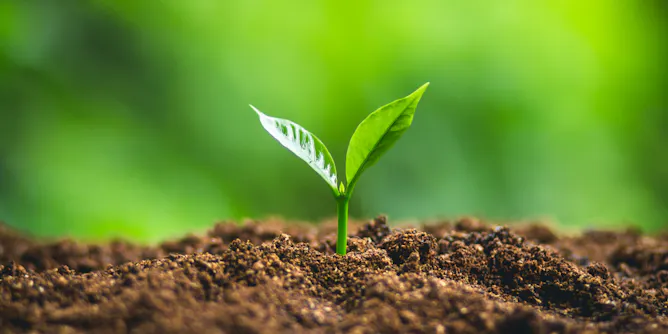
Healthy soils are vital for food, biodiversity, and a healthy planet, but this below-ground world is often overlooked. The launch of the State of Knowledge of Soil Biodiversity Report highlights this.
Articles on Erosion
Displaying 41 - 60 of 68 articles
Almost a century ago, New Zealand and Australia were at the forefront of an environmental crisis that forewarned of humanity’s global impact – erosion. It left its mark on culture.
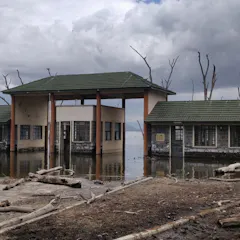
Because the forecast for rainfall in the Rift Valley basin is a rising trend, the lake levels look set to rise even more in the future.
There’s growing interest in making the US food system more resilient and flexible, but soil – the origin of nearly everything we eat – is often left out of the picture.
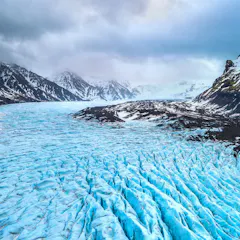
Our study explores the factors which cause glacial erosion.
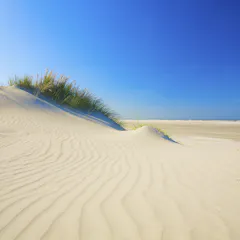
Sand may seem abundant when your toes are buried in it, but it’s becoming scarce along many coastlines around the world.
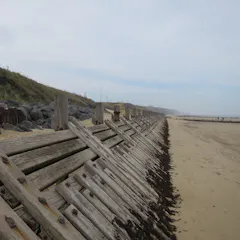
Dumping millions of cubic metres of sand on the beach stops people from dealing with the reality of coastal erosion.
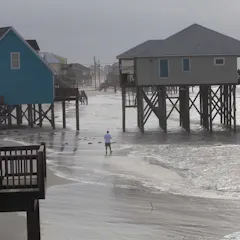
‘Building back better’ refers to making communities more disaster-proof and resilient after they take a hit. But instead, some US owners are building back bigger homes in vulnerable places.

Thousands of years of history tells the same story over and over: you ignore soil at your peril.

A new report predicts that one-third of the ice in the Himalayas will melt, even if we contain global warming to 1.5C. So what does that mean for the flood-prone valleys below?

Sahia and her husband hoped to start a life in Singpur, a village in Bangladesh. But the riverside community found climate change made putting down roots impossible.
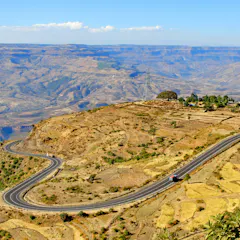
Smart roads in Africa could help reduce the impact of flooding and other disasters that affect rural communities.
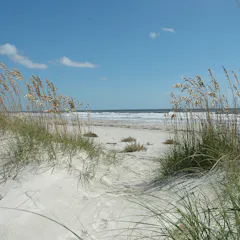
How do the narrow ribbons of sand that line the Atlantic and Gulf coasts withstand the force of hurricanes? The answer lies in their shape-shifting abilities.
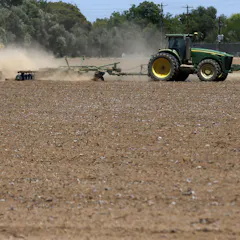
Desertification is a problem of global proportions. If action isn’t taken now, it will accelerate and fuel further migration and conflict.

A watershed scientist explains why post-wildfire landscapes are so susceptible to landslides – and why those risks are poised to rise.
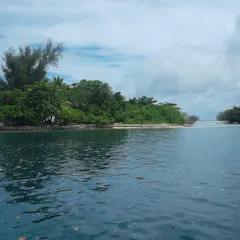
In 1850, the Micronesian island of Nahlapenlohd was the scene of Pohnpei state’s first battle involving cannons and muskets. Less than two centuries later, it has sunk beneath the waves.
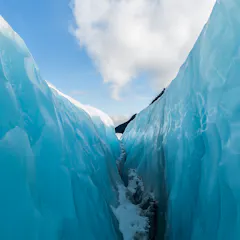
Earth’s thermostat can fail spectacularly at times. Around 700 million years ago, huge volcanic eruptions triggered “Snowball Earth”.
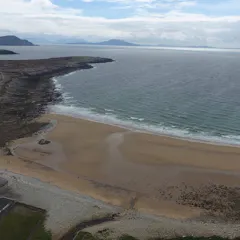
A entire beach in Ireland has returned 33 years after being washed away.
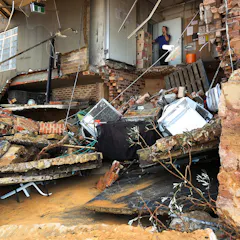
Wild seas have left beaches eroded and houses close to collapse.
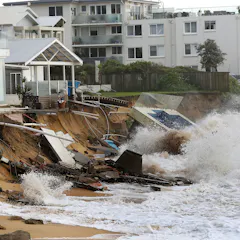
Eastern Australia’s massive storms will likely become rarer in a warmer world, but probably more intense.
Top contributors
-

Professor of Biogeochemistry, University of Wollongong
-
Professor of Earth and Space Sciences, University of Washington
-
Research Fellow, Adelaide University
-
PhD candidate Department of Environmental & Geographical Science, University of Cape Town
-
Ass. Professor, University of Maryland Eastern Shore; North-West University
-
Guest Research Scholar, International Institute for Applied Systems Analysis (IIASA)
-
Research Scientist, Australian Bureau of Meteorology
-
Visiting professor, University of Saskatchewan
-
Professor in Earth Sciences, Nanyang Technological University, Singapore, and Emeritus Professor of Mineral Physics, University of Cambridge
-
Professor of Geology, Adelaide University
-
Senior fellow, King's College London
-
Professor, TC Beirne School of Law, The University of Queensland
-
Senior Lecturer in Ocean and Earth Science, University of Southampton
-
Associate Professor of Engineering, Auburn University
-
Professor of Intersectional Justice, UCL