
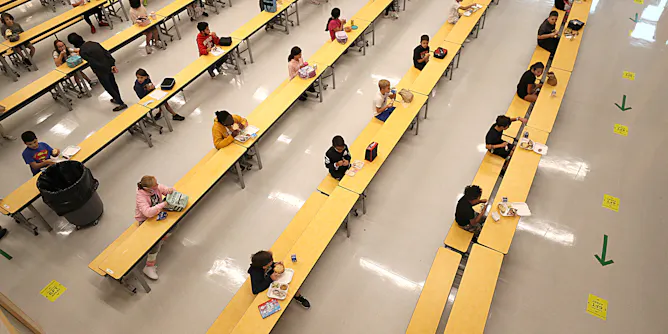
Students are spreading out when they eat and using more single-serve packaging. Future changes to school meals could be less visible.
Articles on Equity
Displaying 121 - 140 of 179 articles
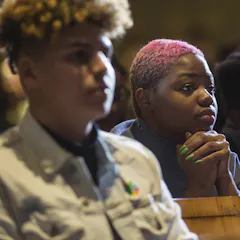
Teacher referrals will replace standardized testing. That could disadvantage already-underrepresented students.

Cognitive neuroscientists use brain imaging and behavioral economic games to investigate people’s sense of fairness. They find it’s common to take care of yourself before looking out for others.

Three education experts explain why students aren’t learning the basics.

Solar power doesn’t have to be just for the wealthy anymore. With the right kind of financial incentives, households at all income levels can benefit from affordable clean energy.

Waterloo Region District School Board’s suspension of the Student Resource Officer program is one step toward ending racism in schools but much more still needs to be done.
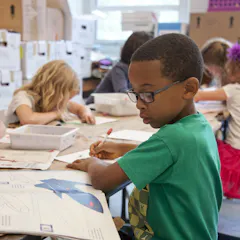
If Ontario’s de-streaming of high schools isn’t accompanied with other efforts to address cultural norms and values, streaming in many other forms and guises will continue.

Turning food scraps and yard trimmings into compost improves soil, making it easier for people to grow their own food. City composting programs spread those benefits more widely.
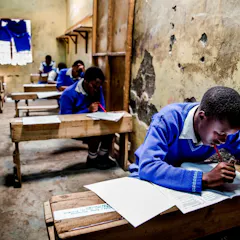
Study presents a model that can be scaled to improve learning outcomes and transition rates for young people living in urban informal settlements.
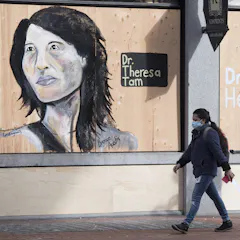
Politicians and public health officials appeal to our sense of fairness in requesting the public’s co-operation in controlling the pandemic. But COVID-19 doesn’t affect everyone equally.
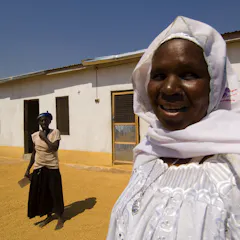
Ghana has ambitious policies on gender equity but is struggling to realise them.

More women on corporate boards means more opportunities for women, and better performances by businesses.
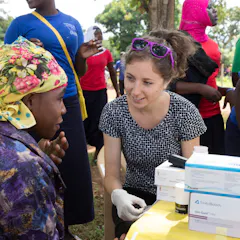
Global health researchers, funders and journals are not walking the talk on equity, diversity and inclusion.

Despite the hard evidence of the excellent benefits of gender, racial and other diversity on research teams, public criticism on the benefits of equity and diversity programs still exists.
Family firms can attract investor interest, yet owners are often reluctant to offer equity. New research indicates that concerns of potential interference and emotions are two of the key issues.

There are many conversations these days around ‘successful dying.’ Two African American scholars argue why these conversations need to include race and how it impacts life span.
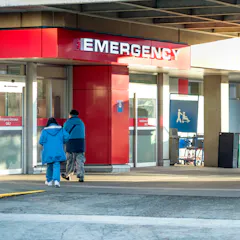
When care is equity-oriented, patients report fewer depression and trauma symptoms, less chronic pain and improved quality of life.

In examining and addressing opportunity gaps for racialized students in schools, school boards must learn to account for present-day and historical inequities.

The extent to which schools foster political deliberation, engagement, understanding and empathy has far-reaching implications for our democracy.

The award of a Nobel Prize in physics to Donna Strickland is an opportunity to build support for women in science, says one female physics professor.
Top contributors
-

Professor of Higher Education Policy, Monash University
-
Associate Professor of Teaching and Leadership, University of North Dakota
-
Lecturer, Teachers and Teaching Research Centre, School of Education, University of Newcastle
-
Associate Professor, Faculty of Education, Wilfrid Laurier University
-
Pro Vice-Chancellor, Climate, Sustainability and Inequality and Director, Southern Centre for Inequality Studies, University of the Witwatersrand
-
Professor of Sociology and Director of the Center for Employment Equity, UMass Amherst
-
Associate Professor, Department of Leadership, Higher & Adult Education, Ontario Institute, University of Toronto
-
Special Adviser to the President, EDID (Curriculum Transformation) and Professor, School of Professional Communication, Toronto Metropolitan University
-
Associate Professor of Educational Studies, University of Alabama
-
Adjunct Lecturer in Urban Studies, The New School
-
Health Policy and Systems Researcher, London School of Hygiene & Tropical Medicine
-
Professor of Education Futures, The University of Melbourne
-
Professor of Economic Geography, Institute for Culture and Society, Western Sydney University
-
Professor of Health Equity, Stretton Health Equity, School of Public Health, Adelaide University
-
Professor of Economics, RMIT University