

Bacteria use strategies similar to artificial neural networks to use the past to adapt to the future.
Articles on Computational biology
Displaying all articles
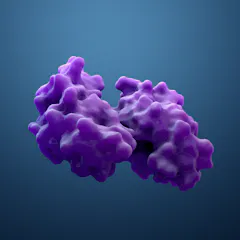
Enzymes significantly speed up the chemical reactions that keep you alive. Researchers are using AI to create new ones to tackle modern challenges.
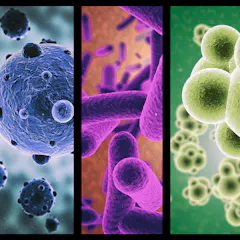
Using digital blueprints of the metabolism of microbes, scientists can simulate expensive and time-intensive experiments set in space, power plants and farm fields.
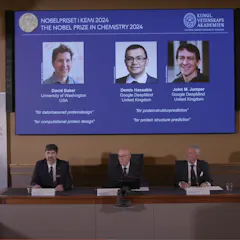
Using computers to design and predict protein structures will revolutionise biochemistry.

Scientists are discovering viral genetic sequences in the wild faster than they can analyze them. A kind of ChatGPT for proteins can help make sense of all that data.
An epigenetic model of cancer that incorporates the concept of stochasticity could also explain why cancer risk increases with age and how biological development can be reversible.

After a nose swab tests positive for a virus or bacteria, scientists can use the sample’s genetic sequence to figure out where and when the pathogen emerged and how fast it’s changing.

Many features of proteins are analogous to music. Mapping these features together creates new musical compositions that help researchers learn about proteins.
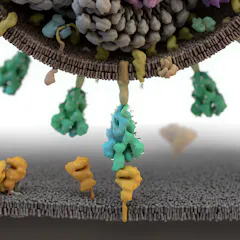
Scanning through billions of chemicals to find a few potential drugs for treating COVID-19 requires computers that harness together thousands of processors.
Researchers from Oregon Health and Science University found that variations in genes that code for parts of the cellular alarm system might play a role in how well people fight off COVID-19.
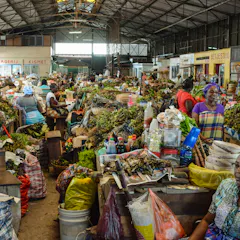
New research suggests that hints left in Creole languages can identify where the original speakers came from – even hundreds of years after they migrated and mixed together.

Switching from foraging to farming would not have been an obvious choice for our ancestors. But they seem to have done it nonetheless.
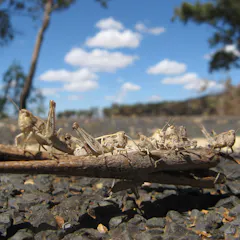
They are creepy and destructive little cannibals, so can mathematics help us avoid the next big locust plague?
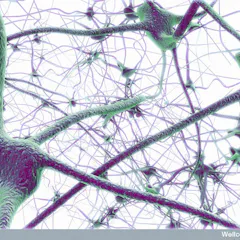
Computers and brains work in virtually opposite ways. Computers are laboriously programmed for specific tasks. Brains learn from experience and can perform a wide variety of complicated tasks that are…
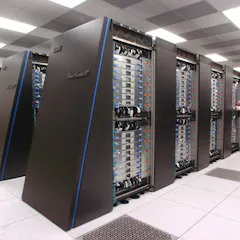
Frederick Sanger, who died recently at the age of 95, won two Nobel prizes in chemistry for his methods for sequencing proteins and DNA. Proteins were of more direct interest to many people because many…
Top contributors
-

Postdoctoral Research Fellow, The University of Queensland
-
Assistant Professor of Biological Sciences, Vanderbilt University
-
PhD student mathematical biology, UCL
-
Postdoctoral Associate in Linguistics, University of the West Indies, Mona Campus
-
Professor of Mathematical Biology and Public Engagement, University of Bath
-
Senior Lecturer in Computational Biology, University of Manchester
-
Professor of Biomedical Engineering, Johns Hopkins University
-
Postdoctoral Fellow in Computational Evolution, ETH Zurich
-
PhD Student in Computational Evolution, ETH Zurich
-
Postdoctoral Fellow in Computational Evolution, ETH Zurich
-
Governor's Chair, Biophysics, University of Tennessee
-
PhD Candidate in Computational Biology and Biomedical Engineering, Oregon Health & Science University
-
Postdoctoral Researcher in Computational Biology, The Rockefeller University
-
Professor of Pharmacy, National University of Singapore
-
Assistant Professor of Radiation Medicine, Oregon Health & Science University