
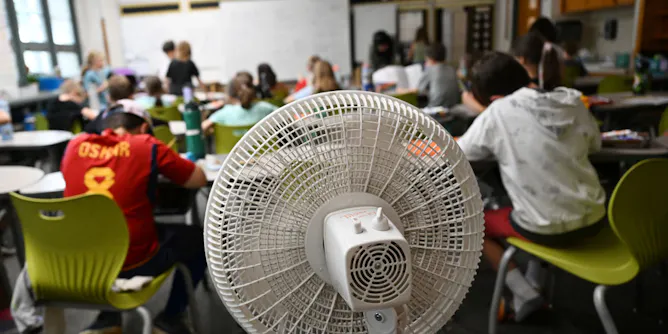
Mold spores, 90-degree classrooms and aging pipes: An environmental health expert explains why Pennsylvania’s old schools are harder on kids than adults.
Articles on Environmental health
Displaying 1 - 20 of 101 articles
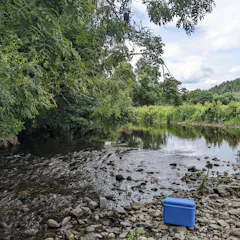
Environmental DNA contained in a small sample of water, sand or even air can reveal the presence of people, wildlife and pathogens, helping researchers track where they’ve migrated.

There’s no such thing as a ‘chemical-free’ life, but some simple steps can help you minimize exposures to daily chemicals.
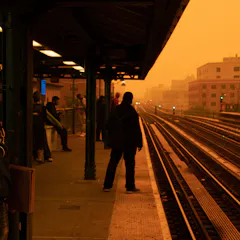
The number of ozone-related premature deaths due to wildfires is also rising.

New research offers a cautionary tale about the difficulty of removing ‘forever chemicals’ from the environment.
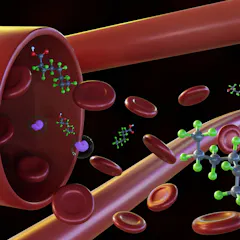
Your body likely contains an accumulation of various PFAS types, making it difficult to trace them to their sources.
The move reshapes how future assessments of chemical dangers will be carried out, and if they’ll be ignored, delayed or understated to benefit industry.

The EPA’s new interpretations are strategically designed to appeal to the current US Supreme Court’s view of agency authority.

The gain isn’t huge, but it’s a notable improvement – similar to what people experience when they start exercising more.
As sea levels rise, increasing amounts of salt water are leaking into freshwater supplies worldwide.
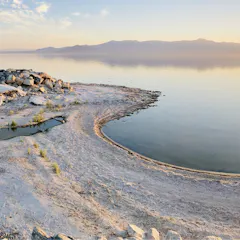
A new study reveals how the lake bed’s toxic dust impairs lung development in children living nearby.

The Clean Air Act gave California the authority to issue tough pollution standards for vehicles, with EPA approval. The Trump administration is now trying to stop it.

Feeling part of something larger than yourself may make it easier to cope with stress and uncertainty.

The damage from military attacks on cities can fill the air with pollutants that harm the lungs and stress the heart.
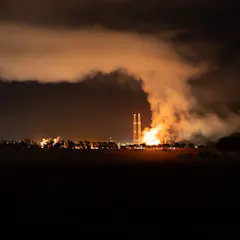
The Moss Landing battery fire became an unintended experiment – showing how burning lithium-ion cells scattered nickel, cobalt and manganese over a protected marsh.
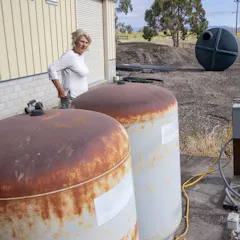
PFAS exposure can vary significantly from one community to the next. A close-up view of three Great Lakes states offers some insights for everyone.
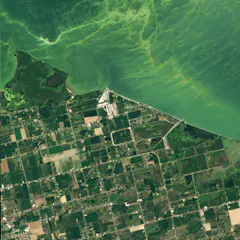
The blooms have become an annual problem in the Great Lakes. DNA studies show what’s growing there and why it’s dangerous.
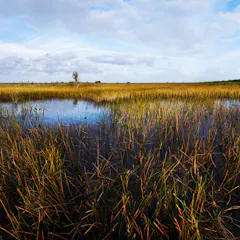
Changes to the landscape and pollution have harmed this vital ecosystem known as the ‘river of grass.’

When volcanoes like Alaska’s Mount Spurr erupt, the ash can damage people’s lungs, smother crops and kill animals, and the harm can continue to spread long afterward.
The Trump administration’s job cuts and advisory board changes at the agency won’t change those rules, as a former EPA science adviser explains.
Top contributors
-

Honorary Professor, School of Natural Sciences, Macquarie University
-
Assistant Professor of Environmental Health, Middlebury College
-
Associate Professor of Environmental and Occupation Health, University of California, Irvine; University of Southern California
-
Senior Lecturer in Pharmacology, Adelaide University
-
Professor of Environmental Health Sciences, UMass Amherst
-
Professor, Environmental Studies Program at UC Santa Barbara
-
Associate Professor of Environmental and Occupational Health Sciences, University of Washington
-
Postdoctoral research fellow, Macquarie University
-
Chief Specialist Scientist (Public Health), South African Medical Research Council
-
Associate Professor of Sociology; Co-Founder, Center for Environmental Justice at CSU, Colorado State University
-
Professor of Earth Sciences and Executive Director, Environmental Resilience Institute, Indiana University
-
Emeritus Professor of Medicine, Adelaide University
-
Honorary Associate Professor in Environmental Health, Australian National University
-
Specialist scientist, South African Medical Research Council
-
Professor of Environmental Health Sciences, Johns Hopkins University