
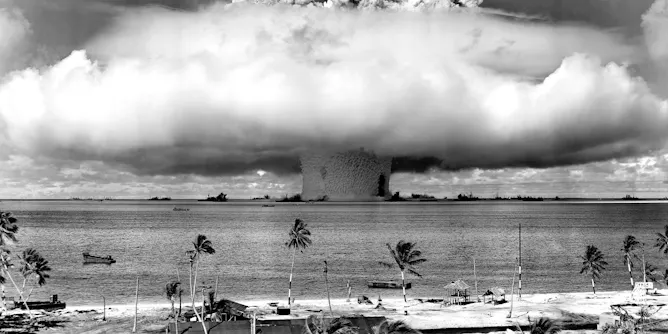
For decades, the US seriously pursued the idea of ‘peaceful nuclear explosions.’
Articles on Energy
Displaying 41 - 60 of 234 articles
The committee voted to exempt some oil and gas operations from the Endangered Species Act in the name of national security.

Countries don’t just switch from fossil fuels to renewable energy sources. Each takes its own path, depending on its economy, international trade relations and government stability.

US consumers, already feeling pain at the gas pump, can expect higher prices and prolonged shortages for goods of all sorts, including food, as additional consequences of slowed oil production.

Nations’ stores of petroleum can dampen price shocks in the short term, but as reserve supplies dwindle, economic pain may continue.
Iran has responded in kind to attacks on its energy infrastructure. With the energy assets of Gulf states now in play for Tehran, regional chaos grows by the hour.
There’s lots of copper in the ground, but demand is already outstripping usable supply – and the shortfall is likely to get worse.

A new study linking Pittsburgh’s air pollution to thousands of deaths each year has been published just as the EPA moves to weaken pollution standards.

Rather than generating climate-warming emissions and wasting nutrients and energy, food waste can become a resource if processed in sewage treatment plants.
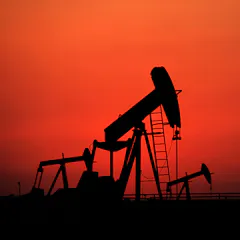
Petrochemicals derived from oil and fossil fuels underlie the production of many consumer goods − and many you wouldn’t know from looking at the final product.
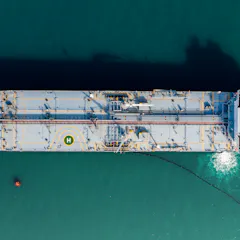
Despite Iranian threats to destroy any ships that pass through a key maritime route, some ships are still doing so.
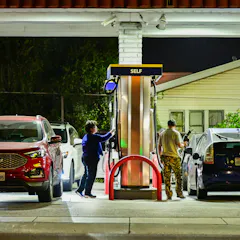
Oil prices affect the US economy differently than in past decades. Nowadays, the US is less reliant on oil imports and uses less oil to produce more economic output.
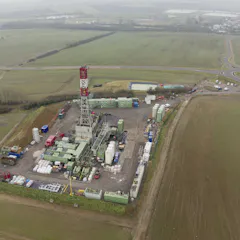
Hydrogen demand around the world is projected to grow significantly by 2050. Some of that supply could come from nature itself.

The issue in front of the US Supreme Court is seemingly mundane, about federal or state jurisdiction. But it is actually much bigger, encompassing some key questions of the 21st century.

Deregulation promised competition but delivered middlemen instead.

Native American lands contain 30% of the nation’s coal, 50% of its uranium and 20% of its natural gas, as well as copper, lithium and rare earth elements.
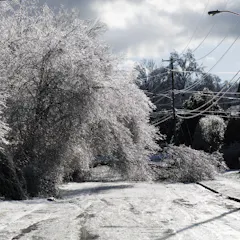
The government directed data centers to turn on backup generation in parts of the US. Expanding distributed generation could improve grid resilience.
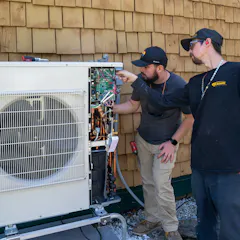
Many homeowners could save money on their heating bills by installing heat pumps – but not everyone, and not everywhere.

Electric vehicles are a fast-growing share of auto sales in many countries, and Chinese automakers are benefiting as the US industry pulls back.

Artificial intelligence systems have big environmental costs but are also finding ways to save energy and water, cut emissions and make businesses more efficient.
Top contributors
-

Professorial Fellow, University of Canberra
-
Senior Fellow in Energy and Climate Change, Grattan Institute
-
Professor and Director, Victoria Energy Policy Centre, Victoria University
-
Professor of Transport Technology and Sustainability, Swinburne University of Technology
-
Professor of Law, Deakin University
-
Professor, School of Economics, The University of Queensland
-
Senior Industry Fellow, Environment and Planning, RMIT University
-
Senior Research Associate, Renewable Energy & Energy Systems Analyst, UNSW
-
Research Associate, Institute for Climate Risk and Response, UNSW
-
Lecturer in International Studies, University of Washington
-
Professor of Sustainability, Curtin University
-
Professor of Engineering, Australian National University
-
Adjunct Professor in Sustainability, The University of Western Australia
-
Professor of Public Policy and Director of the Payne Institute, Colorado School of Mines
-
Climateworks Centre Country Lead, Australia, Monash University