
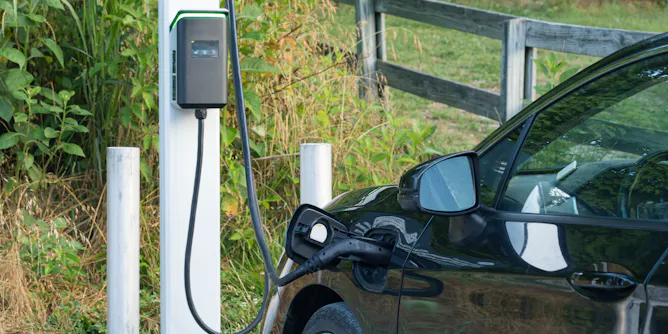
An analysis finds that fewer electric vehicles will also mean less investment to clean up the electricity sector.
Articles on Energy
Displaying 261 - 280 of 1168 articles
Is climate action a cost or benefit? The debate is dividing big Australian businesses. But the answer is clear: benefits from action far outweighs the cost.

Solar on rooftops and EVs on the roads can give a false sense of progress. But it will take much more to actually end reliance on fossil fuels.
Stored data contributes to greenhouse gas emissions by needing power for servers and cooling systems.
Carbon dioxide emissions trap heat in the atmosphere, warming the planet. Too much of it can disrupt the climate and oceans.
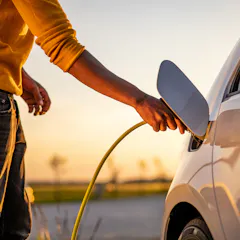
It’s cheaper to charge an EV than fuel a petrol car. But while charging can be dirt cheap, it’s not always the case.

Exciting as it sounds, most of this technology is still locked away in labs, not available in airports.

The way we drive in the real world means the estimated range for a new EV isn’t quite accurate.
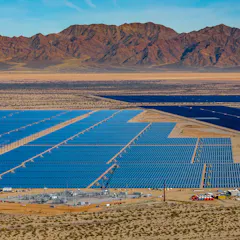
We need to reduce the costs of getting to net zero. Better emissions-reduction incentives and faster approvals processes for renewable energy would be a good start.
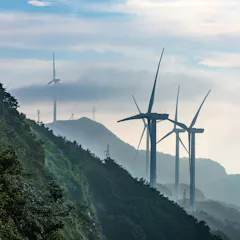
China is roaring forward in the race to be the world’s clean energy powerhouse.

In the wake of the US attacks, the international community asked itself how it could ensure that such horrors were never repeated.
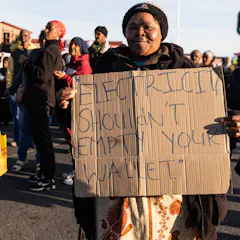
Working class communities in South Africa are continuing the tradition of shutting down their neighbourhood in protest against high electricity prices.
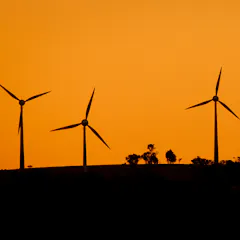
Ideally, Australia’s emerging green grid would have plenty of solar, storage and wind. But rising costs are stalling many wind projects.
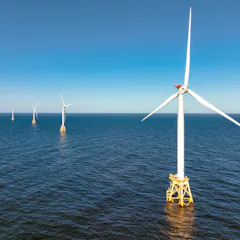
States take the lead on regulation of planning, site selection, leasing and other elements of offshore wind projects in the Great Lakes, though the federal government has a role as well.

People want technology that supports them and eases their struggles. The technology must be controlled by the community and enhance people’s daily lives.
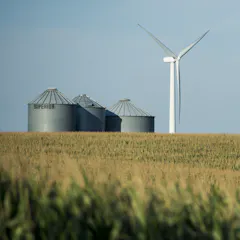
Rural counties also benefit in jobs, manufacturing and tax revenue that will be hard to replace as the US government slashes support for the industries.
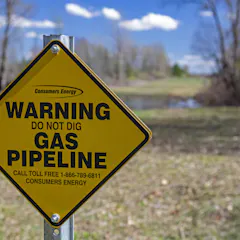
Methane reacts in the atmosphere to form components of fine particulate air pollution, which can penetrate deep into the lungs and increase risk for heart disease and asthma.

Electrification means more demand on the grid. Smart charging of EVs and electric hot water systems could be the solution.
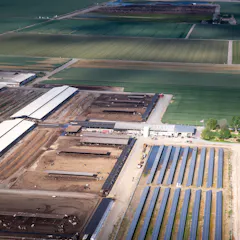
Solar is helping farmers in California save water and secure reliable income in the face of drought and economic pressure.
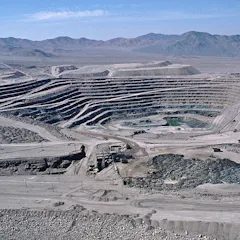
Zimbabwe has large lithium deposits but most is extracted by multinational companies and exported raw. The country doesn’t benefit from lithium battery sales.
Top contributors
-

Professorial Fellow, University of Canberra
-
Senior Fellow in Energy and Climate Change, Grattan Institute
-
Professor and Director, Victoria Energy Policy Centre, Victoria University
-
Professor of Transport Technology and Sustainability, Swinburne University of Technology
-
Professor of Law, Deakin University
-
Professor, School of Economics, The University of Queensland
-
Senior Industry Fellow, Environment and Planning, RMIT University
-
Senior Research Associate, Renewable Energy & Energy Systems Analyst, UNSW
-
Research Associate, Institute for Climate Risk and Response, UNSW
-
Lecturer in International Studies, University of Washington
-
Professor of Sustainability, Curtin University
-
Professor of Engineering, Australian National University
-
Adjunct Professor in Sustainability, The University of Western Australia
-
Professor of Public Policy and Director of the Payne Institute, Colorado School of Mines
-
Climateworks Centre Country Lead, Australia, Monash University