

Most people have never heard of the software that makes up the machinery of the internet
- especially the tools that keep us safe.
Articles on Encryption
Displaying 61 - 80 of 114 articles

The Australian government’s proposed law that would force technology companies to decrypt messages could make Australians more vulnerable.

Cracking down on extremism online won’t solve the problem of extremist violence, will inevitably censor speech that’s important to protect and risks harming political dissidents and democracy itself.

The Australian government wants to access encrypted messages, but don’t call it a “backdoor”.

In a security update on the threats facing Australia at home and abroad, Malcolm Turnbull will say that an ‘online civil society is as achievable as an offline one’.

To protect ourselves online, we should all understand a few key terms.
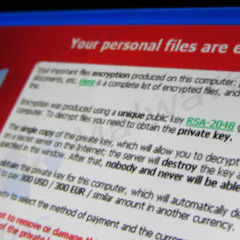
Movies tell us that paying a ransom means the bad guys win, but in the real world it’s not that simple.

We have never been so connected and we are producing more data than ever before. But how can we manage our data effectively while making sure it remains safe?

A way in for government would also allow hackers access.

New standards and regulations are beginning to govern how companies protect customers’ data. Companies ignore this vital issue at their peril, both financially and legally.

The Tor Project is upgrading its protections for internet users’ privacy and anonymity. A scholar and volunteer member of the nonprofit effort explains what’s changing and why.

The technical consensus is clear: Adding ‘backdoors’ to encryption algorithms weakens everyone’s security. So what are the police and intelligence agencies to do?

As searches of smartphones and other digital devices at US borders become more common, can research and computer science help protect travelers’ privacy?

The latest WikiLeaks revelation shows how far the CIA can take its cyber attacks.

The darknet, like the open internet, is not immune from illegal activity. But many darknet users are there in search of ‘hacker ethics’ values such as privacy and free speech.
People who think like hackers have some really good ideas about how to protect digital privacy during turbulent times. We can learn from them.

Despite years of public information efforts, even simple cyberattacks still succeed. Here are five steps to avoiding having your emails appear on WikiLeaks.

The Micius satellite will encrypt data using fundamental laws of physics rather than crackable codes.

A new type of computer means we’ll need a new way to make our data secure.

Ransomware – which encrypts your files and offers to sell you the key – operates differently from other malicious software. Those differences turn out to give potential victims a fighting chance.
Top contributors
-

Director of UWA Centre for Software Practice, The University of Western Australia
-
Research Fellow, School of Information Technology and Electrical Engineering, The University of Queensland
-
Professor, Information Security Group, Royal Holloway, University of London
-
Professorial Fellow, University of Canberra
-
Head, The Cyber Academy, Edinburgh Napier University
-
Senior lecturer, Deakin University
-
Media Specialist, Department of Computing and Information Systems, The University of Melbourne
-
AXA Chair Professor of Cybersecurity, and Professor of Information Systems School of Information Systems / Professor of Information Systems - School of Information Systems, Singapore Management University, AXA Research Fund
-
Lecturer in Software Engineering, Monash University
-
Professor of Computer Security, University of Wollongong
-
Postdoctoral Research Associate in Computer Science, Princeton University
-
Professor of Business Law and Ethics, Indiana University
-
Director, Centre for Cyber Security Research & Innovation (CSRI), Deakin University
-
Professor of Computer Science, Elon University
-
University at Buffalo