

The secret recipe came from Arthur Dee, 17th-century alchemist and royal physician to the Tsar.
Articles on Encryption
Displaying 21 - 40 of 114 articles

Big Tech makes a lot of promises about protecting privacy, but the reality is that using the industry’s products is a matter of trust.

Apple will scan all photos uploaded to the cloud for child sexual abuse without actually looking at the photos. Privacy experts are concerned by the lack of public accountability.
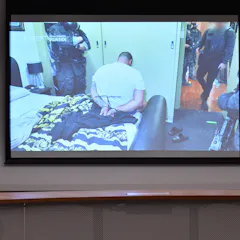
The AN0M app was programmed by law enforcement to allow ‘back-door’ access. This led to the retrieval of information that culminated in hundreds of search warrants.

Researchers tried several times to have the document declassified, including in 1992, 2004 and 2016. It was initially written to help American NSA agents crack difficult coded messages.
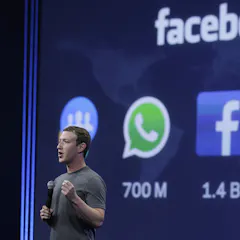
Having an end-to-end encrypted messaging ‘ecosystem’ is a great way for Facebook to evade the full wrath of the law. It has come at a convenient time, too.
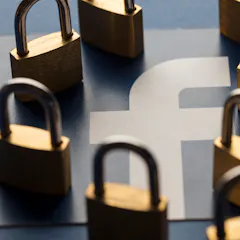
Facebook is planning to put end-to-end encryption on all its messaging services soon. But governments aren’t happy about it, as it could make it harder to catch criminals.

The first internet communication was underwhelming, thanks to a computer crash. But a lot has happened since then – including key decisions that helped build the internet of today.

Computer capabilities have boosted our decryption technology to great heights. How will the future compare to a past, one in which codes were thought to be a means of communicating after death?

A recent proposal by the United Kingdom’s Government Communications Headquarters agency suggests building in law enforcement access to encrypted communications. This has implications for users’ digital rights and privacy.

Telegram enabled protesters in Hong Kong to evade surveillance, but a DDoS attack and the arrest of a group administrator undermined the ability of protesters to organise and communicate.

In a recent Canadian court case, defence and prosecution argued over whether a suspect was required to provide his password to allow for a search warrant to be executed on his phone.

A forum of Australian tech companies this week was told the government’s encryption laws could see Australian jobs moved overseas. Labor’s promised to “fix” the laws, but that could be too late.

If the next government is serious about protecting Australian businesses and families, here are seven concrete actions it should take immediately upon taking office.

The government can access your phone metadata, drivers licence photo and much more. And new research shows Australians are OK about it. But that might change.

Virtual private network companies make lots of promising claims about their services. Most people don’t have the skills to double-check their providers. So this group of researchers did the testing.

Think defensively about your online accounts and data security – and don’t assume you’ll avoid harm.

Anthony Albanese on Labor’s road ahead
CC BY67.5 MB (download)
Speaking to The Conversation, Albanese wouldn't comment on Bill Shorten's unpopularity with voters, arguing instead that it's a matter of whether the Labor team is “seen as worthy of election".

Both the Coalition and Labor agreed to new laws that will give law enforcement agencies the power to access encrypted systems.

As both sides played the tactics, a remarkable thing happened in the House of Representatives. Behaviour improved 100%, with
none of the usual screaming and exchanges of insults.
Top contributors
-

Director of UWA Centre for Software Practice, The University of Western Australia
-
Research Fellow, School of Information Technology and Electrical Engineering, The University of Queensland
-
Professor, Information Security Group, Royal Holloway, University of London
-
Professorial Fellow, University of Canberra
-
Head, The Cyber Academy, Edinburgh Napier University
-
Senior lecturer, Deakin University
-
Media Specialist, Department of Computing and Information Systems, The University of Melbourne
-
AXA Chair Professor of Cybersecurity, and Professor of Information Systems School of Information Systems / Professor of Information Systems - School of Information Systems, Singapore Management University, AXA Research Fund
-
Lecturer in Software Engineering, Monash University
-
Professor of Computer Security, University of Wollongong
-
Postdoctoral Research Associate in Computer Science, Princeton University
-
Professor of Business Law and Ethics, Indiana University
-
Director, Centre for Cyber Security Research & Innovation (CSRI), Deakin University
-
Professor of Computer Science, Elon University
-
University at Buffalo