

Begun as part of efforts to preserve online anonymity and privacy, Freenet, Tor and the Invisible Internet Project are, like the rest of the web, home to both crime and free expression.
Articles on Encryption
Displaying 41 - 60 of 114 articles

The broad and ill-defined new powers outlined in the government’s new telecommunications bill are neither necessary nor proportionate – and contain significant scope for abuse.

The strengths of blockchain technologies could help address the weaknesses of health care systems to store and secure medical records.

It is hard to predict when quantum computers will be strong and fast enough to crack the codes that keep bitcoin safe. But that day is coming.

It is hard to know whether metadata retention has been effective or necessary. We can only hope that the debate over accessing and analysing encrypted services is a little more enlightening.

The ban on Queensland Members of Parliament using encrypted messaging apps for government business should be accompanied by a willingness to strengthen official accountability across the board.

Could an employer or platform claim copyright in a chat group? We’d first have to accept that conversations in a chat group are protected by copyright.

Storing data in the cloud is convenient, but how secure is it? And what are users’ options for stepping up their data security?

Prime numbers are a mathematical mystery.

Scholars dig in to the debate on whether police should be able to defeat or circumvent encryption systems.

The FBI and police officials say they need to decrypt secure communications to fight crime. But they have other options, and modern threats make clear the importance of strong encryption.

Cloud computing is on the rise, but so are questions about its security. This is why we need systems where the data itself enforces security, not just the cloud system within which it is contained.

KRACK can only be used in certain circumstances, and there are some steps you can take to keep your internet traffic safe.

Every government, business or organisation releasing data needs to think about how to ensure that the risk of re-identifying an individual or revealing personal information about someone is low.
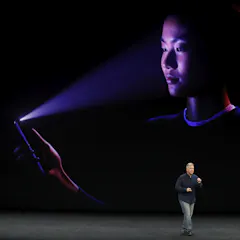
While security researchers are yet to perform a thorough analysis of iOS 11 and Face ID, past issues with the hardware and software of the iPhone point to areas of potential concern.

Some of the iPhone’s innovations have made users less secure.
Many Australians are unaware of current police and intelligence powers when it comes to accessing our data.

As companies make quantum computers available through their cloud services, take a look at what it means for computing to move beyond classical mechanics and into quantum physics.

Quantum computing is being described as “just around the corner”. Is it?

Governments’ efforts to weaken communications security undermine and distract from the need to protect the real weak points in our online communications.
Top contributors
-

Director of UWA Centre for Software Practice, The University of Western Australia
-
Research Fellow, School of Information Technology and Electrical Engineering, The University of Queensland
-
Professor, Information Security Group, Royal Holloway, University of London
-
Professorial Fellow, University of Canberra
-
Head, The Cyber Academy, Edinburgh Napier University
-
Senior lecturer, Deakin University
-
Media Specialist, Department of Computing and Information Systems, The University of Melbourne
-
AXA Chair Professor of Cybersecurity, and Professor of Information Systems School of Information Systems / Professor of Information Systems - School of Information Systems, Singapore Management University, AXA Research Fund
-
Lecturer in Software Engineering, Monash University
-
Professor of Computer Security, University of Wollongong
-
Postdoctoral Research Associate in Computer Science, Princeton University
-
Professor of Business Law and Ethics, Indiana University
-
Director, Centre for Cyber Security Research & Innovation (CSRI), Deakin University
-
Professor of Computer Science, Elon University
-
University at Buffalo