
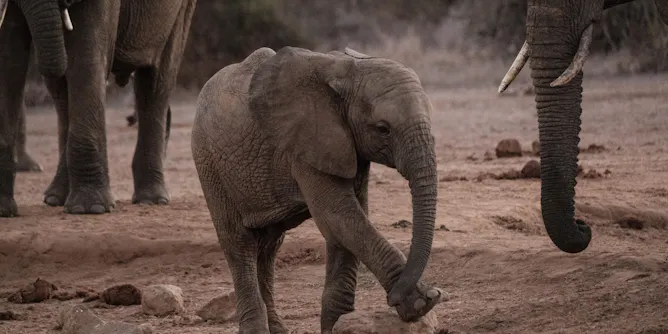
The findings suggest that poaching rates are lower where there is strong national governance and levels of local human development are higher.
Articles on Elephant poaching
Displaying all articles
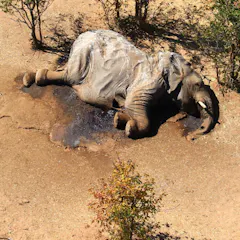
The death toll stands at nearly 400 elephants of both sexes and all ages.

Statistical models and the knowledge of on-the-ground rangers are valuable and complementary sources of evidence for biodiversity conservation.
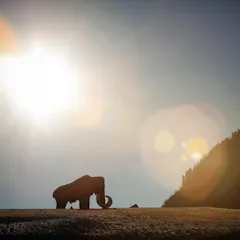
Melting Siberian permafrost is exposing long-dead mammoths, creating a new trade in mammoth ivory.
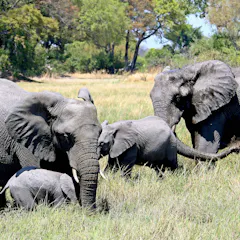
In light of Botswana’s decision to allow trophy hunting again, new evidence suggests elephant poaching has been on the rise.

Translocations have become more frequent in Africa. Elephants are the biggest animals to be moved.

The destruction of a massive haul of illegal ivory was supposed to send a message to poachers and those who trade in the tusks. Did they notice, or can the ivory be used to help elephant conservation?
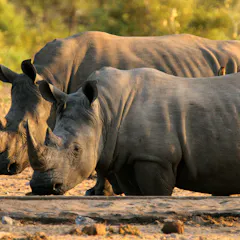
Poaching is changing focus by moving from the Kruger National Park to other provinces and reserves.

Elephants feeding on crops poses a challenge to their coexistence with humans. Farmers must introduce strategies to reduce losses and avoid lethal action against the endangered species.
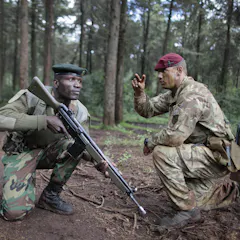
Protecting rhinos and fighting terrorism are both noble causes, but there isn’t much evidence of a link between the two.

China has decided to end all domestic trade in ivory, an act that could help elephant numbers all over Africa.
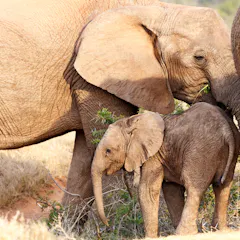
Zimbabwe are looking to resolve a debt to China by selling animals to them. But one of the concerns is that the elephants sold will eventually be farmed and their ivory harvested.
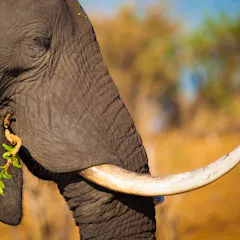
Ivory was a major talking point at the CITES CoP17 conference.Many feel the ban on trade doesn’t work while others believe the ban is the only way to save the iconic species.
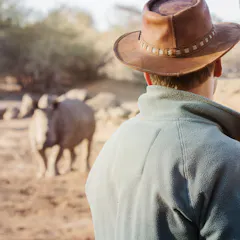
Military responses to combat poaching are a problem. They marginalise communities where poachers come from and can have longer term implications.
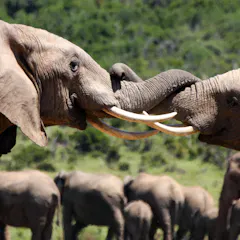
The ivory trade is a very contentious issue and will be debated at CITES. It will revolve around maintaining or lifting the ban on trade. But the human element is likely to be ignored.
The focus of CITES is not solely on the protection of species. It also promotes controlled trade that is not detrimental to the sustainability of wild species.

The amount of ivory on sale in Vietnam has increased by more than 600% in the past eight years. As China has taken a tougher stance on the ivory trade, sales in Vietnam have increased.
Top contributors
-

Visiting Professor, University of Kent
-
Research Associate, Department of International Relations, University of the Witwatersrand; Chief Research Officer, Good Governance Africa; Managing Director, Harvey Economics Pty Ltd.
-
Postdoctoral Research Fellow, University of Cape Town
-
Professor and Chair, Southwestern Environmental Science and Policy, Northern Arizona University
-
Tasso Leventis Professor of Biodiversity, University of Oxford
-
Professor of International Politics, University of Sheffield
-
Postdoctoral research fellow, School of Biological Sciences, The University of Queensland
-
Professor Emeritus and Director of the Centre of Applied Social Sciences, University of Zimbabwe
-
Senior Lecturer, Mathematics, The University of Queensland
-
Professor, Conservation Biology, The University of Queensland
-
Associate Professor of Geography, York University, Canada
-
Simon Research Fellow, University of Manchester
-
Professor of Conservation Science, University of Newcastle
-
Professor in Conservation Science, School of the Environment, The University of Queensland
-
Postdoctoral Researcher in Conservation Biology, University of Reading