
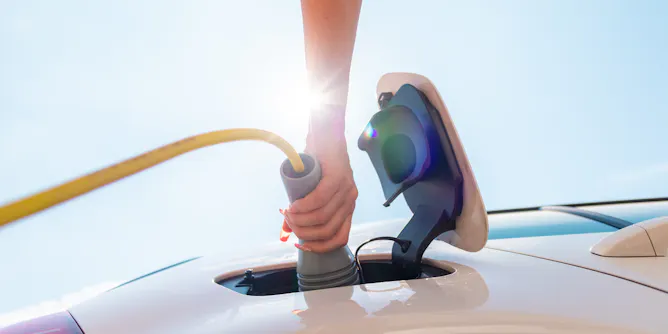
Selling power from your EV back to the grid is now possible. Early adopters say it’s not simple – but change is coming
Articles on Electric vehicles (EVs)
Displaying 101 - 120 of 474 articles
Australia is ready for a rational and transparent discussion about road-user charging on all vehicles, not just electric ones.

Researchers found the stop-start way we drive actually prolongs battery life.

Should Canada pull back on its EV ambitions, or double down to secure its position in the global market?

Despite the challenges a second Trump administration will bring, Canada can continue to address climate change by working with sub-national leadership in the U.S.
The government could look to support domestic manufacturers – but Chinese rivals are circling.

Flow batteries can feed energy back to the grid for up to 12 hours – much longer than lithium-ion batteries, which only last four to six hours.
Emissions from city drivers have largely fallen, while emissions from rural and regional drivers have risen.

Competition in the car industry is intense.
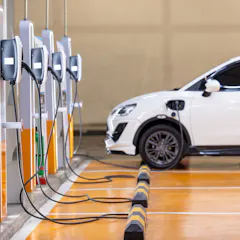
As batteries get bigger, they pose a bigger fire risk, but some are more dangerous than others.

Installing chargers in existing apartment blocks can be complicated. So how can these challenges be overcome?
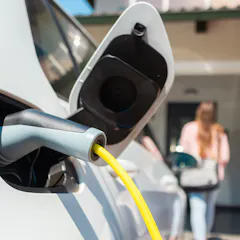
Your EV battery is much larger than a home battery. But until now, Australian drivers haven’t been able to run their homes off their cars – or sell power back to the grid. That’s about to change.

While he hasn’t released an official plan, Trump’s playbook the last time he was in office and his frequent complaints about clean energy offer clues to what’s ahead.
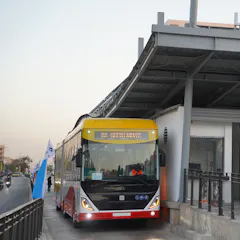
Sub-Saharan Africa is lagging behind in the transition to electric cars and motorbikes. Investment in local manufacturing, renewable energy and storage systems to supply charging stations is needed.
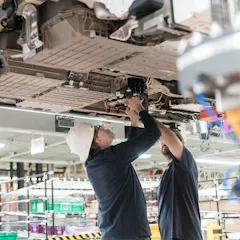
The future of these job-generating gigafactories, many of them in Republican states, could be at risk if the next president tries to wipe out the programs that made them possible.

Personal action on climate still has a place – but it works far better with institutional backing

A business-centric approach can overshadow the broader goals of social and environmental sustainability.
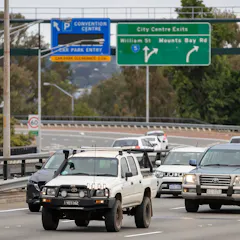
Simplistic comparisons are misleading. Calculations based on the mix of electric and fossil-fuelled cars actually on our roads show any difference in mass is too small to be significant.
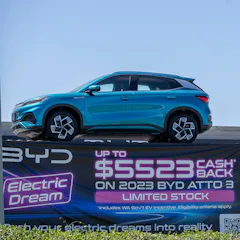
Reduced government incentives, the spreading of myths and concerns about used car values and fires have stalled what had been an increasingly rapid uptake of electric vehicles.
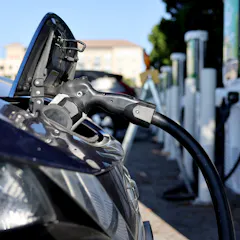
The issue isn’t just the number of chargers – it’s also the quality of drivers’ experiences with them.
Top contributors
-

Professor of Transport Technology and Sustainability, Swinburne University of Technology
-
Senior Lecturer in Operations and Supply Chain Management, Anglia Ruskin University
-
E-Mobility Research Fellow, The University of Queensland
-
Professor, School of Economics, The University of Queensland
-
Professorial Fellow, University of Canberra
-
Adjunct Professor of Transport, University of Technology Sydney
-
Lecturer, School of Electrical Engneering and Computer Science, The University of Queensland; The University of Western Australia
-
Professor of Sustainability, Curtin University
-
Senior Lecturer, Griffith Business School, Griffith University
-
Senior Research Fellow, Collaboration on Energy and Environmental Markets, UNSW
-
Research Associate, Institute of Coding, Coventry University
-
Professor of Business and Sustainability, Cardiff University
-
Professor in Supply Chain and Freight Innovation, Swinburne University of Technology
-
Professor of Civil and Environmental Engineering, Rice University
-
Associate Professor and Principal Fellow in Urban Risk and Resilience, The University of Melbourne