
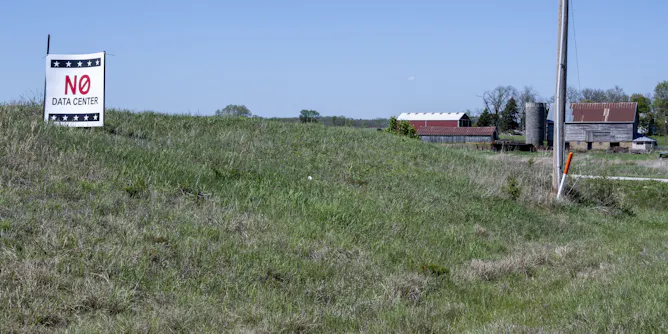
Data center proposals are often local controversies with significant underlying principles at stake.
Articles on Electric utilities
Displaying 1 - 20 of 64 articles
There are opportunities at every level of the US energy market to save consumers money – if governments, companies, communities and individuals choose to act.

Electric utilities don’t make money from selling power to customers, but instead profit from investments in power plants, wires, substations and other equipment.

Deregulation promised competition but delivered middlemen instead.
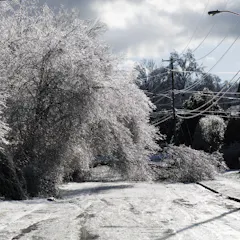
The government directed data centers to turn on backup generation in parts of the US. Expanding distributed generation could improve grid resilience.
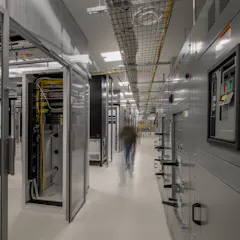
How many data centers will be built – and how much electricity they’ll need – is uncertain. Being prepared costs money, but so does being unprepared.
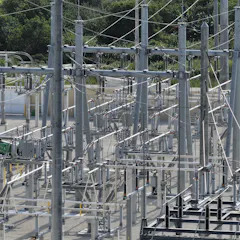
The equipment needed to keep the grid running is hard to make, and materials are limited. And supply-chain bottlenecks are taking years to clear.

Thomas Edison is just part of the answer, and the light bulb is just part of what he achieved.

Electricity rates are soaring in Pennsylvania and other parts of the country. 2 energy experts offer tips to lower your monthly bill.

With the Trump administration prioritizing fossil fuels, cities and states will have to lead the way on clean energy.

Utilities have options for addressing surging power demand from AI data centers, but there’s no silver bullet.

Turning off power is a last-ditch strategy for utilities to reduce the risk that their systems could spark wildfires. In most states, deciding whether to take that step is up to utilities.
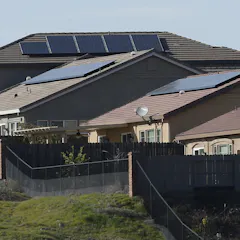
California is considering a controversial proposal for utilities to charge customers for electricity based partly on household income. Two scholars explain how this approach could benefit everyone.
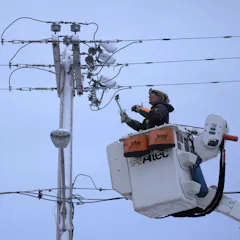
Power companies can be publicly or privately owned and may report to corporate boards, local governments or co-op members. But there’s no one best way to deliver electricity reliably and affordably.
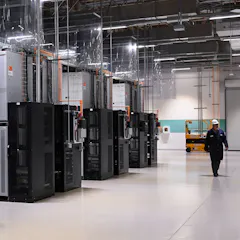
Some power plants don’t have massive smokestacks or cooling towers – or even a central site.
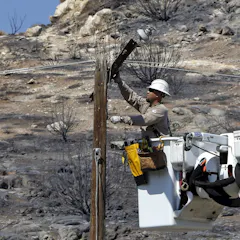
Losing power also has real consequences for people’s businesses, livelihoods and potentially their health and safety.
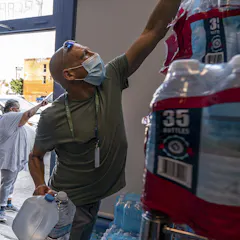
A new report lays out steps communities can take to help their residents survive heat waves as the risk of dangerous temperatures rises.

The US government regulates many industries, but social media companies don’t neatly fit existing regulatory templates. Systems that deliver energy may be the closest analog.
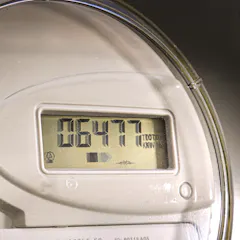
Most households pay a flat rate 24/7 for electricity although the cost of generating it fluctuates through the day. Wireless technologies are changing that system.
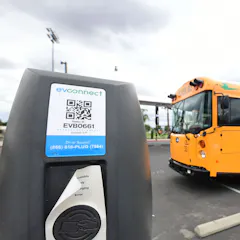
They look like conventional school buses, but electric versions are cleaner, quieter and cheaper to maintain. States, utilities and federal agencies are helping school districts make the switch.
Top contributors
-

Director of Energy Studies, University of Florida
-
Professor of Energy and Environmental Economics and International Affairs, Penn State
-
Lynton K. Caldwell Professor of Public Affairs, Indiana University
-
Presidential Distinguished Professor of Energy Policy and City Planning, University of Pennsylvania
-
Associate Professor of Civil, Environmental and Architectural Engineering, University of Colorado Boulder
-
Associate Professor of Economic Geography, University of South Carolina
-
Professor of Electrical and Computer Engineering, Iowa State University
-
Professor of Sustainability Sciences and Director, School of Marine and Environmental Affairs, University of Washington
-
Research Scientist, Joint Program on the Science and Policy of Global Change, Massachusetts Institute of Technology (MIT)
-
Director, Nicholas Institute for Environmental Policy Solutions and Associate Professor of Practice, Duke University
-
Associate Professor of Physics, Penn State
-
Professor of Electrical and Computer Engineering, University of Florida
-
Associate Professor of Civil Engineering, Texas A&M University
-
Professor of Marketing, Co-coordinator of Chaire Européenne de la Transition du Territoire, GEM
-
Associate Professor, Writing Rhetoric and Communication, UMass Dartmouth