
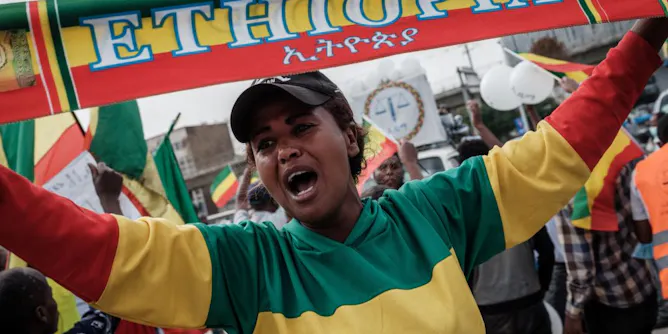
A new government with popular legitimacy will have power to address lingering political, economic and security challenges.
Articles on Elections in Africa
Displaying 41 - 60 of 174 articles

The recent spate of military takeovers, most recently in Chad, highlights a developing trend by armed forces in Africa which overtly subvert constitutional governance.
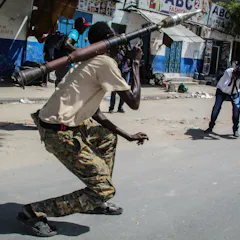
The international community is opposed to Farmaajo’s term extension because of fears that it’s a power grab consistent with political trends elsewhere in the region.
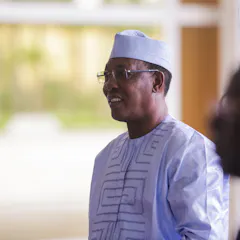
When he grabbed power in 1990, Déby promised to create a democratic society, but he turned out to be a ruthless authoritarian whose main agenda was to remain in office.

Although polarising, parliament’s move to extend Farmaajo’s term has presented a practical road-map to hold direct elections for the first time since 1969.
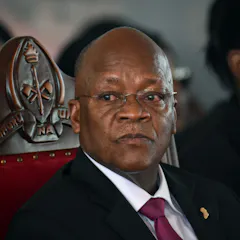
He came into office with a reputation for making broken systems work, but as he began his second presidential term John Magufuli became known as a ruthless and ambitious authoritarian.

The legitimacy of SWAPO, the former liberation movement that has governed since 1990, has been eroded amid growing corruption and a deepening economic crisis.

Ethiopia’s party system is extremely volatile due to the prevalence of weakly institutionalised and fragmented political parties.
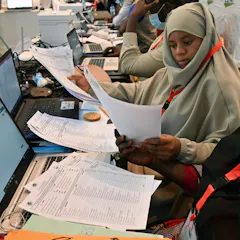
Although Niger’s quest for entrenching democracy is a good development, poverty and insecurity are obstacles.
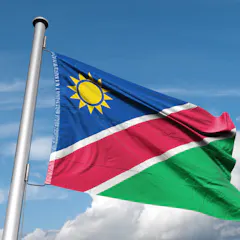
The November 2020 local and regional elections have indeed put Namibia’s political culture at a crossroads.
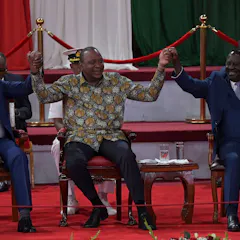
The changes proposed by the initiative are were well-addressed in the country’s 2010 Constitution.
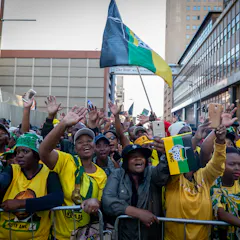
The trouble is that the ANC’s branch structure, designed initially as a means of grassroots democracy at work, is in a mess.
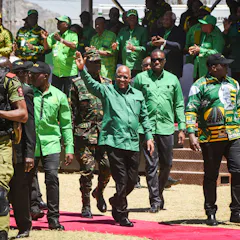
President John Magufuli won a second term by a contested landslide and looks set to take even greater control of Tanzania’s democratic space.
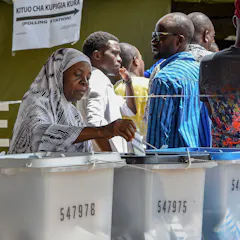
Tanzania’s October poll shows that elections are purely performative for governments which do not adhere to the basic tenets of democracy.
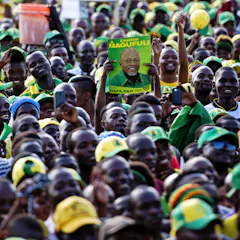
Magufuli took a populist approach in trying to woo voters away from an invigorated opposition, and when that didn’t work he reported to oppressive tactics.
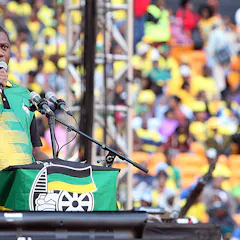
Since parties always need money, forcing them to depend on private funders means throwing them into the hands of donors who will demand favours for their cash.
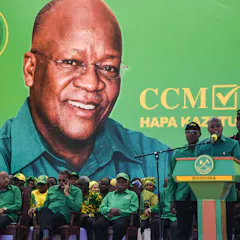
As key opposition members lose seats in their strongholds, it is clear that Tanzania’s ruling party is set to establish a super-majority that will institute a deeper authoritarian agenda.

The country has built a fairly good reputation for well-functioning, democratic governance.
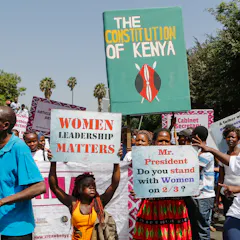
For 10 years, Kenya’s legislators have failed to enact a law to implement a two-thirds gender rule set down in the 2010 constitution, despite numerous court rulings.
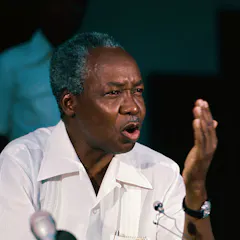
For all of the shortcomings of Nyerere’s regime, his ideas continue to inspire Tanzanians fighting for a more equal and democratic future, over 20 years after his death.
Top contributors
-

Professor of Democracy, University of Birmingham
-
Lecturer in African History, Queen Mary University of London
-
Professor of Sociology, University of the Witwatersrand
-
Professor in Political Science, University of South Africa
-
Extraordinary Professor, Department of Political Sciences, University of Pretoria
-
Director of the Leaders of Africa Institute and Research Affiliate with Davidson College, Davidson College
-
Chief Research Specialist in Democracy and Citizenship at the Human Science Research Council and a Research Fellow Centre for African Studies, University of the Free State
-
Research Associate, Dept of Anthropology & Development Studies and Fellow, Clare Hall, University of Cambridge, University of Johannesburg
-
Professor of Political Studies, University of Johannesburg
-
Director & SARChI Research Chair: Political Economy of Migration in the SADC Region, University of Pretoria
-
Head of Department, Public and Environmental Law Department, University of Limpopo
-
Professor, Department of Political Sciences, University of South Africa
-
Professor of Public Affairs, Tshwane University of Technology
-
Associate Professor, International Development Studies; Associate Dean, Menno Simons College, University of Winnipeg
-
Professor of Urban Governance, University of the Witwatersrand