
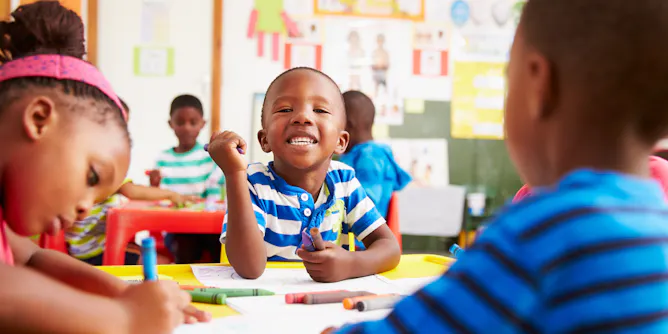
Two years of high-quality preschool is one of the most effective strategies we have to change the trajectories of children from disadvantaged backgrounds.
Articles on Education policy
Displaying 101 - 120 of 282 articles

We have scholarships specifically targeted at women to redress the gender imbalance in STEM subjects. So why can’t we do the same for men in primary education?

The government is right to cut back on funding certain VET courses that have low-enrolment rates and are unlikely to lead to work.

Placing a recruitment cap on teacher education courses does not guarantee delivery of high quality graduates, and risks limiting diversity in the profession.

Australia’s school funding model provides high levels of public funding to private schools, while also allowing them to charge fees.
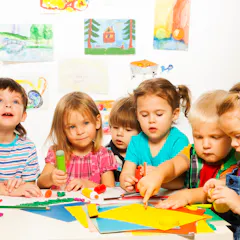
Parents are sending their children to private pre-school programs as a way to ensure they are ready to start school. But are these effective?
A new school funding model being proposed aims to free up funds to help education ministers resolve their differences in state funding, and deliver needs-based funding in full.
Any new approach to linking welfare payments to attendance must address the flaws of previous trials. It will require the cooperation of schools and the availability of accurate, real-time data.
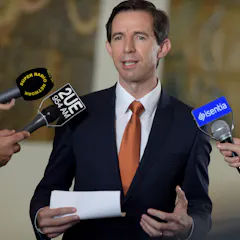
Instead of a needs-based model, we ended up with an inconsistent patchwork of approaches across Australian states and territories that protected the vested interests of non-government schools.
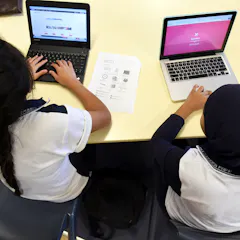
The government says that quality teachers are crucial to improving learning outcomes. Yet they still pursue policies that don’t put these teachers in front of our most marginalised students.

Education policy in Australia is being held back by a lack of data.
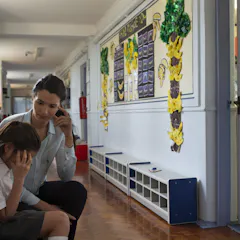
School expulsions are on the rise in Australia. But research shows individual punishment as a deterrent rarely works.
The claim that school spending has increased is misleading and simplistic.

Public perception of teachers influences not only those who may be considering entering teaching, but also how those in this profession perceive themselves.
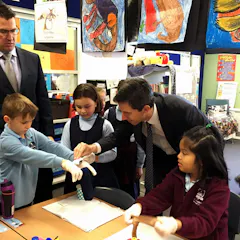
Despite a steady stream of reviews into teacher education, little action has been taken. It has become a ‘policy problem’. What is the evidence for current policy?
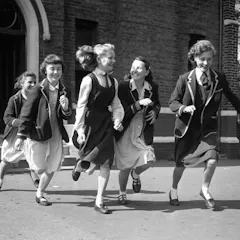
A new study has looked at what happend when grammar schools were made free to all children in the 1940s.
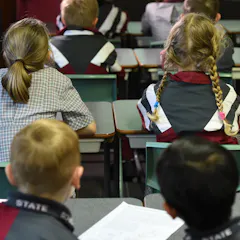
The Productivity Commission has said that education spending has substantially increased over the last decade but student achievement has shown little or no improvement. Is that true?

Australia needs a new approach to solve the rural staffing churn. The solution might be found in better preparing those who teach the teachers.

We need to have fewer teachers, to pay them more on scales differentiated by skill, and to have more restricted entry into teacher education programs.

There is little evidence that external inspections and evaluation measures produce better teachers.
Top contributors
-

Professor of Education and Public Policy, Durham University
-
Adjunct associate professor, Southern Cross University
-
School Education Program Director, Grattan Institute
-
Honorary Senior Fellow, The University of Melbourne
-
Professor of Education Futures, The University of Melbourne
-
Director of Research and Deputy Head of Southampton Education School, University of Southampton
-
Professor of Educational Leadership and Policy Studies, School of Education, University of Nottingham
-
Management Consultant & Occasional Lecturer in Management & Economics, CQUniversity Australia
-
Associate Professor in Language, Literacy and TESL, University of Canberra
-
Professor and Head of School, School of Early Childhood and Inclusive Education, Queensland University of Technology
-
Emeritus Professor of Education, University of Derby
-
Dean of Education, School of Education and Institute for Education, Bath Spa University
-
Executive Director, Public Policy Institute, Australian Catholic University
-
Professor of Social Impact, University of Technology Sydney
-
Professor, Australian Catholic University