
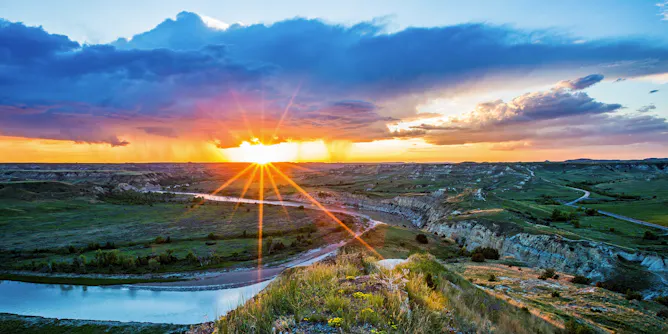
When something is free, people use a lot of it. Economists are urging governments to compute values for natural resources – wildlife, plants, air, water – to create motives for protecting them.
Articles on Ecosystems
Displaying 161 - 180 of 319 articles

One-fifth of Earth’s land could be restored to wilderness by reintroducing animals and improving management.
We may think of plants as passive life forms, but they can cooperate, share resources, send one another warnings, and distance themselves from their communities when survival depends on it.
A stable ecosystem of organic matter is the key to improving agricultural yields in the surrounding farmland and fighting climate change.
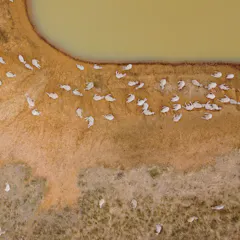
This is not an imaginary future dystopia. It’s a scientific projection of Australia under 3°C of global warming – a future we must both strenuously try to avoid, but also prepare for.
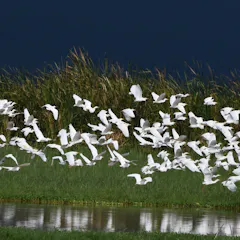
Biosphere reserves are the living labs in which people and nature learn how to live and thrive together. Four pilot sites in Africa show the programme’s promise.
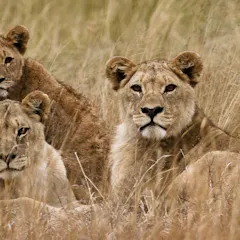
Debates centred on the role of recreational hunting in supporting nature conservation and local people’s livelihoods are among the most polarising in conservation today.
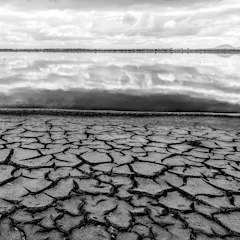
Iconic ecosystems, from coral reefs to Tasmania’s ancient forests, are collapsing across the continent and into Antarctica. It’s not too late to act — in fact, our lives depend on it.

The dingo fence is the longest fence in the world. The environment looks almost identical on either side — until you view it from space.
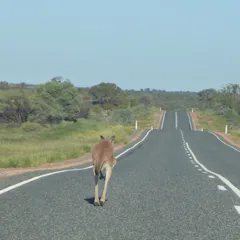
World-first research finds human disturbances, on average, restrict an animal’s movements by 37%, or increase it by 70%. That’s like needing to travel an extra 11 km to get to work each day.
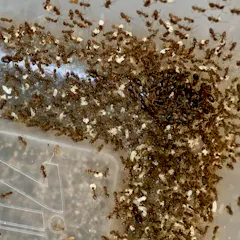
The spread of tawny crazy ants may be driven, in part, by their need for calcium. The calcium-rich limestone bedrock of the lower U.S. Midwest may provide ideal conditions for populations to explode.
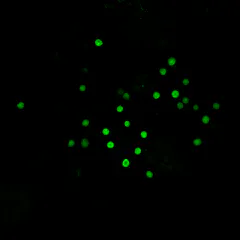
In the ocean, phytoplankton helped by diazotrophs play an outstanding role in withdrawing CO₂ from the atmosphere. But climate change is disturbing this delicate balance.
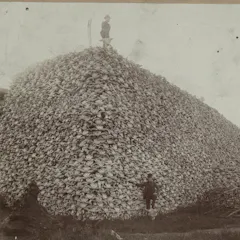
Historical photographs of bison extermination are a window into a history of relationships between humans, bison and the environment.
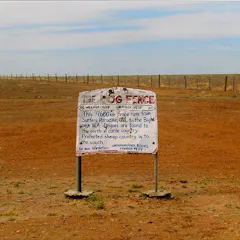
Millions of miles of fences crisscross the Earth’s surface. They divide ecosystems and affect wild species in ways that often are harmful, but are virtually unstudied.
Humans have caused ecosystems to collapse on purpose for millennia, to grow food or build settlements. But unplanned collapses are a different matter.
Historians and scientists discovered how colonisation in eastern Europe changed ecosystems – and the societies embedded in them.
There are 85 ‘threatened ecological communities’ listed under Australian environment law. But unrealistic criteria means they’re not adequately protected.

Among the human rights under threat are the rights to life, health, food, a healthy environment, water, an adequate standard of living and culture.
We must turn pledges into immediate action and restore our ecosystems on a global level.
We counted the number of standard trees in Australia. It turns out that since 1990, we’ve actually been gaining trees faster than losing them.
Top contributors
-

Professor in Wildlife Ecology and Conservation, School of Life & Environmental Sciences, Deakin University
-
Professor in Conservation Science, School of the Environment, The University of Queensland
-
Associate Professor, Global Ecology, University of Sydney
-
ARC Future Fellow, Queensland University of Technology
-
Honorary Research Fellow, University of Sydney
-
Professor in Ecology, Charles Sturt University
-
Professor, Obafemi Awolowo University
-
Research fellow, Charles Sturt University
-
Professor Emerita, Department of Biological Sciences, Macquarie University
-
Professor, Water and Landscape Dynamics, Fenner School of Environment & Society, Australian National University
-
Matthew Flinders Professor of Global Ecology and Node Leader in the ARC Centre of Excellence for Indigenous and Environmental Histories and Futures, Flinders University
-
Lecturer in Ecology, University of New England
-
Associate Professor in Ecology, Charles Sturt University
-
Ecologist and Researcher, Flinders University
-
Professor in Biodiversity and Conservation, The University of Queensland