
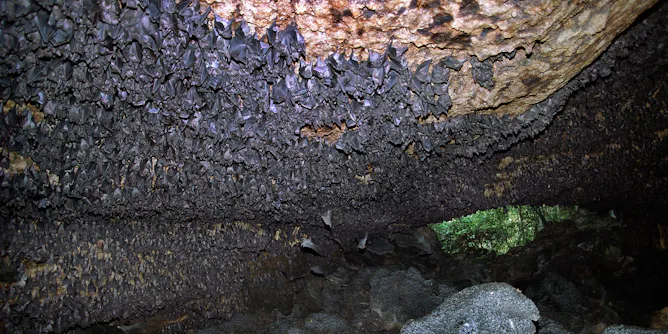
A 25-year-old local scientist captured rare footage showing how one of the world’s deadliest viruses could jump from bats to humans.
Articles on Ecology
Displaying 61 - 80 of 538 articles

Fishing was once more open to all off New England. After devastating fishery collapses, stricter rules helped fish stocks recover, but they also changed the face of fishing and the lives of fishermen.
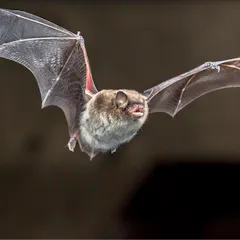
If bats’ way of living falters, entire food webs could feel the effects.
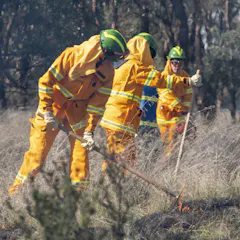
New research shows how Western science can support cultural burning to deliver benefits across cultures – as well as for nature.

A new archaeological study finds early evidence of white-tailed deer declines in the 17th century, likely driven by the commodification of deerskins under colonial capitalism.
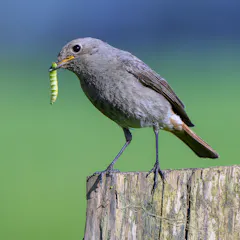
Scientists have tracked microplastics in small creatures in the UK.
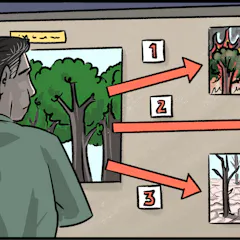
Park and forest managers can’t rely on the past any longer to understand future risks. Fires, pests and climate change are changing the game.
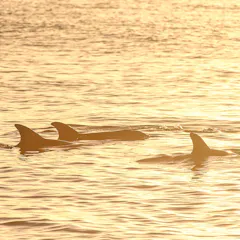
Studying the information contained in dolphin whistles is crucial for our understanding of threats to their survival.
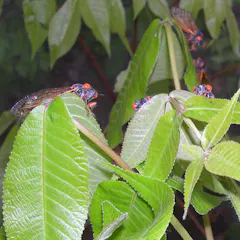
Two ecologists explain why a misleading map is worse than no map at all, and how they have worked for years to track the emergences of 13-year and 17-year cicadas.
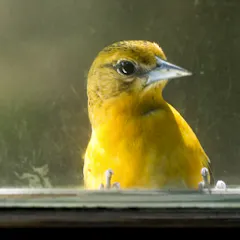
Cats aren’t the only bird hazard around your home. More than 1 billion birds die each year from hitting windows, often during migration.
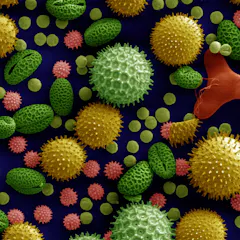
Palynologists who study tiny pollen fossils share 4 stories found in grains that fell hundreds to millions of years ago.

Children who grow up on farms are less likely to develop asthma or allergies as adults. The reason? Micro-organisms in the air.
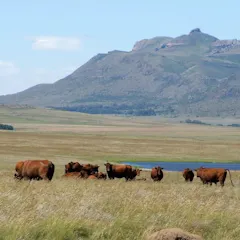
The Grassland Society of Southern Africa has been conducting scientific research for 60 years, adapting to new challenges.
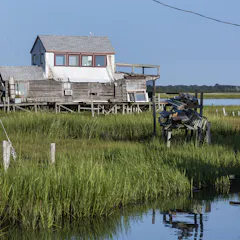
The administration wants to cut funding for programs that help communities adapt to wildfire risk, sea-level rise and invasive species, among many other risks.
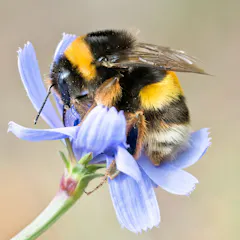
Fast-rising temperatures can change how plants and animals behave and disrupt the delicate timing of pollination.

The Florida Wildlife Corridor, which turns 15 this year, connects habitats across the state for panthers, bears, sparrows and other species.

Pope Francis has died at the age of 88, the Vatican has announced. 10 years ago, his encyclical, Laudato Si’, was published. This environmental text sought to move the Catholic Church and its concern with the Earth back into a leading role.

Claims of ‘bringing back’ any species take away focus from proven solutions that can actually fix the extinction crisis.

Stories of how the data was collected were fascinating. Some people camped on islands for weeks. Some scaled cliffs or jumped from helicopters onto remote islands.
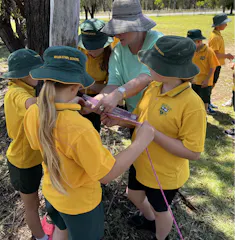
Citizen science project ‘Insect Investigators’ takes scientists to regional schools to teach students to track and identify insects.
Top contributors
-

Matthew Flinders Professor of Global Ecology and Node Leader in the ARC Centre of Excellence for Indigenous and Environmental Histories and Futures, Flinders University
-
Professor of Conservation Biology, School of Life and Environmental Sciences, University of Sydney
-
Associate Professor in Entomology, University of Sydney
-
Professor in Wildlife Ecology and Conservation, School of Life & Environmental Sciences, Deakin University
-
Lecturer in the School of Applied Sciences, Edinburgh Napier University
-
Professor in Ecology, Charles Sturt University
-
Senior Research Scientist of Ecology and Evolutionary Biology, University of Connecticut
-
Associate Professor, Ecology, Northumbria University, Newcastle
-
Professor of Biology, Boston University
-
Associate Professor of Wildlife Ecology, University of Florida
-
Assistant Professor of Ecology and Evolutionary Biology, University of Connecticut
-
Professor of Sustainability, Azim Premji University
-
Emeritus Professor of Ecology, University of Salford
-
Professor of Pyrogeography and Fire Science, University of Tasmania
-
Postdoctoral Researcher in Mycology, West Virginia University