
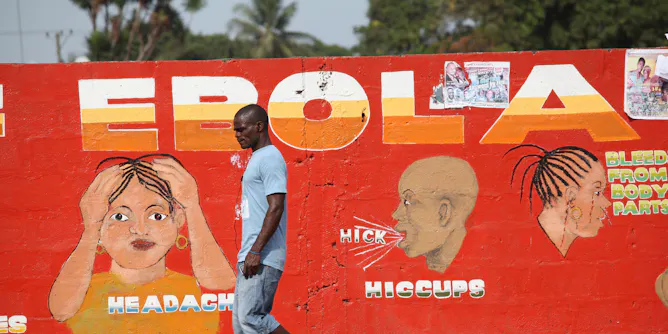
Many cases of Ebola are missed entirely. Affected countries need to invest in primary healthcare and detection to nip outbreaks in the bud.
Articles on Ebola
Displaying 141 - 160 of 365 articles
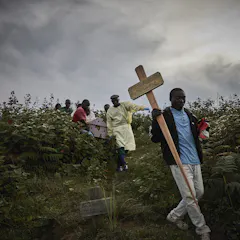
Vaccines against Ebola exist, as do diagnostic tests and screening at border crossings. So why is the disease spreading?
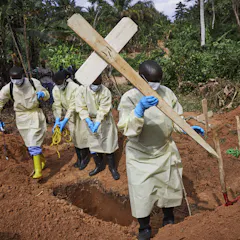
The grim facts are undisputed: the current Ebola outbreak is expanding, largely unabated.
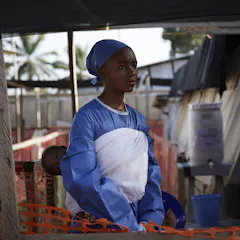
Research has identified a range of health complications in Ebola survivors. These include eye complications and vision problems.

The way humans share the world with wildlife has rapidly changed – and this is having a serious impact on the spread of pathogens.
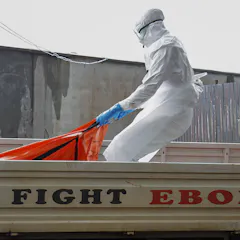
The current Ebola outbreak in the DRC is devastating vulnerable communities already affected by displacement and violence.
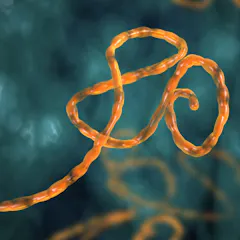
The Ebola virus claimed 11,000 lives in 2014. Today, scientists may have cured the disease in guinea pigs by using antibodies.
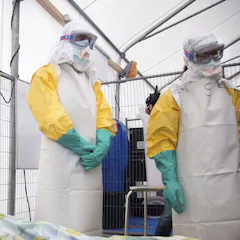
The high stress conditions of an outbreak can spread a dysfunctional culture among those working to fight it. A survey after the 2015 Ebola epidemic quantified the issue – and suggests a better way.
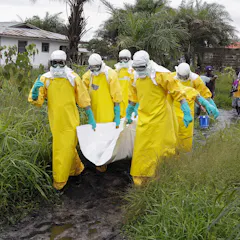
Four new Ebola treatments are being tried out in the DRC.
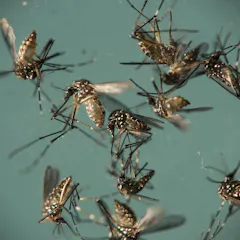
In January, measles returned to the Pacific Northwest, while Ebola resurged in the Congo. It would take a lot more research for scientists to be able to stop threats like these in their tracks.
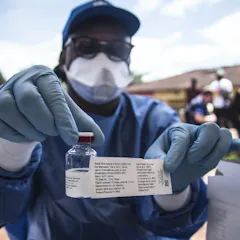
The new Ebola vaccine is yet to be licensed but evidence shows that it protects against the strain of the virus.
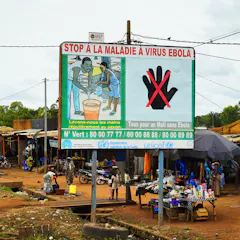
Without the current experimental vaccine the Ebola outbreak in the DRC has the potential to spiral out of control.
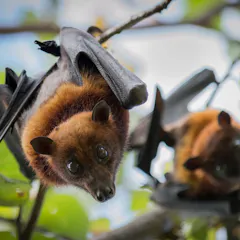
The family of deadly filoviruses just got bigger.
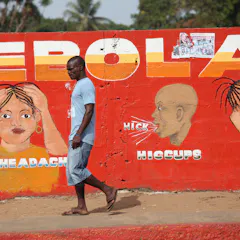
Aid has never been just about helping people. It’s also about gaining influence and exercising soft power.

Researchers have increasingly turned to DNA sequencing to help identify and track diseases like Ebola.
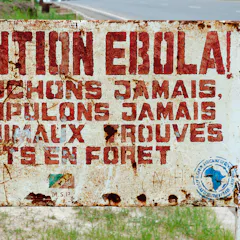
Instability in the DRC and Ebola’s deadly properties is making it hard to contain the virus.
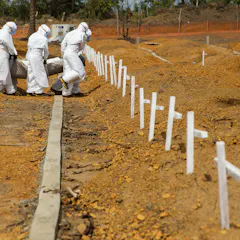
It could be a matter of days before the ebola epidemic in the DRC spreads to urban centres or spills over into neighbouring countries.
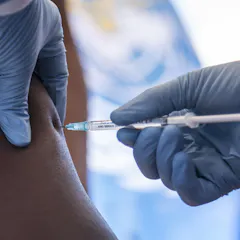
The UN Security Council’s response to the most recent Ebola outbreak has been weak. But what options does it have?
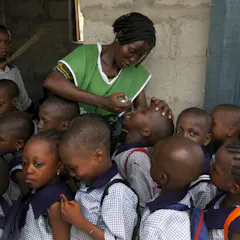
The global target to eradicate polio is being missed because a number of countries are struggling to reach high vaccine coverage.

We cannot end TB with century-old technologies and poor quality care. It is time to reinvent the way we are managing TB, and overcome our collective failures of the imagination.
Top contributors
-

Lecturer in Virology, Queen's University Belfast
-
Professorial Fellow, University of Canberra
-
Professor in the faculty of Medicine, Mbarara University of Science and Technology
-
Part-time lecturer at the Global Health & Social Medicine, Harvard University, and Lecturer at the School of Public Health, College of Health Sciences, University of Liberia
-
Professor of Global Biosecurity, NHMRC L3 Research Fellow, Head, Biosecurity Program, Kirby Institute, UNSW
-
Lecturer, Biomedical and Life Sciences, Lancaster University
-
Principal Medical Scientist (PhD MPH), National Institute for Communicable Diseases
-
Senior lecturer, Njala University
-
Professor of Infectious Diseases, Monash University
-
Principal Scientist and Canada Research Chair in Zoonotic Virus and Animal Reservoirs at the Vaccine and Infectious Disease Organization and Co-Lead of One Health at the University of Saskatchewan, University of Saskatchewan
-
Senior Lecturer in Communicable Disease Epidemiology, University of Sydney
-
Research Scientist, African Population and Health Research Center
-
Head of the Center for Emerging and Zoonotic Diseases, National Institute for Communicable Diseases
-
Professor of Immunology and Infection, Edinburgh Napier University
-
Associate professor, University of Sydney